Three myths about China proved wrong








During the year, some Western media outlets have attributed global inflation and deflation risk to China. More recently, the claim has been that China's economy is about to collapse. In reality, China's economic recovery will intensify in the second half of this year.
Information war is the new normal in international media. Contrarian voices are not just marginalized, but algorithm-excluded. Also, the line between ideologies and facts has blurred. The New York Times columnist Bret Stephens believes China's economy is on secular decline (Aug 29), just as he denies climate change and promotes neoconservative foreign policy.
The interest conflicts of some "opinion leaders" are obvious. The Hill's Peter St Onge, who declared that China has collapsed (Sep 13), is a fellow of the Heritage Foundation, a neoconservative think tank activist. Bloomberg interviewed as China expert Kyle Bass, who said "China's economy is "circling the drain" (Sep 11). Bass is a Texas-based investor and a member of several anti-China groups who has for years (unsuccessfully) used his hedge fund to bet against China and the yuan. His alleged stock manipulation has been scrutinized by US regulators and The Wall Street Journal.
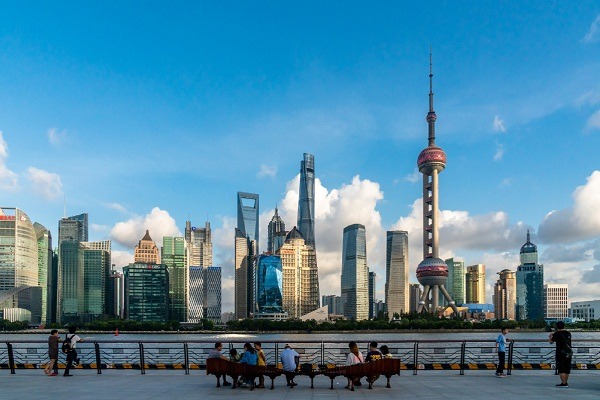
Then there was the bizarre Newsweek story (Sept 5), suggesting Shanghai "has turned into a 'ghost town'" due to China's economic collapse. It built on a tweet by "independent journalist" Michael Yon, who cites a mystery "friend from China" to back up the claim.
Yon is a former member of "Special Forces" who reportedly spent more time "embedded with combat units" than any other journalist in Iraq and has popped up in destabilized targets ever since, including Hong Kong in 2019. In the past, his credibility has been challenged by US media and even the Pentagon.
In the past three quarters, the three media myths about China risks have been inflation, deflation and collapse. But what are the facts?
When China withdrew the COVID-19 prevention and control measures and began reopening its economy at the beginning of this year, international observers warned that the world's second-largest economy would become a "global inflation threat". There was a problem with the narrative. Numbers didn't back it up, as I showed in my op-ed in China Daily in March.
After the first quarter of the year passed, international pundits turned their earlier narrative upside down. When Chinese inflation rate was flat in June, these oracles claimed China was facing an impending deflationary crash.
But was China really a global deflation risk? That presumes that price levels in China reflect a sustained fall, and that such deflation is somehow exported worldwide.
In reality, the deflationary preconditions were not in place, as I showed in my op-ed in July. Then, I predicted that despite international headwinds, China's "rebound is strengthening… and economic recovery is likely to strengthen in the second half of the year".
Now that seems to be the case.
The better-than-expected economic data for August suggests that China's economic recovery is strengthening. On the supply side, the industrial value added recorded a 4.5 percent year-on-year increase. On the demand side, retail sales, a main gauge of consumption, beat expectations following the summer travel peak and consumption-boosting measures.
In the coming quarters, the rebound is likely to further strengthen on stimulus, including the increase in tax allowances. And early signs suggest that consumption recovery will accelerate during the upcoming National Day holidays.
The key issue for domestic recovery remains the ailing property market, though policymakers hope to restore consumer confidence in the sector through a reduced down payment ratio and a ceiling on new mortgage rates. These are steps in the right direction, but more needs to be done to stabilize the sector.
As recovery gathers pace in first-tier cities, policymakers also hope to see positive spillover effects in other cities and regions. Working-age jobless rates are at nearly the pre-pandemic level and rising incomes are boosting above-average deposit levels. Hovering at 20 percent, the rise of the youth unemployment correlates with the timing of the trade wars and geopolitics, which foster instability and uncertainty penalizing investment and hiring.
Supportive fiscal policies are needed, so is an accommodative monetary stance. On Friday, the People's Bank of China, the country's central bank, kept the interest rate unchanged but boosted liquidity through medium-term lending. Some said this is inadequate, yet the central bank can delay rate cuts because of strategic investments in the new economy, including electronics and software, electricity and railways infrastructure, and auto companies' rising capital input into electric vehicles whose sales are booming.
Moreover, the sharp, geopolitically-induced downturn in semiconductors may be bottoming out. And Huawei's impressive 5G Mate 60 suggests China is moving toward self-sufficiency in high-tech much faster than expected.
The challenging external headwinds reflect some moderation, for now. As long as the West's geopolitical unilateralism and protectionism continue, global demand is likely to remain sluggish weighing heavily on global recovery.
The eurozone is coping with recession, the United Kingdom is struggling under the disastrous impact of Brexit, the US economy is flirting with recessionary risks, and Japan's rising debt continues to maintain persistent stagnation and deflation. In contrast, China's growth could be anything between 4.5 percent and 5 percent this year. Given the US trade wars against and its geopolitical targeting of China, it would be an impressive achievement.
The author is the founder of Difference Group and has served at India, China and America Institute (US), Shanghai Institutes for International Studies (China) and the EU Centre (Singapore).
The opinions expressed here are those of the writer and do not necessarily represent the views of China Daily and China Daily website.
If you have a specific expertise, or would like to share your thought about our stories, then send us your writings at opinion@chinadaily.com.cn, and comment@chinadaily.com.cn.