New Delhi deceiving itself with new push on hydropower







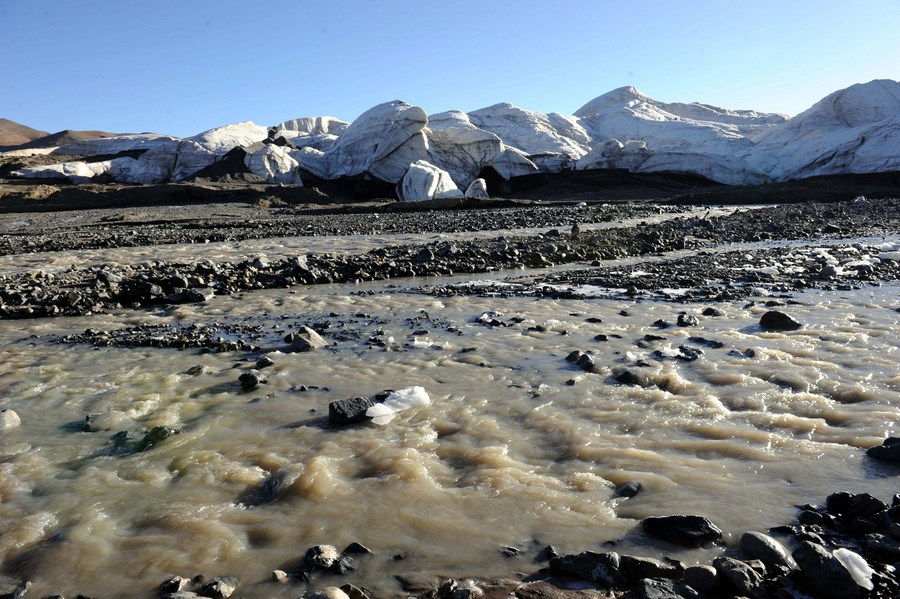
China's Tibet autonomous region, the Himalayan wonderland, is known globally for its rich natural endowments. Abundant water resources, with their resultant hydropower potential, present one such gift of nature.
Zangnan, or southern Tibet — part of which India has illegally occupied, giving it a pseudo status and including it in so-called Arunachal Pradesh state — is no exception.
However, while the water wealth of Tibet is being harnessed, keeping in view the requirements of sustainable development and the ecological needs of future generations, the same in Zangnan remains a sorry tale of political misunderstanding and shortsightedness by New Delhi.
After decades of delays, controversies, objections and agitation, the Indian government and Zangnan's current authorities have once again joined hands to give another new push to hydropower development.
A total of 12 stalled hydroelectric projects, with a cumulative capacity of 11,517 megawatts, reportedly have been allotted to public sector undertakings, the name given to state-owned enterprises in India. Out of these, five projects totaling 2,620 MW have been assigned to North Eastern Electric Power Corp, five of 5,097 MW to Satluj Jal Vidyut Nigam Ltd, and the remaining two projects of 3,800 MW capacity to National Hydroelectric Power Corp. These are expected to cost about $15 billion.
Over the years, such projects, which number a whopping 150, have faced roadblocks. Environmentalists have said these projects would be wiping away a large part of forest cover, would result in the unnatural change of course of rivers and their tributaries, could lead to an increase in flash floods, and would damage natural habitats and biodiversity.
Considering that the terrain is highly prone to landslides, experts believe that such large-scale hydro projects are a major danger not only to what is called Arunachal Pradesh itself, but also to downstream states, particularly Assam. Many projects still have not been given clearance in terms of environmental impact assessment.
Local communities that have been displaced or fear displacement in the future have also registered their protests and agitation on a number of occasions. Whether relevant Indian institutions will be able to arrange funds needed for the projects also remains a pressing question.
The reality is that Zangnan is not in any natural geographic harmony with Indian territory. It sits as a remote, isolated and disconnected 'state' — a state only on the map. Therefore, constructing transmission lines from project sites to population centers and economic hubs where the power generated would actually be used, if at all, also remains a perplexing proposition.
Why are New Delhi and its partners in "state"-level administration pushing at this point in time? Simplistically, part of the answer lies in conventional wisdom: A growing Indian economy and a prospering society need more electric power, much more than currently available, and any government in India has to tap all the resources and avenues available.
But India is going into the next general elections in about half a year. So the ruling Bharatiya Janata Party needs to show "progress" on a huge scale.
The country also has the objective of showcasing to the world that it is moving ahead in a big way in terms of green energy and planning for the future as a lowcarbon country.
Ironically, this large-scale drive is also a tool to pinch and try to antagonize China with a message from India that "we are doing it, and we do not care what you think." This is particularly so after China's third phase of renaming rivers, mountains and towns in Zangnan, along with Beijing publishing a map with Zangnan as its legitimate territory. It should be noted that Beijing continues to tread ahead carefully, as per law and rules governing sovereignty.
In a nutshell, India's renewed push for the projects in so-called Arunachal Pradesh still has to face many ups and downs. It will not necessarily be a smooth ride.
Indian policymakers must realize that a false sense of development does not change the reality of whose territory Zangnan actually is, and where its future lies. Political gimmickry does not go far.
The author is founding president of the Eurasian Century Institute in Islamabad, Pakistan. The views do not necessarily reflect those of China Daily.