


Palace Museum's new gallery sheds light on imperial printing history







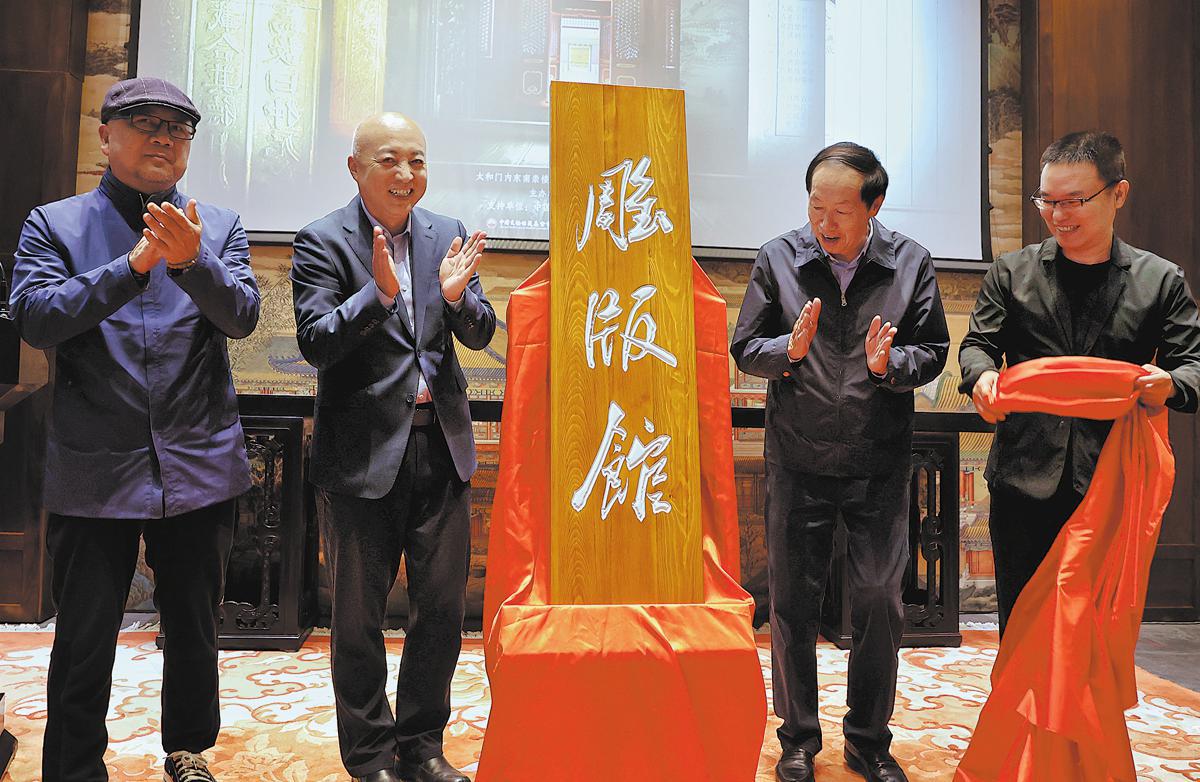
A gallery displaying printing woodblocks opened at the Palace Museum in Beijing on Monday, the first such exhibition space of its kind since the museum opened to the public in 1925.
The Palace Museum, also known as the Forbidden City, was China's imperial palace from 1420 to 1911.
It houses 1.86 million cultural relics, and about one-third of these are ancient books, documents and related printing woodblocks, making the museum a key venue on the development of Chinese literature.
However, these precious relics for academic studies previously lacked a venue in which they could be publicly showcased.
According to Wang Xudong, director of the museum, the institution now has a collection of about 240,000 printing woodblocks, including 210,000 made within the royal court during the Ming (1368-1644) and Qing (1644-1911) dynasties, which are mainly related to classic literature, records of national affairs and Buddhist sutras.
The opening exhibition of the new gallery, near the Gate of Supreme Harmony, features 32 woodblocks.
"These exhibits are of great value for people to understand the politics, culture and printing techniques of that era," Wang said.
"Putting them in the context of the history of Chinese classic books and the Qing inner court, we can get more information through in-depth studies, which will inspire us to develop modern culture."
For example, an exhibited woodblock carved with dragon patterns was made in 1644 shortly after Qing troops seized Beijing.
It demonstrates a Qing imperial admonition demanding that princes and high officials strictly stick to their duties and avoid corruption. Related records in historical files and printed notices using this woodblock are also presented alongside it.
Another exhibited pair of woodblocks, made in the Wanli era (1573-1620) to print a comprehensive collection of Confucian classics and Chinese dynastic history, were important references for Ming scholars and were ordered to be carefully restored by Qing rulers, as indicated by their markings.
Some woodblocks were also made to record aspects of the royal lifestyle, with a group used to print landscape pictures of the Chengde Mountain Resort and Emperor Kangxi's poems lauding its beauty.
To give visitors an immersive experience, a part of the gallery is designed as a warehouse, where over 15,000 printing blocks are on the shelves.
Ji Zhangwei, a researcher at the Palace Museum Library, said that woodblock printing reached its peak during the Ming and Qing dynasties. The royal courts of the two dynasties made a great effort to sponsor printing as an important way to demonstrate national strength and promote cultural development. Pear wood was the most common material to make the blocks at the time.
As a result of the preservation of these woodblocks, "many precious ancient documents survive to this day", he said.
However, many woodblocks have been lost over the centuries, "so what we see today are only fragments of the whole", added Ji.
For example, printing houses and libraries in the Forbidden City were hit by fires several times during the imperial era. There was also a great deal of damage to the collection during the war of 1900, when Beijing fell to foreign invaders.
The Hall of Martial Valor, where the imperial printing house was located, remains to this day, and its surviving woodblocks are generally in good condition.
"This heritage comprises a crucial example of the world's ancient printing history," Wang said.
A charity program was announced in July to further conserve, digitize, study and revitalize these literary treasures at the Palace Museum. The effort also involves the China Foundation for Cultural Heritage Conservation and ByteDance, the parent company of short-video platform TikTok. The new gallery is one of the first results of this work.
"Thanks to the program, the charm of ancient printing arts may be better recognized by the public," said Liu Yuzhu, head of the foundation. "As a result, more sectors of society may be inspired to participate in the protection of cultural relics."