



Translating the mysteries of Naples
In discussion about Italian writer Elena Ferrante and her city of choice, topics range from identity to authenticity, Yang Yang reports.







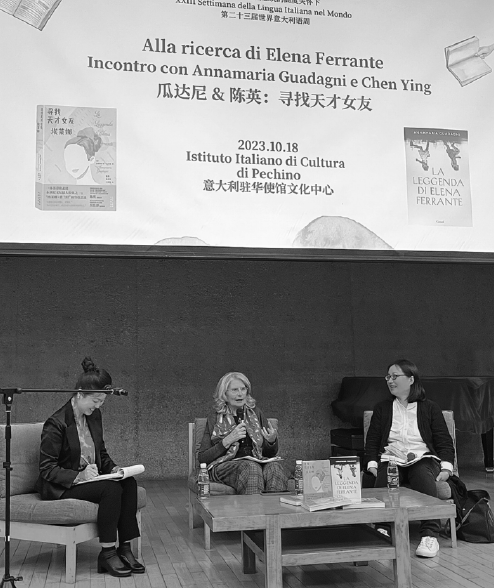
At a recent book event about The Legend of Elena Ferrante at the embassy of Italy in Beijing, two Chinese scholars joined author Annamaria Guadagni in talking about the identity of the mysterious Italian writer.
The event was part of the XXIII Settimana Della Lingua Italiana Nel Mondo (the 23rd World Italian Language Week) in China.
Ferrante's books, including the Neapolitan Novels, have been translated into more than 40 languages and have sold more than 10 million copies across the world, since they were published in 2011. The final season of an HBO adaptation of the novels is to be due out this year. Since being introduced to China in 2017, they have become one of the most talked about series of novels in the country. On review site Douban alone, about 350,000 people have left ratings.
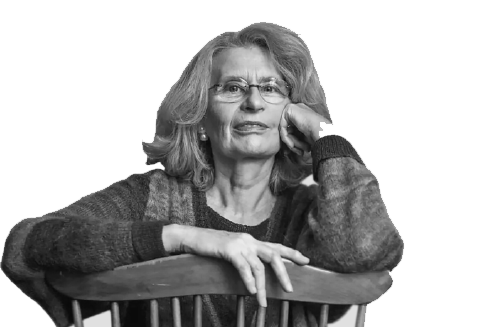
However, for the last 30 years, the writer's identity has remained unknown. In her book, Guadagni tries to unveil Ferrante's identity and a Chinese translation of the book has now come out.
Guadagni says that she decided to write the book after a reporter disclosed the writer's identity in what she considered an improper way in 2016.
"The reporter identified Ferrante as an actual person, based on information provided by her publishers, but I believe that she is a fictional narrator, a voice. Of course, there is a real person behind the books, but I feel that he or she is different to Ferrante, who is a fictional voice that has been shaped over the last 30 years.
"That voice is independent to some extent, and represents a special way of looking at the world," she says, "and now the person behind that voice has been revealed, what will happen to it?"
She says that she wrote the book to explore the existence of Ferrante, a question that she has been thinking about since 1995.
To explore Ferrante's existence, she also went to Naples to explore its landscape and cultural environment.
As for who she believes Ferrante is, Guadagni says that readers will have to find out themselves.
The book's translator Chen Ying, an associate professor of Italian language and literature at Sichuan International Studies University, who also translated the four Neapolitan Novels — My Brilliant Friend, The Story of a New Name, Those Who Leave and Those Who Stay, and The Story of the Lost Child — attended as a guest speaker. Li Jingjing, an associate professor of Italian language and literature at Beijing Foreign Studies University, hosted and translated the dialogue.
To understand Ferrante, it is important to know about the southern Italian city of Naples, where Ferrante sets her novels, and which itself is a major character in her novels.
At the start of the event, the three speakers talked about their impressions of the city.
Li says that for her Naples has a special charm that integrates its glorious past, its noisy and chaotic present and even its slightly decadent street style.
One important quality is the city's contradiction between past and future, Guadagni says.
It is a city where people display strong feelings and preferences for what they like. It is also a city that has a strong sense of future because it is an important industrial city, especially in the fields of information technology and space technology.
"In Ferantte's books, you can find all these elements," the author says.
What attracts Guadagni most about Ferrante's take on Naples is the distinctive identity traits the writer presents.
"She hates the city, but also loves it. She wants to escape from it, but finds an inerasable connection between herself and the city," she says.
"The book I wrote was to show people around the city through Ferrante's narrative architecture, and to see the complexity hidden beneath the surface."
In answer to Guadagni's question about how she dealt with the language to convey the social identities of Ferrante's characters, especially those from the lower classes, Chen says that there are counterparts for many of the words the Italian writer uses in Chinese dialects, but that she did not want a person from Naples to sound like they were speaking a dialect from Shandong or Shaanxi province, not to mention that in general Ferrante's language is elegant, and obviously influenced by classical literature.
"So I tried to show their social identities in the different ways they speak," Chen says.




Today's Top News
- Shanxi's green transition an example others can learn from
- Cultural interaction a necessity on road to peace
- HK must cherish its Chinese identity
- HK may ban smoking at building sites
- Academicians pledge to advance scientific innovation
- New records substantiate truths of war








