Maritime business set to turn the tide







The Greater Bay Area's world-class port cluster, tax concessions for shipping operators, and the development of smart ports in Hong Kong are expected to make the city's seafaring industry more competitive amid sluggish growth in the global economy and trade. Chai Hua reports from Hong Kong.
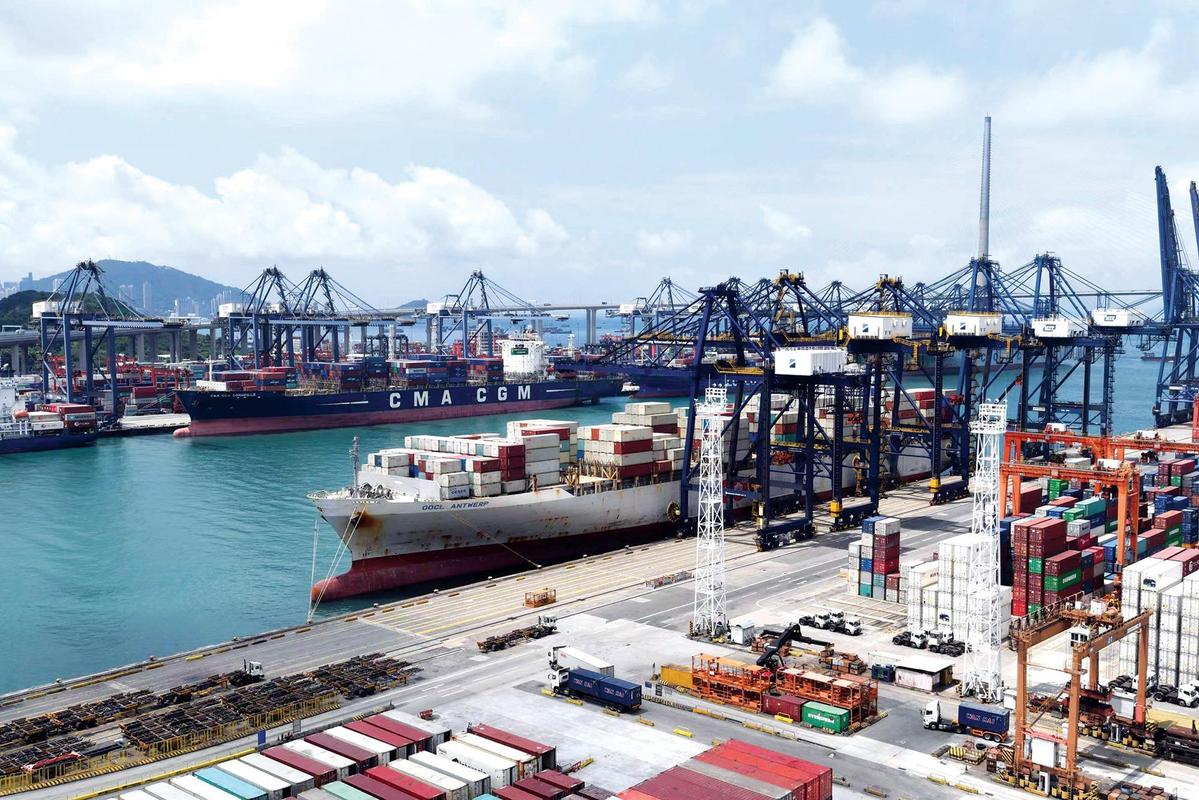
Shipping companies have been in the doldrums as global economic growth and trade slacken. With vast changes in the external environment and keen international competition, the Hong Kong Special Administrative Region government and the maritime industry are addressing long-standing issues.
This year's Policy Address, delivered on Oct 25, pledged to step up the development of high-end maritime services, as well as green and smart transformation in the sector; and promote and strengthen collaboration among shipping enterprises in the Guangdong-Hong Kong-Macao Greater Bay Area and around the world.
"To meet the challenges, the government's directives, including the initiatives announced in the Policy Address, are in the right direction to make our ports more competitive," says Bjorn Hojgaard, chairman of the Maritime and Port Development Committee of the Hong Kong Maritime and Port Board.
He notes that the SAR already has a vibrant maritime cluster, with over 1,100 port and maritime-related companies providing a great variety of quality maritime services. Such an achievement is inseparable from the government's measures, including a series of tax incentives launched in the past few years to attract more businesses to the city.
The SAR introduced new tax concessions for eligible ship leasing companies in 2020, with operating lease and finance lease activities exempt from profits tax. The tax rate for ship-leasing management for ship lessors was halved to 8.25 percent from 16.5 percent.
Steps were also taken last year to halve tax rates for shipping managers, agents and brokers. "As a result, eligible shipping agents, managers and brokers have benefited from the lower taxes. Overall, these measures have not only made Hong Kong's tax system more competitive, but also enabled our maritime sector to grow in scale and diversity," says Hojgaard.
"These steps had begun to bear fruit. From January 2020 to September this year, InvestHK (the SAR government unit set up to promote foreign direct investment) has completed 33 projects relating to overseas maritime companies, and helped them establish and expand their operations in Hong Kong."

Wellington Koo, chairman of the Hong Kong Shipowners Association, expects these concessions to help the SAR secure about 12 percent of the world's shipping finance market within the next decade.
Considering the expected significance of tax regimes in the future, it's slated to be the theme for this year's World Maritime Merchants Forum, which will commence on Nov 20. Government officials, shipping company executives, associations, financial institutions, as well as experts from around the world, will gather in the SAR to discuss topics concerning the shipping sector.
Besides efforts to lure more shipowners and managers to set up or expand their operations in Hong Kong, Koo suggests that the government put a greater focus on commodity traders. "It's very normal that 'shipping' follows 'cargo'," he says. "If we could attract more freight and decision-makers from Hong Kong commodity companies, shipping firms and related service providers would follow."
New advantages
Incentives for green shipping also benefit shipowners, says Hojgaard. With challenging and ambitious decarbonization targets set by the International Maritime Organization, shipowners have to renew their existing tonnage capacities with newer and greener vessels that can use new clean or alternative fuels.
Hong Kong, as an associate member of the IMO, is the first Asian port to mandate that oceangoing vessels switch to low-sulfur fuel when they're berthed. As revealed in the 2023 Policy Address, the government will develop Hong Kong into a green maritime fuel bunkering center.
Hong Kong is also making strides in building smart ports. The primary focus is on elevating the competitiveness of ports by setting up a digitalized port community system that can facilitate seamless flow and sharing of data among stakeholders in the maritime, port and logistics industries.
Hojgaard says such a platform would streamline port operations, enhance coordination, and improve overall efficiency, leading to reduced cargo handling time and costs. A trial data-sharing platform specializing in handling cold chain products was introduced in the third quarter of this year. The goal is to expand it for wider adoption by 2025.

GBA integration
The integrative development of the Greater Bay Area will be another boon for Hong Kong, and is likely to inject fresh growth momentum into the maritime sector. The Greater Bay Area Outline Development Plan supports the consolidation and promotion of Hong Kong's status as an international maritime center, and its development of high-value-added maritime services.
To promote closer cooperation, the SAR's Transport and Logistics Bureau signed a memorandum of understanding on maritime cooperation with the Guangzhou Port Authority this year. The Hong Kong Shipowners Association is also contributing its expertise to the newly established Shenzhen Ocean University.
"Hong Kong, as an international maritime center, can play a crucial role in building a world-class port cluster in the Guangdong-Hong Kong-Macao Greater Bay Area by utilizing its unique advantages and strategic position," says Hojgaard.
Hong Kong can act as a springboard for international companies to enter the mainland market, while providing a familiar environment for Chinese enterprises to conduct business in the global arena. "Overall, these will give full play to Hong Kong's distinctive advantages as an international maritime center that's closely connected to the mainland and the world," he says.
To strengthen collaboration in the Greater Bay Area, this year's Policy Address stated that the SAR government will prepare for the next Greater Bay International Maritime Conference to promote the comprehensive strength of the region's port cluster.
Contact the writer at grace@chinadailyhk.com





- Crew members ready for Shenzhou XXI mission
- China urges Philippines to 'mend its ways' over South China Sea provocations
- Key things to know about formulation of recommendations for China's 15th five-year plan
- Hainan striving to be a 'low-carbon island'
- Chinese-German metals company opens innovation center in Shandong province
- Automaker leverages premium audio to ride China's intelligent vehicle wave