China-America reset at APEC: When pragmatism overrides ideology








In 1979, China-US relations were formally established after extensive discussions following President Richard Nixon's historic visit to China in 1972.
In 1981, I was among the very first wave of American students to come to China to learn Chinese inspired by the newspaper and television images of Nixon's 1972 visit to China. Suddenly we were seeing images of a China waiting to open, waiting to integrate into the rest of the world and participate in a shared global economy.
Black and white images of a China that we were not allowed to see after the McCarthy communist witch hunts of the 1950s and John Foster Dulles communist containment policies that had sunk America into the Vietnam War quagmire. We were all left asking the question, was all that hyperbole necessary? Was containment the answer? Maybe try friendship and global integration. Post World War II was the beginning of a China-US reset.
As the first wave of American students, I was studying at Nankai University in Tianjin, where foreigners had hardly been seen since 1949. I remember performing magic tricks I had learned as a kid in the street; getting lost on my bicycle in narrow alleyways; going to the homes of emerging artists experimenting with flashes of color, impressionistic and surreal ideas on canvas merged with iconic Chinese brush strokes and black ink.
There was a halcyon hope, a desire to make friends. People in the street were as fascinated with whatever we foreign students thought, or did, just as we were all so fascinated to learn as much about Chinese culture and lifestyles as we could. Mutual learning was at the foundation of all interactions. Friendships made then, have lasted until today. Now how can we take this people-to-people experience up a few notches to the bigger geopolitical arrangement that we now find ourselves in. Many of us want to disentangle the twisted and decoupled nodes, to reconnect the wires and get the flow of magnetic energy back circulating in a positive way, as it once did before.
In the years that followed (1980s-2000), as a young lawyer, I served as advisor to multinational corporations entering China's market, and then later as an advisor to China's own government on enterprise reform and monetary policy issues. During these years, each time we struck a deal bringing new investments and technologies, we witnessed people's lives transforming, efficiencies unleashing the incredible entrepreneurial spirit of Chinese people that had been held back for so long.
The almost Yin-Yang synergy of shifting between planning and market so that planning would open conditions for market that would drive the economy. When the market needed management, planning would adjust, re-balancing things. It was all about efficiency and effectiveness, making China the economic force that would be crucial to the global economy in the decades that have followed.
The outcome of these years was to not only lift the broader population of China out from poverty, but to establish new infrastructure systems that made life more efficient. Moreover, infrastructure and development experience relevant to the rest of the developing and underdeveloped world that faced the same challenges as China. Now China became a source of solutions by sharing its own development experience and the new infrastructure needed to get there.
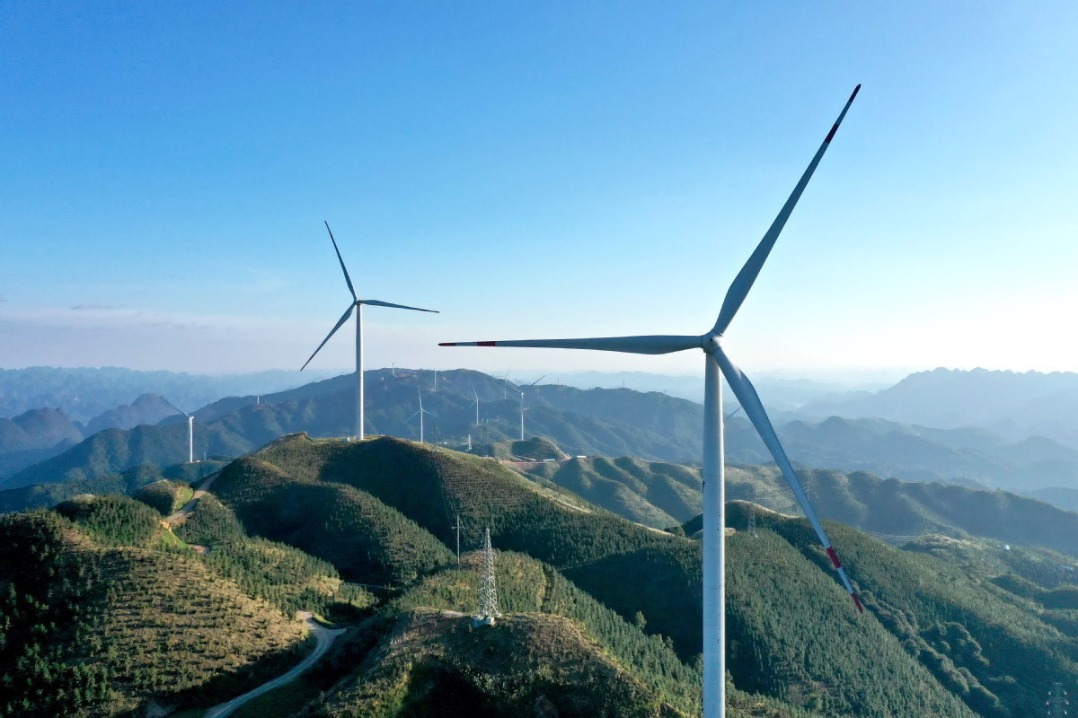
Years later (2012-2015) I would serve drafting "Ecological Civilization", a comprehensive environmental policy that would call for technology applications toward evolving a smart, green and blue national infrastructure to tackle climate crisis. By scaling green energy technologies, China has been able to reduce costs making the green alternative a mainstream application that can be applied to energy systems worldwide. Global cooperation is needed in this area more than ever if we want to have a planet to live on. So what happened to global cooperation?
Unfortunately these past years have been discordant with decoupling, de-risking and the general dismantling of systems that many of us have spent a career lifetime in working for, in the interest of solving global problems rather than creating them.
It is heartening that President Xi Jinping is visiting the US to attend the APEC meeting, more significantly, to meet with counterpart US President Joe Biden. It is time for direct discourse to solve issues of mutual concern rather than mutual guessing and posturing. This meeting offers the possibility to establish a new reset for China-US relations. Many of us are hopeful.
For many of us who have lived through the years of building positive China-US relations, this offers a glimmer of optimism after a period of foreboding concern. The message is that pragmatism must override ideology. If we are not approaching the challenges of climate, poverty, inequality and conflict with pragmatism, then we will not have a world to live on. Then what use is ideology?
This bilateral meeting occurs on the stage of the APEC meeting. Asia-Pacific is the most dynamic area of the world today in terms of economics, culture and creativity. The two most powerful economic players in this equation are China and the US. If both countries can work together rationally and intelligently to solve challenges and achieve goals shared by the region, then it is in the interest of all, and the Asia-Pacific region will thrive in the years ahead in a way that no other region has in the history of mankind. For many of us committed to this region, we have been waiting for this reset for a long time. Now it is time to prioritize pragmatism over ideology.
The author is a US documentary filmmaker and a senior international fellow at the Center for China and Globalization. The views don't necessarily reflect those of China Daily.
If you have a specific expertise, or would like to share your thought about our stories, then send us your writings at opinion@chinadaily.com.cn or comment@chinadaily.com.cn.