Part-time jobs, not subsidies, can better help needy students







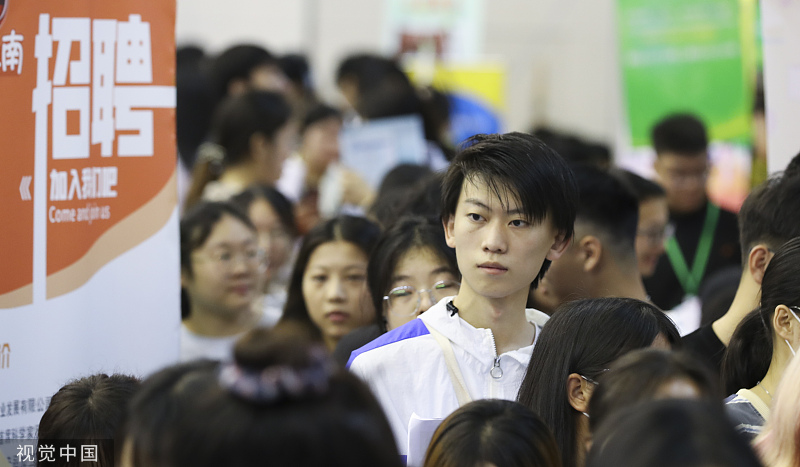
Recent posts in Zhongshan University's online forum — revealing that a financially struggling student was reportedly using a full set of Apple products and even buying expensive concert tickets — have sparked a controversy.
Observing the student's spending habits and lack of frugality in daily life, the university decided to discontinue the grants the student was getting.
Such grants and subsidies play a crucial role in China's higher education system, providing essential financial support to those facing difficulties in financing their education. Yet there is room for improvement in the subsidy system.
Just by examining the existing student aid system, it becomes apparent that there are certain flaws. Linking financial aid to the living conditions and academic performance of university students inevitably heightens their mental stress. Those facing economic challenges and also relatively lower academic achievements find themselves under dual pressure.
Furthermore, by predominantly focusing on the family's economic status, the authorities setting the criteria for distributing student aid neglect the individual efforts of college students. This approach could result in some students lacking the motivation to improve their life situations on their own. College students are adults and should take responsibility for their own lives. Family financial trouble does not equate to student poverty; some students, despite coming from financially disadvantaged backgrounds, overcome obstacles through part-time work or utilize their skills to engage in various business activities, achieving financial independence ahead of time.
Making financial difficulties a condition for receiving financial aid not only induces feelings of inferiority in students but also discourages them from making personal efforts. Financial aid should only be provided when students are unable to generate sufficient income through their own labor to address living difficulties.
Third, regarding the procedure for distributing student aid, there is room for improvement. Currently, higher education institutions mainly use a competitive evaluation approach to select and provide financial aid to the most financially challenged students among those facing difficulties. This practice not only compromises the personal privacy of students, but also fosters a sense of rivalry, undermining cooperation and unity among them. The distribution of financial aid should involve a self-application process, where students declare their individual circumstances, and the aid is then allocated by the funding committee based on urgency and severity. It's crucial to note that financial aid is distinct from student loans; it does not require repayment. Therefore, when distributing financial aid, thorough tracking and investigation must be conducted to ensure that the aid genuinely supports students in need.
Fourth, part-time work-study programs can effectively address the practical difficulties faced by college students. For those encountering financial challenges, offering part-time work opportunities allows them to earn income and cover their living expenses through labor. This form of support not only cultivates a strong work ethic in students, encouraging them to resolve their own financial difficulties, but also helps reduce the operational costs of higher education institutions.
In the ongoing reform of China's higher education student aid system, two key points must be emphasized.
First, distinguishing between financially challenged students and those from impoverished families by shifting from family investigations to making inquiries about students' living conditions. This approach would help prevent the occurrence of perceived family discrimination. Second, immediately ceasing activities related to selecting so-called impoverished college students and establishing a highly organized and disciplined funding committee to conduct confidential investigations into students' personal situations. This would ensure the protection of students' privacy and guarantee that students receive assistance with dignity.
The educational administrative authorities can establish student aid contracts, mandating that students must truthfully declare their personal income situation. In the event of a false declaration or if a student alters his living conditions himself, the aid distribution can be terminated prematurely in accordance with the terms of the contract.
The author is a professor of law at the Zhongnan University of Economics and Law. The views don't necessarily reflect those of China Daily.
If you have a specific expertise, or would like to share your thought about our stories, then send us your writings at opinion@chinadaily.com.cn or comment@chinadaily.com.cn.