US' turn to protectionism in EV sector will backfire







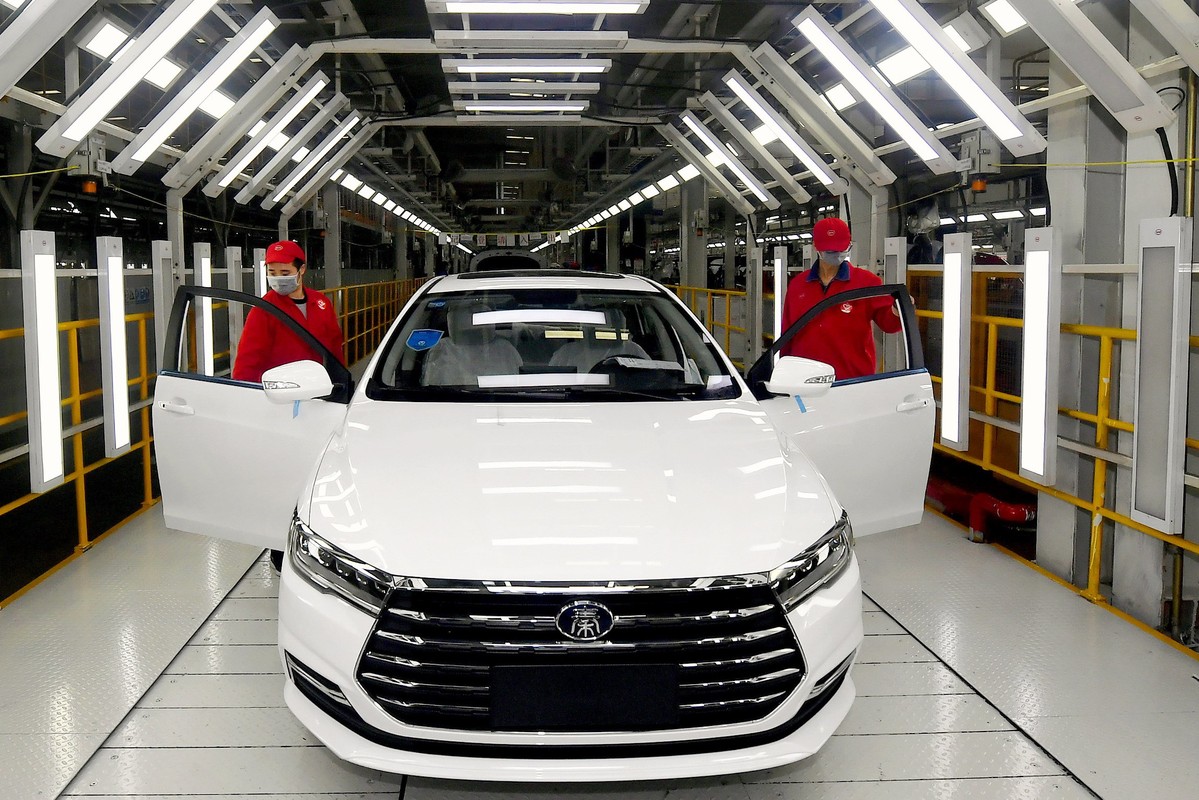
The recent push by the US government to regulate the domestic supply chain requirements for electric vehicles highlights a short-sighted policy approach that is likely to backfire. While aiming to curb China's dominance in strategic industries, these protectionist measures will significantly hamper America's competitiveness in this pivotal sector and exacerbate ongoing challenges. A cooperative strategy leveraging the strengths of both economies would serve long-term interests better than isolationism.
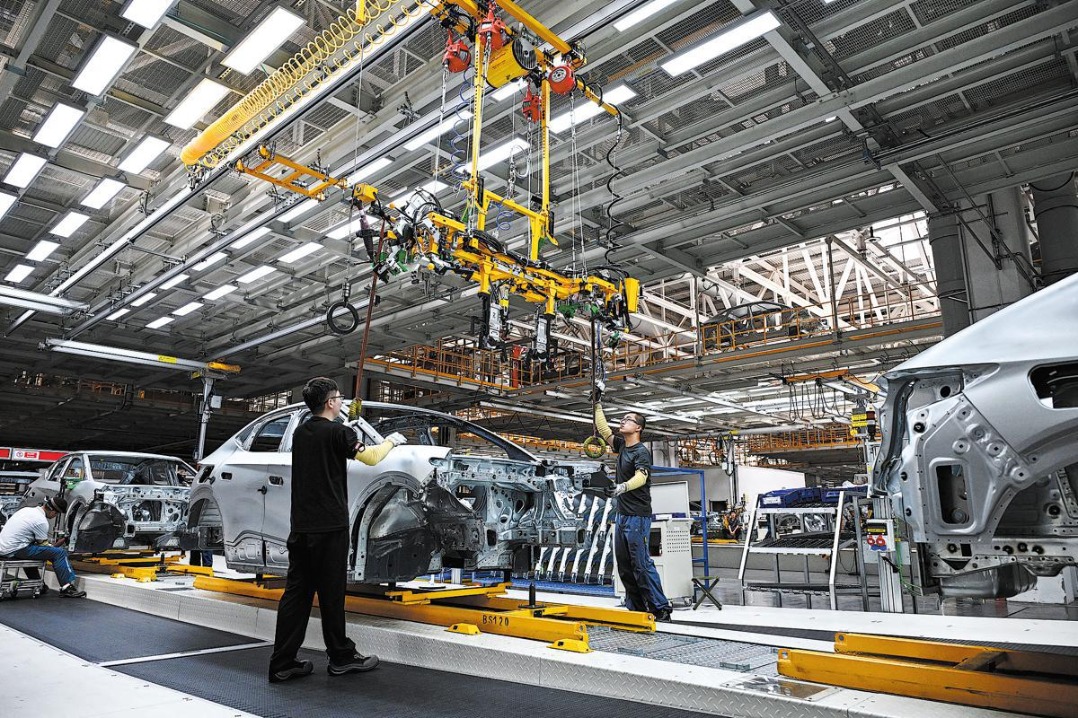
To begin, restricting collaborations with Chinese partners severely reduces the scale and speed at which American automakers can transition to electric. They were counting on China's sizable manufacturing base and technological advancement to help transition more quickly. However, limited access to affordable global supply networks will jack up costs, hurting margins and production capacity growth. At a time when scaling up is crucial, this self-imposed handicap leaves domestic producers lagging foreign rivals.
Further, the sector is a vital job generator for the United States. With collaborations halted, outsourcing and offshoring of components may accelerate, which risks weakening America's strong industrial foundation, exacerbating long-term trends of deindustrialization. The domestic industry faces significant disruption as existing investments are rendered obsolete or untenable. High-paying manufacturing jobs would shift overseas, dealing a double blow to the economy.
Building self-sufficiency in electric vehicle supply chains from scratch within a compressed time-frame is also implausible. Complex global supply networks take decades to establish organically. An insular approach shields from external capabilities and delays the accumulation of competitive strengths. It is unrealistic to expect the US industry and workforce to spontaneously replicate foreign suppliers' efficiency. Delays in building scaled production undermine competitiveness versus fast-moving rivals.
Rather than isolation, multilateral cooperation maximizes advantages for all parties. China's massive production capability and investment in innovation benefit consumers worldwide. For its part, America brings best-in-class research, financing, and a large market. Strategic partnerships leveraging complementary strengths can help expedite the global energy transition. Both countries gain by collaborating to establish common standards and transparent rules for fair competition.
There are more constructive ways forward than trade wars and protectionism. Strategic independence requires joint efforts, not severing mutually-beneficial ties. A balanced, long-term oriented approach integrating trade, investment, technology and workforce development policies holds greater promise for bolstering America's standing in vital industries of the future. Cooperation, not confrontation, with competitive major powers serves economic and environmental interests best.
There is a Chinese idiom called "Yin Zhen Zhi Ke", which means "to quench one's thirst with poisoned wine". The United States' actions can be seen as a new example of it.
Xu Ying is a Beijing-based commentator. The article presented is solely the opinion of the author and does not necessarily represent the views of China Daily.
If you have a specific expertise, or would like to share your thought about our stories, then send us your writings at opinion@chinadaily.com.cn or comment@chinadaily.com.cn.