Education funds need to be spent on improving teaching quality







I have made it a habit to visit a couple of university campuses when traveling to other Chinese cities. While enjoying the beautiful sceneries and artistic architecture free of charge, I can't help comparing today's campuses with those of my university years.
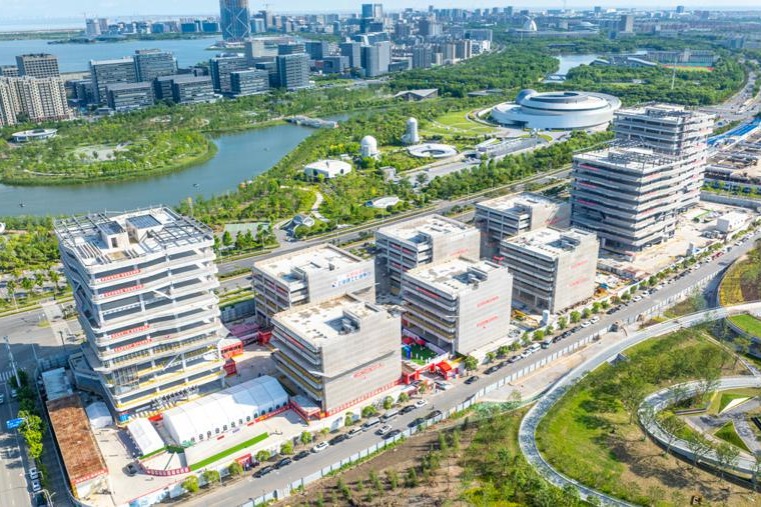
Campuses today are mostly huge — so big that students need bicycles to shuttle between different departments and the administrative building — and dotted with gorgeous sculptures, beautiful lakes, gardens, lawns, and forested areas. Many teaching buildings are unique, designed by renowned architects.
While enjoying all these, I visualize my campus of 45 years ago — a campus with one six-story teaching building, two four-story dormitory buildings, an auditorium and a playground.
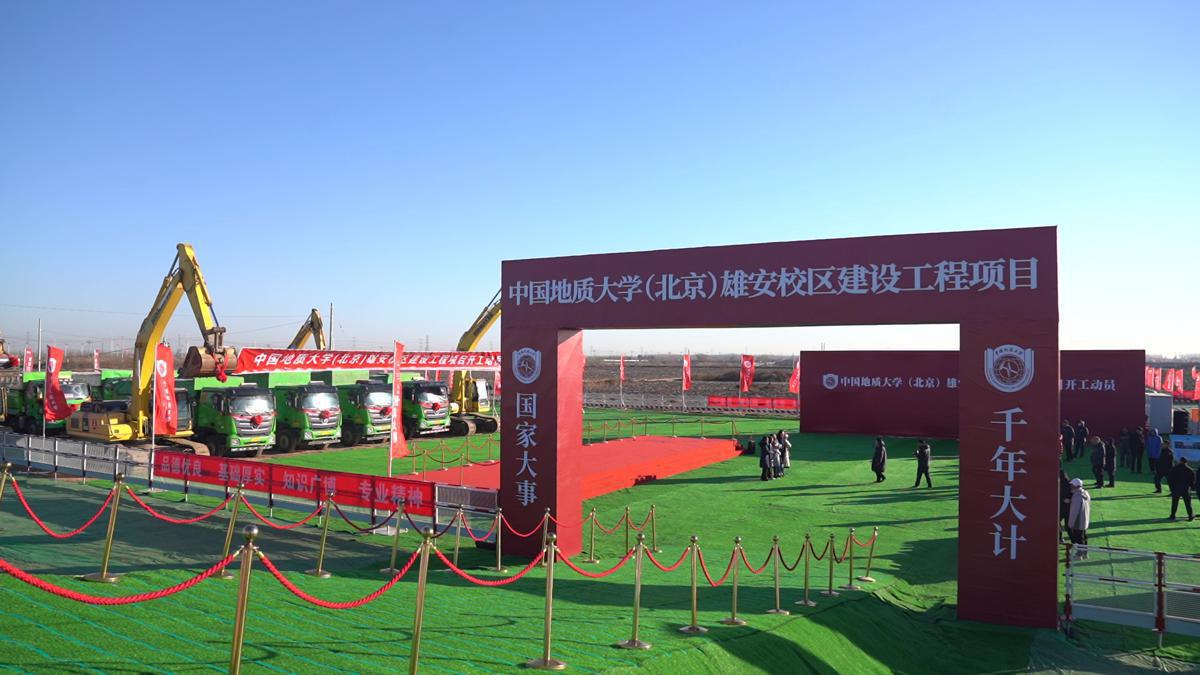
Times have changed so have campuses. With governments at different levels continuously investing funds in education over the past decades, university campuses have expanded by up to ten times. When there is no more room for expansion at their existing location, some departments are shifted to a new campus at another place or the entire campus is moved to a new location in the suburbs. As a result, most major cities now have one or two "university towns" like Shahe in Beijing, Songjiang in Shanghai and Chang'an in Xi'an.
The expansion of campuses has also been necessitated by the ever-increasing number of students enrolling in universities. When I sat for the college entrance examination together with nearly 6 million other students in 1977, only 270,000 youngsters were lucky enough to enroll in colleges. For the past few years now, higher education institutions have been enrolling more than 10 million new students every year, with about 60 percent of examinees getting admission.
Behind the increase in the size of campuses and number of new admissions is the huge government investment in education. The State Council, China's Cabinet, recently announced that investment in education in 2022 reached 6.13 trillion yuan ($858.06 billion), up 5.97 percent year-on-year.
Despite the current economic difficulties, investment in education will likely keep increasing because in 2013 the national education policy mandated that "education investment make up more than 4 percent of GDP".
The ever-increasing investment has improved the world's largest educational system — China now has about 290 million students studying in more than 500,000 schools and universities. With more than half of the funds injected into compulsory education — 12 years in developed areas and nine years in less-developed, rural areas — primary and high schools are now equipped with up-to-date teaching facilities and better-qualified faculties. Even schools in remote, mountainous areas have been providing free boarding and/or free lunch for students.
I am a bit envious of today's students for the education facilities they are provided with. During my college days, students of two classes had to use one classroom — one in the morning, the other in the afternoon — while a bench for two had to be shared by three students because schools then didn't have enough rooms and benches to accommodate all the students in one session, morning or afternoon. But when I see today's students toiling with their heavy homework and attending numerous after-school courses, I feel lucky to have escaped the ordeal. I barely have any memory of doing homework during my primary school years.
Despite being fascinated by the beautiful sceneries and fantastic buildings on campuses, I sometimes ask myself if investments in such things are worth it, especially when teaching quality in some universities has much room for improvement.
In 2022, for the first time in decades, China witnessed negative population growth, a trend that is likely to continue. That means the number of students entering schools and universities will keep shrinking from now on.
I will keep visiting universities to enjoy the beautiful sceneries and admire the architecture despite the increasing difficulty in doing so because of entry restrictions imposed by almost all universities due to various reasons.
But efforts should be made to improve teaching quality instead of building humungous campuses and/or beautifying their outward appearance. Investments will be worthwhile only when they are spent on recruiting or paying talented teachers, improving teaching quality, imparting skills and education to students, purchasing equipment for scientific research and/or supporting innovative projects.

The author is former deputy editor-in-chief of China Daily.
kangbing@chinadaily.com.cn