Qingdao's key moves keep it clean, green







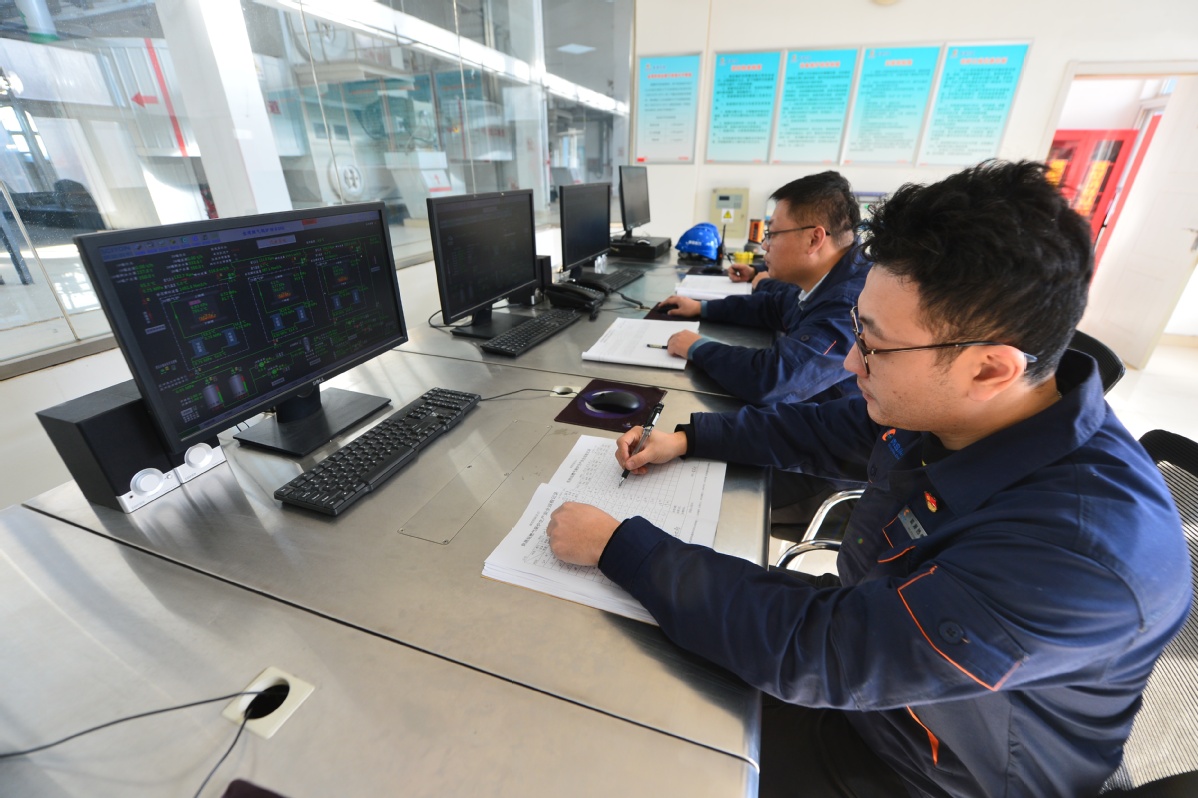
According to Xu, switching to natural gas as a heating source has reduced pollution on multiple fronts.
For instance, natural gas is transported by pipeline, which means it seldom causes pollution from transportation.
The new boilers, which adopt a low nitrogen-based combustion method, no longer need external flue gas treatment facilities. Besides, the natural gas heating plants are also in harmony with the surrounding environment, unlike coal-fired heating plants that discharge white smoke.
After the coal-to-gas conversion revamp, the Jinze heating station in Shibei district can meet household heating demand from within 8 million square meters.
At the same time, the vacant coal storage facility has been turned into a community cultural and sports center with an area of more than 10,000 square meters, becoming a good place for community residents to refresh and exercise.
Ding Ruiping, deputy general manager of Qingdao Energy, said that the company's heating supply capability has surged more than 40 percent, thanks to the implementation of the project.
In addition, about 380 mu (25.3 hectares) of land has been saved from the renovation of the heating plants for other more productive uses.
A resident surnamed Han, who lives near the heating plant in Shibei district, said the coal-to-natural gas switching project has greatly benefited his neighborhood, as they no longer have to suffer from dust and smoke from the coal-fired unit.
Apart from natural gas, the city has also made use of other new and clean energies, mostly renewables like distributed photovoltaics and ocean thermal energy.
"To reduce carbon emissions, Qingdao needed to phase out coal-fired boilers and a centralized heating network and switch to a distributed system relying on natural gas and other renewable energies for heating," said Lu Lanlan, a senior project official of ADB.
To achieve this, ADB has facilitated the sharing of experiences between the Qingdao and Swedish industry associations in heating and cooling, Lu said.
The project design has fully taken into consideration that a single clean energy source alone cannot meet the growing heat demand in Qingdao, nor achieve overall low-carbon transformation of the heating system while the city phases out its coal-fired power plants.
Therefore, a "multienergy complementarity" approach — a combination of multiple clean and renewable energies — has become the core aspect in promoting a low-carbon transformation of Qingdao's heating system, she added.
For example, the Qingdao Olympic Sailing Center, a community of 10 buildings, has achieved zero CO2 emissions by improving energy efficiency, phasing out fossil fuels, reducing the use of natural gas, and increasing the use of renewable energies.
The distributive photovoltaic facilities on the roof of the Qingdao International Convention Center, part of the Olympic sailing center, not only generate power to meet demand from the convention center, but are also able to provide electricity to the Qingdao power grid.
Their average annual power generation is 760,000 kilowatt-hours, saving 224 tons of standard coal and reducing carbon dioxide emissions by 580 tons per year.
Apart from common renewable energy sources like solar photovoltaics and wind energy, the center also makes good use of clean energy technologies to heat or cool the buildings, such as industrial waste heat recovery and seawater source heat pumps.
The center can save 3.03 million kWh of electricity, 22,000 gigajoules of heat, and 5,500 standard cubic meters of natural gas every year, therefore slashing 8,663 tons of carbon emissions.
Wei Qingpeng, an associate professor at the school of architecture at Tsinghua University, said that buildings account for about 21.7 percent of China's energy consumption, and Qingdao's "multienergy complementarity" approach for heating and energy supply has accumulated valuable experience in developing an energy model centered on new energy sources.
liuzhihua@chinadaily.com.cn