China remains a powerhouse of global economy







The dream of every developing country is to eradicate poverty and to achieve a high GDP economic growth rate. As simple and obvious as these two objectives might appear, the fact is that in most countries of the world, in both academia and policy-making circles, there are widely diverging positions on the issue.
Should economic growth take priority, relegating poverty reduction policies when a high level of per capita income becomes a reality? Is there a causality relationship between economic growth and poverty reduction? If so, does economic growth per se lead to poverty reduction, rendering the correct trickle-down approach? If poverty reduction is given priority, will that help or hinder economic growth?
China did not dwell too much on these issues, nor did it wait for agreements on the issue. With its unbounded pragmatism and distaste for ideological dogmas, China, under Deng Xiaoping's leadership, decided to meet the two challenges at once with extraordinary success.
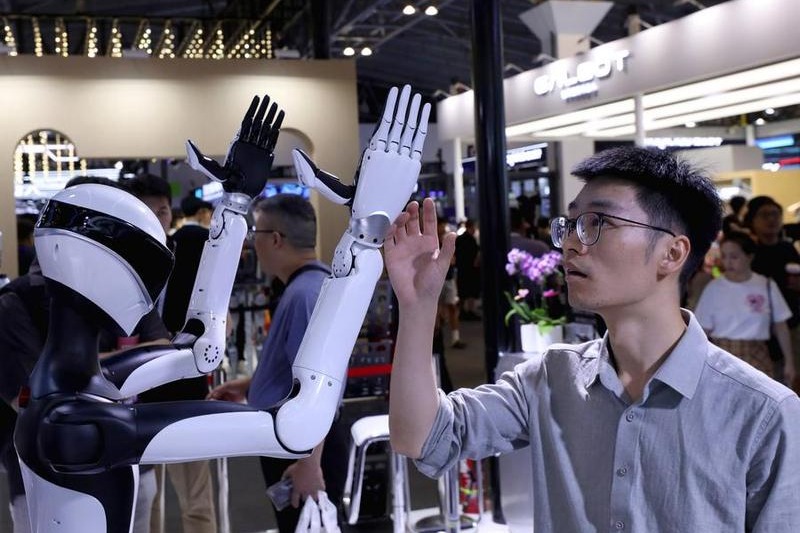
China's economy grew at an average rate of about 10 percent per year for four decades, which allowed it to lift more than 800 million people out of extreme poverty. Its economy became the industrial powerhouse of the world and its mastering of advanced technologies, either adopting from other countries or created locally, generated a substantial competitive edge vis-à-vis both the developed Western economies and the Global South.
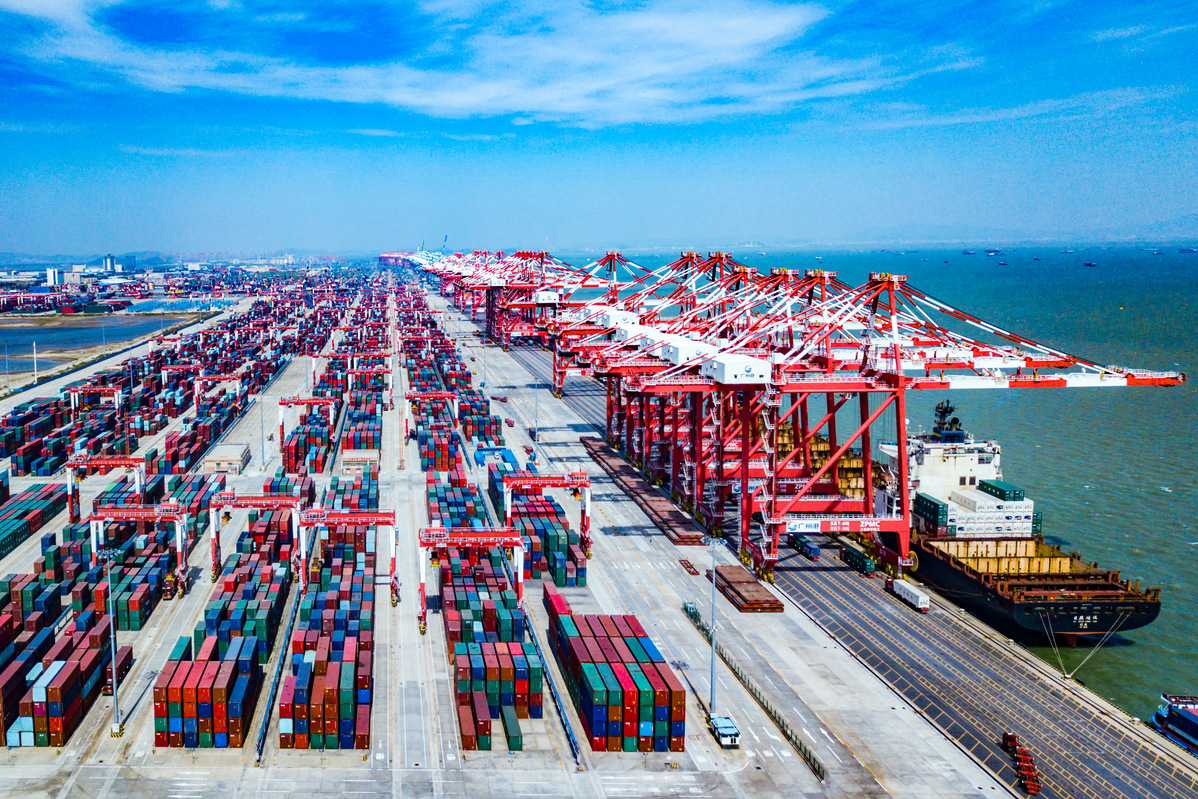
The reaction of some countries, the same ones that have preached free trade almost as if it was a religion, to the point of imposing them on many developing countries, has been to instigate trade wars against China. So far, the impact of those wars has been feeble, as China continues to be competitive in world trade.
Yet the quality development which China's top leader has called for might be the best answer to a potential enhancement of trade protectionism against China. Never mind the intensity of trade obstruction measures, if the price, technological quality and values (for example, sustainability) of Chinese products continue to be a magnet for consumers and businesses across the world, there is little harm that geopolitical protectionism can cause to the Chinese economy.
Toward that path, China should feel optimistic, since it registers optimal conditions to keep the economy growing at a faster pace than most economies in the world and to compete with the advantages of quality development. It has big trade surplus and substantial foreign reserves. This wide room for maneuvering is accompanied by the high rate of household savings: 44 percent of disposable income, more than double the corresponding ratio for Western economies.
Therefore, China not only wants to improve the quality and increase the quantity of investment and the pace of capital accumulation; it also has the macroeconomic means to proceed without fear of trade deficit, a payment crisis or an inflationary outburst.
At any rate, unlike most emerging economies China tallies a large domestic market, capable of matching up any consequences of anti-Chinese export policies in other countries. Given the high rate of household savings, demand can be boosted even without increasing government expenditure.
And since the Chinese government's debt is lower than 60 percent of GDP, it has enough room for increasing public expenditure in order to boost demand. This is a luxury few countries can afford given the high ratio of government debt to GDP. For instance, in the United States, the corresponding ratio is 122 percent and in Japan 261 percent, according to the IMF. The ratios for other Western developed economies are similarly high. Perhaps the exception is Germany, whose debt ratio is only 66 percent.
China has already won the favor of global markets as far as high-tech and environmentally friendly products are concerned. A quarter of China's manufactured exports are high-tech products. China accounts for about 80 percent of the global market for solar panels and more than 60 percent of wind energy production. Given that environmental certifications are becoming an imperative in sale pitching, sustainable energy is of paramount importance.
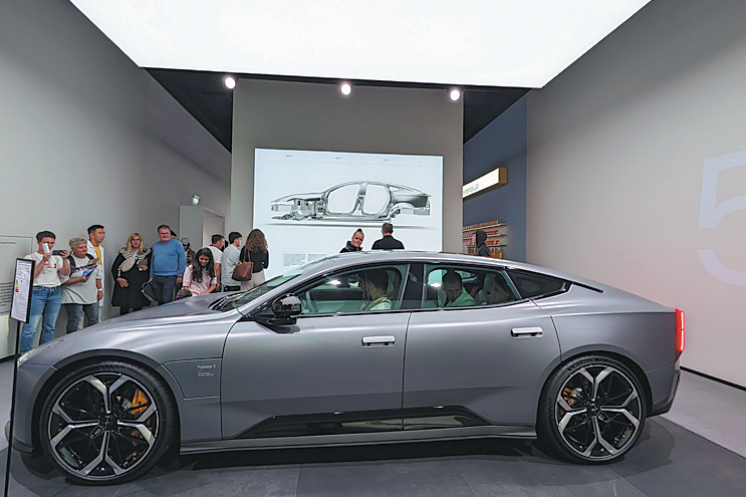
Importantly, China is also the largest manufacturer of electric vehicles.
These and other indicators clearly position China in the pole position in any race for quality production. But probably the most important reason for being optimistic about the outcome of that race is the fact that the Chinese authorities are not attached to any ideological recipes.
Since the launch of reform and opening-up in the late 1970s, the Chinese leadership has dynamically adjusted policies according to whatever is needed to maintain fast economic growth, sharpen the country's competitive edge in the world market, promote technological modernization and reduce poverty. China does not adhere to any ideological or economic textbook or clichés. This flexibility contrasts with the self-imposed ideological pomposity that shapes policymaking debates in most Western economies, not only on economic decisions but also foreign policy.
The US is the world's largest economy and there is much to admire about some of its achievements. But China's strength is important for balancing the world domineering ambitions of US politicians. Therefore, the Global South would benefit if an optimistic and visionary China emerges from the annual sessions of the National People's Congress and the National Committee of the Chinese People's Political Consultative Conference — a China that will continue to promote global peace, prosperity and sustainability.
The author is a professor at Instituto Empresarial University in Spain, a senior fellow at Beijing Club for International Dialogue and was special advisor to the president of Costa Rica from 2018-2022.
The views don't necessarily represent those of China Daily.
If you have a specific expertise, or would like to share your thought about our stories, then send us your writings at opinion@chinadaily.com.cn, and comment@chinadaily.com.cn.