Florida law blocking Chinese talent faces mounting criticism







A Florida law barring public universities from hiring researchers from China is facing mounting criticism from academics and advocates for its potential to cripple scientific progress in the United States.
The National Postdoctoral Association (NPA), a leading advocate for postdoctoral researchers (postdocs) in the US, has recently joined the fight against the law, advocating for the freedom to hire top talent regardless of national origin.
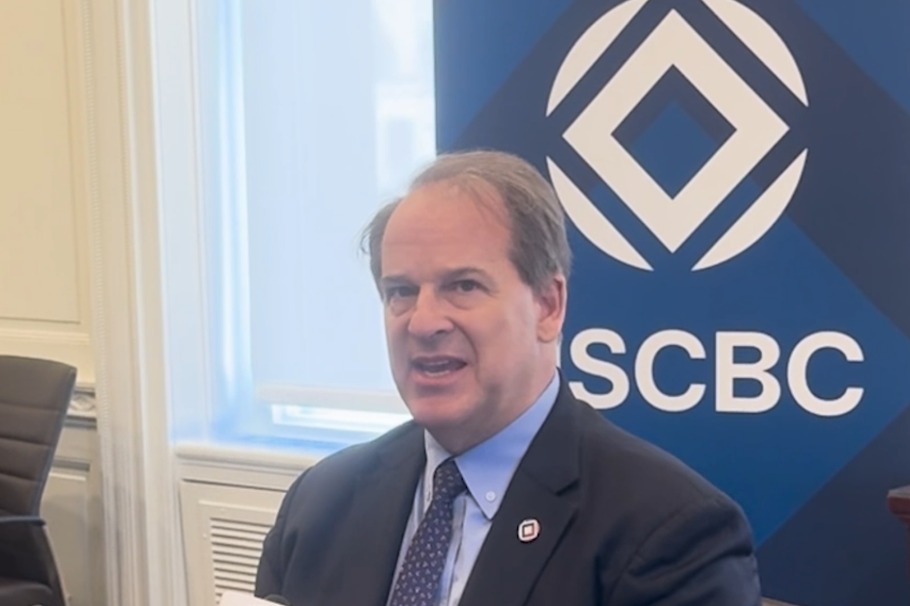
"We oppose any bill that bans international students or postdocs from studying or working at public universities. This approach benefits no one and harms both the individual seeking to come to the US and our national research efforts," Thomas Kimbis,?executive director and CEO of?NPA, told China Daily.?
The law, SB 846, took effect on July 1, 2023. It prohibits Florida's 12 public colleges and universities from taking money from or partnering with entities in China and six other "countries of concern" -- Russia, Cuba, Iran, North Korea, Syria and Venezuela.
The list of banned interactions includes offering anyone living in one of those countries a contract to do research.
"The bill, intentionally or not, can cause a significant slowdown in the process of becoming a paid grad student or postdoc at a variety of state institutions," said Kimbis.
"Postdocs in particular already face a difficult immigration?journey and don't need to have any additional delays that are accompanied?by a lack of clarity of process," he added.
Kimbis emphasized the crucial role of scientists born outside the US in driving global innovation as well as US economic, societal and health advancement.
"Nearly 60 percent of our postdoc population comes from outside the US -- a figure that is steadily increasing," he said, adding that this group plays a significant role in advancing research and development across various disciplines.
Kimbis also expressed concerns about a potential brain drain by turning away the brightest minds – "a lost opportunity for innovation that could threaten the very national security that SB 846 purports to protect", he said.
Faculty members at the University of Florida (UF), which boasts the state's largest research portfolio, have been most vocal in opposition. More than 350 have signed a petition since December urging the university to disregard nationality when recruiting top graduate students.
They warn that "failure to act swiftly" will result in losing exceptional talent to other universities and cause "irreversible damage".
The law applies to all academic interactions with China and the other six countries. Exceptions are allowed only when the Board of Governors, which oversees higher education in the state, grants a waiver on a case-by-case basis. But it isn’t clear how it would be implemented.
The law's ambiguity regarding implementation has left faculty members in a state of confusion. Professors across various disciplines at UF have voiced their concerns, as shown in their comments on the petition’s endorsement form.
Fred Gmitter, a professor of horticultural sciences, slammed the law as "counterproductive" and an attack on academic freedom.
"Excessive political interference in the affairs of a public university is counterproductive and contrary to the fundamental concepts of academic freedom," he said, "This bill is dragging UF down, not lifting us up."
Emma MacKie, a professor of geological sciences, highlighted the detrimental impact on accessing international talent.
"China and Iran are powerhouse incubators for geological talent, with a disproportionate number of students studying geology and geophysics, especially in industry/applied geoscience topics," she said. "We cannot strive to be a top ten department if we can't access or collaborate with a significant fraction of the world's top geoscientists," she continued.
The UF has a significant share of international graduate students from China, and the law would have "an outsized impact" on these communities, said the Asian-American Scholar Forum. It warned that hindering collaboration with these communities would have a chilling effect on open science and could harm scientific innovation and leadership in both Florida and the United States as a whole.