No deflation in China but more efforts needed to defuse risks







BEIJING -- China has not slid into deflation, but more efforts will be exerted to defuse potential risks, lawmakers and political advisors have said during the annual sessions of China's national legislature and political advisory body.
"Deflation is often the result of long-term accumulation of structural problems in economic operation, not affirmed solely on one or two price indicators," said Huang Maoxing, a deputy to the 14th National People's Congress and vice-president of Fujian Academy of Social Sciences.
The view that deflation has occurred in China is completely misleading, he stressed.
Based on the economics, deflation mainly refers to continuous declines in prices and a downward trend in the money supply, usually accompanied by economic recession.
China's consumer price index, a main gauge of inflation, rose by 0.2 percent in 2023, in contrast with certain developed economies suffering from high inflation.
Deducting the markedly fluctuated prices of food and energy, the core CPI rose by 0.7 percent year-on-year in 2023, indicating overall stability in the supply and demand of industrial products and services, said Jin Li, a national political advisor and vice-president of Southern University of Science and Technology.
Moreover, China's CPI edged up 0.7 percent year-on-year in February, reversing a 0.8-percent decline in January, and went up 1 percent on a monthly basis, expanding by 0.7 percentage points from that in January, said the National Bureau of Statistics.
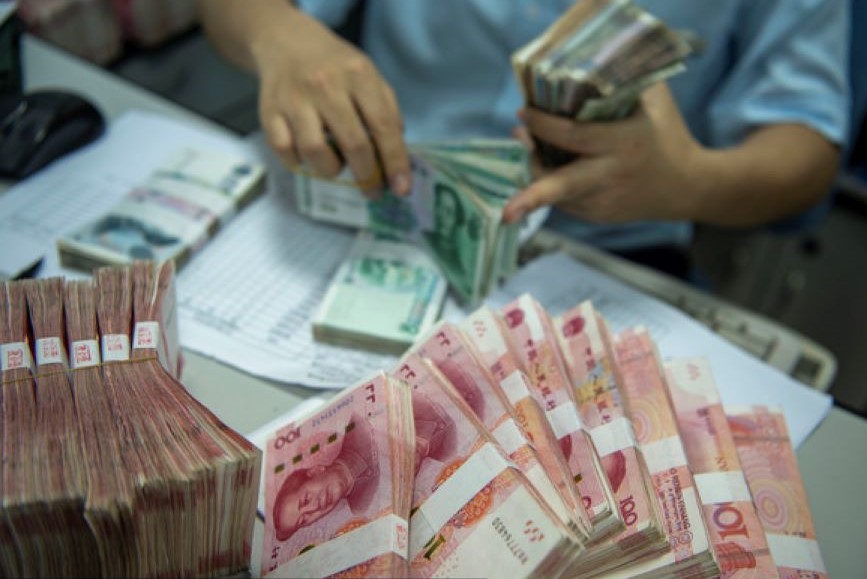
Referring to the money supply, the M2, a broad measure of money supply that covers cash in circulation and all deposits, climbed 8.7 percent year-on-year to 297.63 trillion yuan ($41.9 trillion) by the end of January, according to data from the People's Bank of China.
China's 2023 gross domestic product surpassed 126 trillion yuan, an increase of 5.2 percent, ranking it among the fastest-growing major economies in the world.
"We don't expect to see a general deflation trend in China," Gita Gopinath, first deputy managing director of the International Monetary Fund, told a press conference last November.
But prices do influence economic operation and daily life. The current low inflation rate in China is the result of multiple factors.
"After the stable transition of epidemic prevention and control, China's domestic production sees a fast recovery, logistics remain smooth, and the supply of products is sufficient, but demand is constrained by unstable expectations," said Xu Guangjian, vice-chairman of the Price Association of China.
He attributed the declines in prices largely to the time gap between the recovery of supply and demand, adding "it takes time."
Jin said that major issues like the Ukraine crisis have led to higher grain and energy prices in 2022, hence the relatively lower CPI increase in 2023 due to the high base. In addition, pork prices, a heavyweight in China's CPI calculation, have been declining due to ample supply and weak pork consumption, dragging down the CPI growth.
External factors also have an impact on prices in China. In response to high inflation, central banks of the United States and European countries rapidly and intensively adjusted their monetary policies.
The rapid and unexpected decline in inflation levels in developed economies has affected the price levels in China, said PBOC governor Pan Gongsheng.
Although weak CPI performance is deemed temporary, more work must be done to take precautions against deflation risks, and resolve the inadequacy of effective domestic demand and overcapacity in some industries, according to national lawmakers and political advisors.
"Maintaining a reasonable level of liquidity is an effective measure to prevent deflation risks," said Zeng Gang, director of the Shanghai Institution for Finance and Development.
He expects more effective demand in the real economy and stronger consumer and investment willingness as the government work aims at a steady decline in overall financing costs this year.
Ayhan Kose, deputy chief economist of the World Bank, stated that the policies adopted by China can enhance consumer confidence and boost consumption in the short term, and increase long-term economic growth potential through steadfast reforms.