Academic is logical in her proposal
Researcher calls for greater emphasis, especially in education, on promoting clarity of thought, Li Yingxue reports.







Famed fairy tale author Huang Zhenhuan, known under the pen name of "Two-tone Scenery" on social media platform Sina Weibo, where he has more than 7 million followers, recently took a course at the Expression Academy. Taught by debate expert Huang Chih-chung, the sessions helped to refine his communication skills.
Despite writing nearly 200 books and engaging in numerous signings and speeches, Huang Zhenhuan felt his day-to-day communication lacked finesse. He acknowledged that while he excelled in expressing himself in writing, the course taught him valuable techniques for persuading others in face-to-face interactions.
"Being proficient in expression solves many problems, helps adjust one's mindset, and is even useful for writing," he says.
"If I had learned these skills at a younger age, I might have avoided some detours, and I would be more clear-minded and happier."
In the past couple of years, classes focusing on communication skills for adults and critical thinking for teenagers have emerged as the fresh choice for many adults and parents. This shift reflects a growing demand for enhanced logic education.
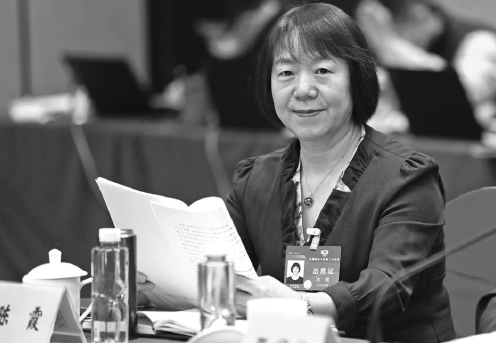
After years of research in philosophy and social sciences, Chen Xia, a member of the National Committee of the Chinese People's Political Consultative Conference, and researcher at the Institute of Philosophy of the Chinese Academy of Social Sciences, has come to recognize the vital importance of promoting modern logic.
According to her, understanding logic helps us avoid getting carried away by emotions or biases in discussions, leading to fewer conflicts and misunderstandings.
"Logic teaches us to reason and organize our thoughts in today's society. It prevents us from letting emotions or preconceived ideas cloud our judgment, which often leads to futile arguments," Chen says.
"Being logically literate enables us to draw conclusions from what we know, see beyond surface appearances, and develop essential skills that enhance understanding, aid professional development, foster innovation, and contribute to social harmony," she continues.
As a national political adviser focusing on Chinese philosophy, Chen has been focusing on building up the key aspects of Chinese philosophical and social sciences — the discipline, academic, and discourse systems.
Each year, she carefully crafts proposals after thorough research and reflection. Over the past two years, she's increasingly realized the importance of logic education for the progress of these fields. So, her recent proposals were centered around promoting it nationwide.
She says that the connection between the philosophical and social sciences and thinking is quite tight. She emphasizes that the core of this field lies in thinking patterns, and has been advocating for popularizing critical thinking education. Now, she's pushing even further for logic education, as she considers it fundamental.
During the two sessions last year, Chen proposed initiatives to spread logic education across all levels, from schools and universities, to the general public. She believes that modern logic should be widely embraced and applied in various areas, including technology, philosophy and social sciences, as well as by the general public, as it holds significant value in all these domains.
Last year, she proposed making logic education a fundamental part of every student's learning journey. Her plan includes teaching primary and secondary school students to recognize valid and invalid arguments, introducing concepts of logic in high school to improve critical thinking and writing skills, and making an introductory logic course covering essential traditional and modern logic principles mandatory in college.
Chen also suggested celebrating World Logic Day by teaching the public about logic. This would help people reason and argue effectively in daily life, fostering dialogue, resolving disputes, and supporting technological innovation and social development.
"Much of our communication is wasted when we're unsure about what we're saying. Developing a habit of organizing and reasoning can make what we mean much clearer," she says.
Logic is crucial to nurture harmonious relationships, she adds, noting its transition from natural to artificial language due to the clarity it brings amid disputes and misunderstandings.
In November 2019, UNESCO declared Jan 14 as World Logic Day during its 40th General Conference.
In a message to mark World Logic Day in 2020, UNESCO Director-General Audrey Azoulay highlighted the pervasive presence of logic in our daily lives. Whether using AI software, turning on a computer, or forming an argument, logic is ever-present and universally relevant.
Azoulay emphasized that logic has played a crucial role in the advancement of various fields such as science, engineering, cognitive psychology, linguistics and communication. It serves as a source of innovation and a catalyst for change.
In the 21st century, logic is more vital than ever, Azoulay said. Fields like computer science and information technology rely heavily on logical and algorithmic reasoning. Thus, logic is indispensable to our societies and economies, driving progress and innovation.
This year, Chen's proposal focuses on enhancing logic education in higher-education institutions.
"The 20th National Congress of the Communist Party of China emphasized the importance of strengthening basic research. Logic, as the science of inference, forms the foundation of knowledge systems and serves as a tool for establishing and refining all scientific knowledge systems. Human thinking inevitably involves logic, and it's the basis for discerning thoughts," Chen explains.
Her research revealed that nearly 70 percent of respondents identified the severe shortage of faculty as the main challenge facing logic education in higher-education institutions. Currently, only two universities offer undergraduate programs in logic, about 40 universities offer master's programs, and approximately 20 universities offer doctoral programs.
"This falls short of meeting the demands for logic education in higher education and the needs of national strategies and daily interactions," Chen says.
To address this gap, Chen proposes developing an educational system to enhance research literacy among students. She suggests introducing introductory and advanced courses and promoting interdisciplinary logic education.
"Universities play a crucial role in nurturing innovative talents, and popularizing logic education is essential to strengthening talent development," Chen emphasizes.
Chen argues that logic stands out for its ability to derive new knowledge from what's known.
"When we talk about innovation, it's not just about imagination; logic serves as a foundation," she explains. "Moreover, innovation requires seeing beyond surface appearances to grasp the essence of issues. Logic provides a structured approach. With logical training, we can uncover the core of problems and propose effective, innovative solutions."
Chen also stresses the importance of logic training for art students, which helps make their thinking more rigorous, strengthens their ability to articulate viewpoints powerfully and clearly, and boosts overall literacy.
"Fields like law, linguistics, and journalism rely heavily on logical thinking in both spoken and written communication," she adds.
She explains that logic has deep roots in ancient Chinese philosophy. For instance, Mohism, represented by books like the Mozi from the late Warring States Period (475-221 BC), delved into topics like how we know things, logic, and natural science, teaching people how to reason.
"In those days of lively philosophical debates, the Mohists stood out by organizing a set of rules to guide constructive discussion among different schools of thought," Chen says.
She believes that in today's age of advanced artificial intelligence, foundational skills are crucial. "Logic, in particular, is something everyone should have. Many times, relying solely on intuition can lead to judgments that don't align with the facts," she emphasizes.
Chen also points out that while some may naturally make judgments based on intuition, logic can be learned later in life. Mastering logical rules provides a stable foundation for decision-making, she says.





Today's Top News
- China, Russia vow to defend WWII legacy
- Japan will pay a heavy economic price if it pursues Takaichi's militant agenda
- French President Emmanuel Macron arrives in Beijing
- Cold wave, strong winds grip many parts of country
- Russia's visa-free policy to promote tourism
- Yuan poised for stronger global role