Rediscovering Chinese aesthetics
Hanfu experiences a revival in popularity, blending historical symbolism with contemporary fashion trends, igniting cultural appreciation and innovative designs, both in China and abroad, Meng Wenjie reports.







Beyond style
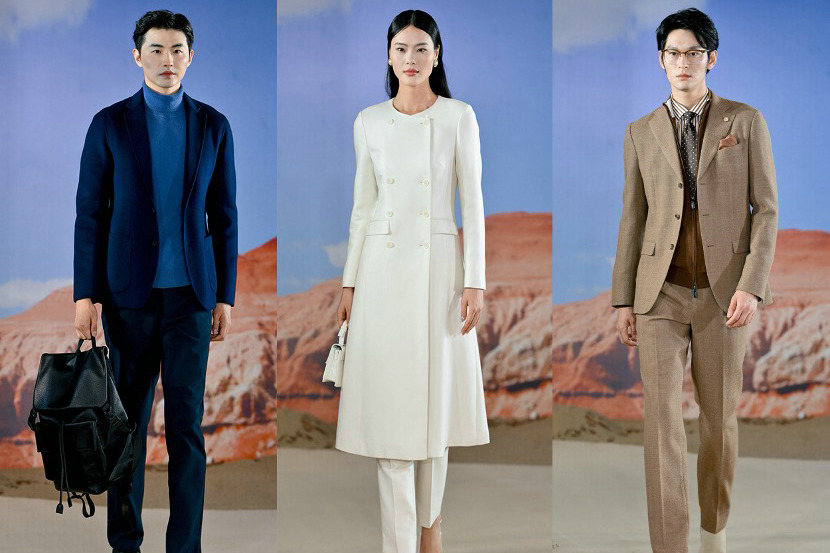
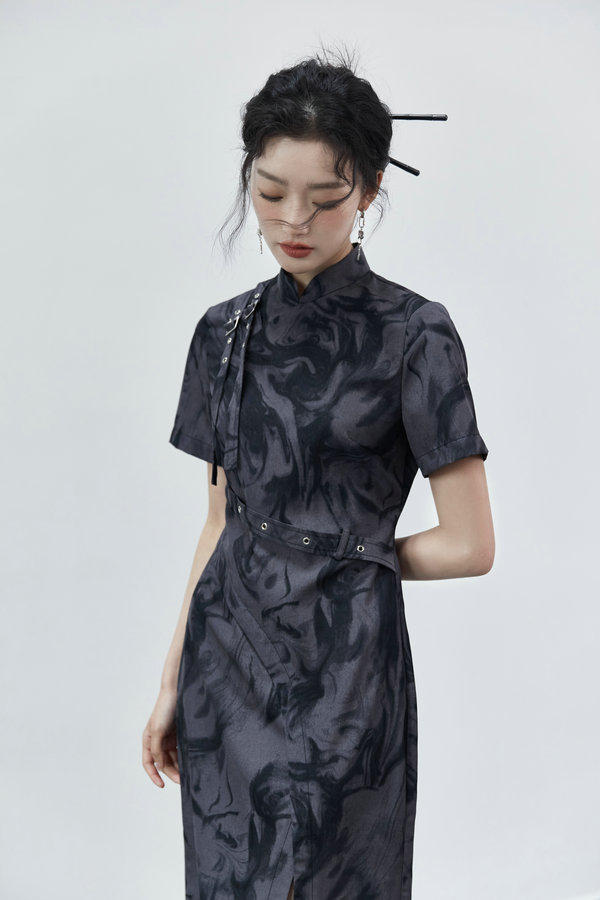
Sanmu (pseudonym), 33, is the founder and designer of INGKO, a women's clothing brand specializing in neo-Chinese style. Reflecting on the establishment of INGKO with his wife in 2019, Sanmu recalls that the prevalent Chinese-style clothing options in the market at the time were mostly hanfu or Zen-style attire favored by middle-aged and elderly customers, leaving a gap for young fashion brands with Chinese artistic flair.
"In recent years, hanfu has garnered increased attention and admiration from young people, laying a strong foundation for the contemporary appreciation of Chinese aesthetics among today's youth," said Sanmu.
He also noticed that since 2022, the neo-Chinese style has surged in popularity.
"Our suppliers, fabric merchants, and accessory providers have begun experiencing shortages, and there has been a noticeable growth in factories manufacturing related products," he said.
However, Sanmu took a distinctive approach with INGKO, aiming to capture the allure of Chinese women. For example, he believes qipao can be both elegant and cool, open to incorporating subtle punk or metallic elements into the design. "Why can't someone wear a qipao to a nightclub?" he thought.
Sanmu's design inspirations stem from heroines in films from his youth, such as Guan Qiaohong from Hidden Man, directed by Chinese filmmaker Jiang Wen. He fondly recalled the character's inspiration — a female assassin named Shi Jianqiao (1905-1979), who spent a decade in hiding to avenge her father's death by assassinating the warlord Sun Chuanfang (1885-1935) during the 1920s.
"These heroines embody a calm, decisive, and independent image of Chinese women, diverging from the gentle stereotype often portrayed in Western perceptions," he said.
Drawing from this inspiration, Sanmu and his wife conceived a women's clothing line called "Chushan" (Taking the Field) in early 2020.One promotional image that encapsulates the essence of this series features a woman in a black qipao, facing the camera with a clenched fist raised in salute.
"This concept incorporates the Taoist philosophy of chushan, signifying the notion of venturing out to combat evil, aiming to convey the chivalrous spirit and righteousness of Chinese women," he explained. "I hope to showcase contemporary cultural trends by blending traditional Chinese aesthetics into modern fashion, celebrating our ethnic culture."
Despite the growing hanfu trend in China and the efforts of enthusiasts and academics to promote it, there remains a general lack of understanding among people in other countries about Chinese traditional clothing.
According to Wang, he traveled to a dozen countries, including the UK, Germany, the US, and Mexico, while wearing hanfu. One memorable moment occurred at Big Ben, where international tourists were intrigued by his outfit and approached him. "They guessed about the origin of my clothes, suggesting countries like Japan, South Korea, and even Brunei, but none correctly identified that it's from China," Wang said.
He believed this misconception stemmed from the fact that people in other countries have few chances to see authentic hanfu items. "Even in museums like the British Museum, most clothing artifacts are from the Qing Dynasty (1644-1911), which is typically not categorized as hanfu," he said.
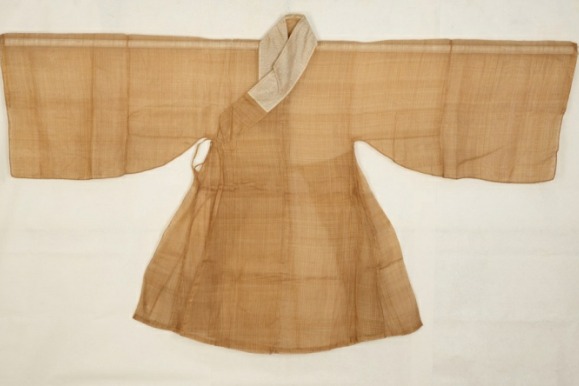
One potential solution might be to integrate hanfu into everyday wear. In fact, Zhou's students are currently exploring possibilities that preserve hanfu's cultural heritage while meeting the needs of everyday dress choices. Their innovative hanfu designs involve minimal alterations to the structure and focus on improving fabric and craftsmanship.
Zhou disclosed that they integrate materials such as organza or chiffon, along with contemporary decorative techniques, to give a traditional, refined look to the garments while also lowering costs and improving practicality. In contrast to traditional silk, cotton, and linen, modern fabrics usually offer affordability and ease of maintenance.
"Traditional Chinese clothing culture is essential for students to refine their aesthetic sensibilities and spark fresh design concepts, enabling them to integrate this knowledge into practical design," she said.
- Young people drawn increasingly to cherished traditions
- Dunhuang Academy's protection team work to ensure relics not lost to sands of time
- China Pavilion opens at Malta's first art biennale
- Revival of ancient arts: Craft blossoms in modern age
- Tianjin's intangible cultural heritage shines in Hong Kong