NPC deputy proposes more support for grassroots museums







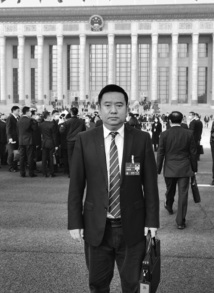
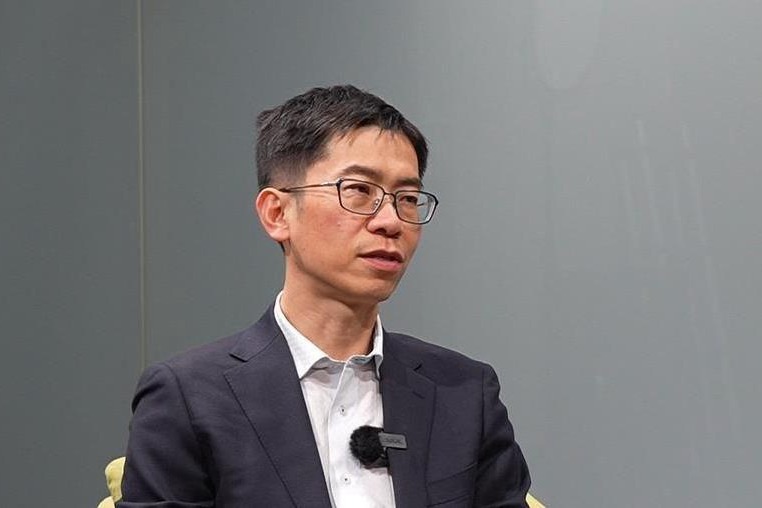
Grassroots museums should be given more support to improve their scientific research functionality and cultivation of staff, according to Guo Jin, a deputy to the National People's Congress of the second session of the 14th NPC.
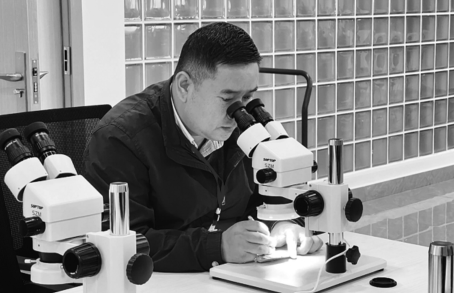
Guo, who is also deputy director of the Chengjiang Fossil Site Natural History Museum in Yuxi, Yunnan province, has been engaged in paleontology, especially the fossils found at Chengjiang, for nearly two decades. The site presents a complete record of an early Cambrian marine community. He participated in the application of the Chengjiang Fossil Site to become a UNESCO World Heritage Site in 2012, and the whole process of establishing the museum there.
He notes that the museum has upgraded from a place solely collecting and displaying artifacts to somewhere people can receive education. Such a transition, he says, requires an improvement in the museum's research and science popularization functionality.
As a result, last year he proposed the improvement of science popularization functionality in grassroots museums and, at this year's two sessions, proposed enhancements to their research functionality.
"Research is the source of a museum's dynamism. Without updated knowledge, a museum cannot design good exhibitions to attract visitors," says Guo.
He adds that demand for museums has changed over the years. "In the past, many people only visited museums to have fun, but now, they attend in order to learn something new. That requires better research to generate new knowledge for them to learn," says Guo.
To be successful in such an endeavor, it is also important to cultivate talented people, he says.
"It's very difficult for a grassroots museum to attract talent," says Guo. "The aggregation of talent is just like an inverted triangle. The higher-level museums can easily attract the best people since they offer more funding and other resources for scientific research, but at the grassroots level, it is much less appealing.
"As a result, I believe grassroots museums should look to cultivate the people they already have, and provide better conditions for their growth," he says.
Right now, due to the limited conditions at grassroots level museums, few people have the capacity or conditions to perform good research. "But, this year's Government Work Report mentions the need to develop a systematic protection of cultural relics, and that can only be achieved through systematic studies. This is what lower-level museums fail to complete," says Guo.
As a geology major at Kunming University of Science and Technology, Guo was attracted to Chengjiang fossils at a paleontological geology lesson in 2006. He was keen to learn about the fossils, which are the traces of one of the earliest groups of living beings in the world.
After graduation, he was recruited by the administrative committee of Chengjiang Fossil Site nature reserve to be engaged with protection and management of the site. At the same time, he was admitted to Yunnan University as a postgraduate student to learn more about Chengjiang fossils from his tutor Hou Xianguang, a researcher who discovered the fossil group in 1984.
In 2014, when the Chengjiang Fossil Site Natural History Museum was being planned, Guo participated in the whole process from fund collection, appearance and exhibition design to artifact collection and the museum's operation.
Guo says his ideas pertaining to grassroots museums were formed during this process.
When the museum was officially opened in 2020, despite being affected by the COVID-19 pandemic, it still attracted 2 million visits. "It has played an important role in the education of primary and middle school students. Many schools have organized extracurricular activities at our museum, which have been welcomed by the students," says Guo.
He also mentions that, as well as cultural heritage-themed museums, which enjoyed a huge spike in interest in the past few years, nature-themed museums are also very popular.
"Several years ago, culture-themed museums were distributed in an uneven way, mostly in first-tier cities like Beijing and Shanghai and coastal areas. But, in recent years, they have been built in less-developed cities and gained huge popularity among the wider public," says Guo.


Today's Top News
- Xi extends congratulations to 50th founding anniversary of Lao People's Democratic Republic
- Enhancing old-age finance prioritized
- French president to pay three-day state visit
- Strategy defines growth trajectory
- Opportunity to reconnect Europe with China
- Ryukyu's historical tributary ties with China highlighted