


A generational odyssey
For nearly a century, a single family has committed itself to bridging the Chinese and Greek cultures, Li Yingxue reports.







In China, there exists a remarkable family whose legacy stretches across three generations, all bound by a singular, noble pursuit: the deepening of cultural bonds between China and Greece.
This family's story was mentioned in an article by President Xi Jinping, published in the Greek newspaper Kathimerini (The Daily) on Nov 10,2019, during his visit to Greece.
The piece shines a light on the Luo family's unparalleled dedication to bridging two richly historical nations.
At the center of this saga is Luo Niansheng, a name now synonymous with the meticulous translation and passionate study of Greek literature and drama.
Alongside him, his son Luo Jinlin and granddaughter Luo Tong — imbued with the same fervent spirit of intellectual curiosity and cultural diplomacy — continue to weave this intergenerational tapestry.
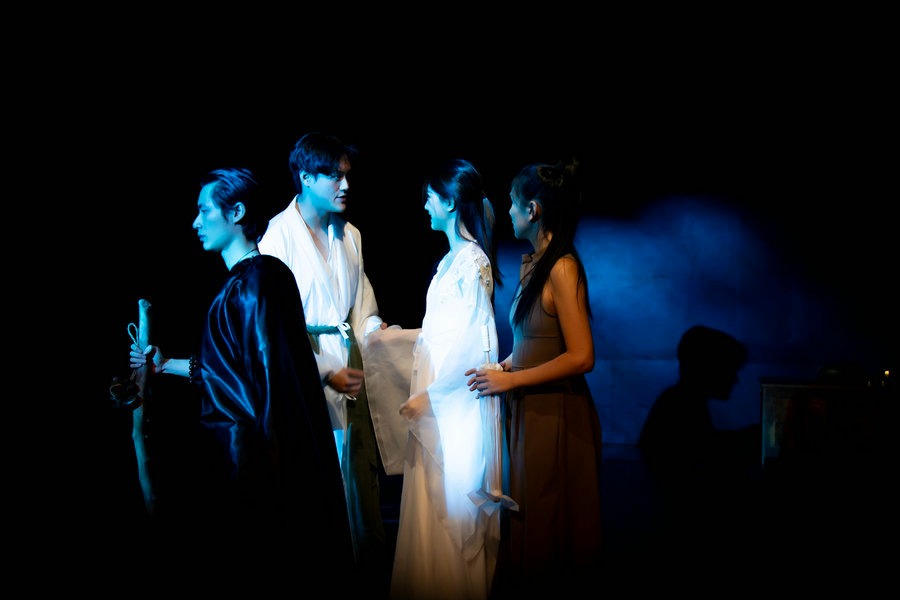
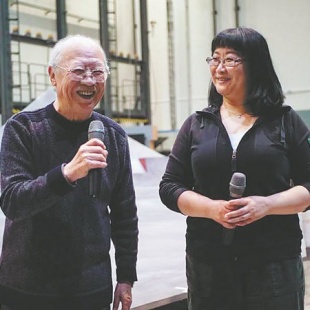
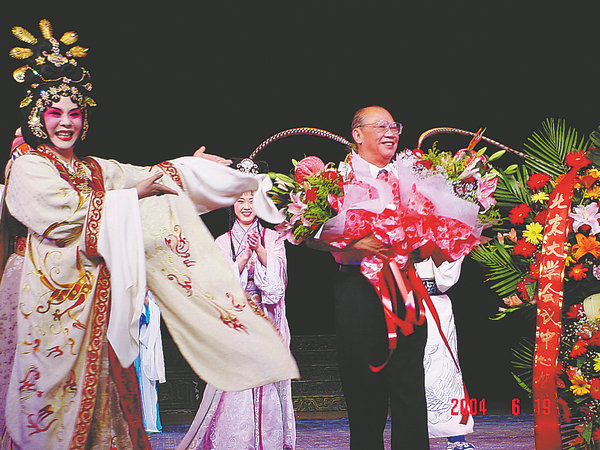
Since the 1980s, Luo Jinlin has revitalized Greek drama in China with his father's translations and innovative Chinese opera techniques. Luo Tong further bridges the two cultures by promoting Chinese studies in Greece, establishing its first private Chinese cultural center and interpreting for Chinese diplomats.
Together, they have not only contributed to the global appreciation of classical and contemporary Greek works, but also laid the foundation for a friendship between the two nations, built on the mutual respect and understanding of each other's cultural heritage.
Grandfather, the translator
Luo Niansheng was born in 1904 in a village in Weiyuan county, Sichuan province. He studied at Tsinghua University and later became a government-sponsored student in the United States. However, he decided to leave his studies and his imminent degree to pursue his passion for Greece, becoming the first Chinese student to do so.
Learning Greek was no easy task, with its complex grammar and alphabet, but Luo Niansheng's love for the language helped him master it in just a few years.
After completing his studies, he returned to Sichuan in 1936 to teach. Luo Jinlin recalls seeing his father immersed in books all day — teaching English during the day and translating Greek works at night.
Luo Niansheng's deep commitment to Greek literature was like a profound dialogue with ancient Greek civilization. "Opening books of Greek literature every morning is my greatest joy," he once said.
From publishing his first translation of the Greek tragedy, Iphigenia in Tauris, in 1936, until his death in 1990, he dedicated nearly his entire life to translating Greek literature.
He left behind nearly 10 million words in translations and papers, including over 50 ancient Greek literary and artistic works, such as Aristotle's Poetics, and Rhetoric, and a collection of Greek epigrams.
Even in his final days, he was translating Homer's epic The Iliad. Luo Niansheng once humorously commented on his potential epitaph: "If it must be written, let it be this — 'Devoting my life to translating Greek dramas was trouble enough.'"
In December 1987, the Academy of Athens gave Luo Niansheng its highest award for literature and art. A year later, the Panteion University of Social and Political Sciences gave him an Honorary Doctorate for his significant contributions to the study and dissemination of ancient Greek culture.
Luo Jinlin fondly recalls that his father's dedication to translating Greek literature was balanced with a humble lifestyle. His father's desk was a simple bed board, and he used the same wooden chair for decades. In his leisure time, he enjoyed walks in Zhongshan Park in Beijing and playing bridge with family and friends during holidays.
Despite returning from Western studies with progressive ideas, his father maintained traditional attire, even wearing an old cloth robe to teach in the 1960s when it was uncommon. "He never imposed his views on us; instead, he encouraged us to develop freely," Luo Jinlin says.