


Restoring the past
A couple at the Hubei Provincial Museum dedicate their lives to conserving China's cultural heritage through traditional craftsmanship and modern conservation methods.







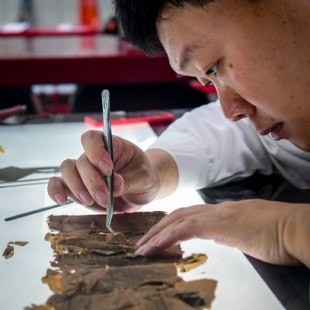
One of his most memorable projects was restoring an ancient painting by Huang Shen (1687-1772), a renowned painter of the Qing Dynasty (1644-1911). When Zhao first received the piece, he recognized the challenge it presented: it was over three meters high and severely damaged, making it nearly impossible to unfold. Given its significant economic and historical value, the restoration task was both daunting and crucial, ultimately taking three years to complete.
While restoration work is essential, it is not the end goal of relic protection. To ensure the long-term preservation of these antiques, preventive conservation is just as vital. This is the field that Zhang, as a cultural relics analyst, is currently exploring.
According to her, previously, many relics were in urgent need of restoration. However, as restoration efforts have advanced, preventive conservation — another aspect of relic preservation — has received increased attention.
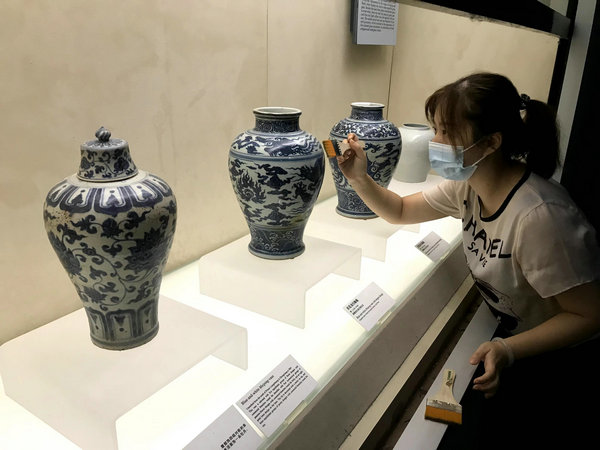
Zhang's daily work involves examining relics before restoration, assisting in making restoration plans, and evaluating completed restorations. Once the restored relics meet the required standards, she and her colleagues draft precautionary guidelines to ensure suitable environments for their proper storage.
For undamaged relics, Zhang closely monitors environmental conditions and implements proactive measures to prevent any potential damage. This includes regulating temperature, humidity, light exposure, and air pollutants.
"Different relics have varying humidity requirements," she explained. For example, bronze artifacts require humidity levels of 40 percent or lower, while lacquered wooden artifacts are best preserved at 60 to 70 percent humidity. Other materials, such as pottery and paintings, have less strict standards, ranging between 50 and 60 percent humidity.
"Whether it's before or after restoration, or for undamaged relics, preventive conservation work is continuous and essential," she said.
Zhang's work also includes relic digitization, preserving images, and creating audiovisual records of relics. "In doing so, even if the relics themselves disappear someday, future generations can still learn from these materials about our ancestors' thoughts and culture," she explained.
In addition to their regular duties at the museum, Zhao and Zhang also actively promote relic preservation to the public. Zhao frequently participates in community lectures on the restoration of ancient calligraphy and paintings. He also teaches restoration techniques at Hubei College of the Arts, offering students a hands-on experience in the field.
Zhang has observed a growing interest in relic preservation among young people, fueled by the popularity of cultural and historical films and TV shows like Masters in the Forbidden City and National Treasure. However, she notes that many people, after gaining a deeper understanding of the industry, find it somewhat tedious due to the repetitive nature of the tasks and a perceived lack of creativity. So, she advises these eager young individuals to temper their expectations.
"This line of work requires not just a passion for history but also considerable patience," Zhao said. "Even with your best efforts, you may not see immediate or substantial rewards. However, dedication over time is crucial for relic preservation to truly thrive."