Hypocrisy, lack of any logic are hallmarks of new act







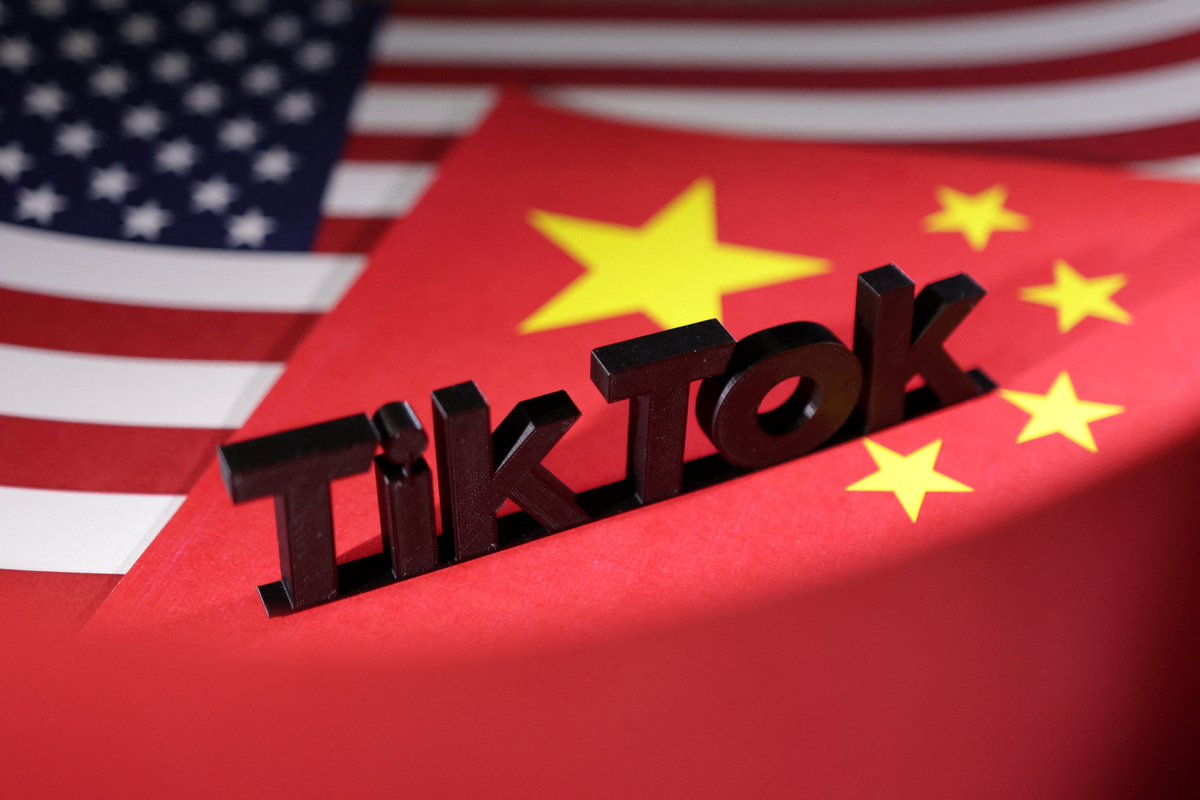
Washington is a wonderful city, rich in history, full of diverse ethnicities and backgrounds, and with abundant cultural attractions. It is also littered with political hypocrisy.
The United States Senate on Tuesday chose to support legislation that will require TikTok to either be sold to a non-Chinese entity or face a ban from US-based app stores. President Joe Biden has signed the bill into law, and that would give TikTok's parent company about nine months to sell or face that ban. The legislation is predicated on the idea that the social media platform shares with the Chinese government information about its users that can then be manipulated to influence the users' attitudes. It sailed through the House of Representatives in mere days, which is stunning considering that the US Congress consistently advances legislation at a glacial pace.
Keep something in mind as you see those video images or photographs of President Biden signing the legislation. This is the same President Biden whose reelection campaign opened a TikTok account in order to reach some of the estimated 170 million Americans, most of them young, who are on the platform.
Think about that for a minute: TikTok is such a "threat" to the US and its national security that the current president engages with it.
Hypocrisy, indeed.
The political posturing over TikTok, owned by the China-based ByteDance, would be funny, if not for the ramifications of what is unfolding: The United States — the country that advocates for freedom of expression and which will fight efforts to harm domestic businesses all over the world — is demanding that a foreign business be sold to it. Or else.
Clear-headed thinking is required here. As The Associated Press reported, "To date, the US government… has not provided evidence that shows TikTok shared such (data-related) information with Chinese authorities."
Perhaps because there is no such evidence.
Neither you nor I should hold our breath; US officials are not going to change their tune about China. In the baked-in "China is evil" narrative that has spread deep roots across the US, just the hint of China doing something wrong leads to a knee-jerk reaction that then requires it be sanctioned for the behavior. Logic is left at the station as the train of emotion speeds down the track.
But there is a small ray of optimism at the moment. At least one US senator should be applauded for urging caution. Kentucky's Rand Paul suggested that First Amendment ramifications could not be ignored when conversations about TikTok were held.
Justifiably, TikTok executives are listening, and they have been strongly encouraging US users to contact their members of Congress and voice their displeasure with TikTok's ban. The company's CEO Shou Zi Chew recently claimed that 300,000 American jobs would be placed at risk if any TikTok legislation became law. Keep in mind that job gains in February totaled 275,000, meaning all of those would be wiped out and unemployment would certainly tick up.
And, yes, this is an election year in the US.
If this bashing of an Asian nation and its business practices sounds familiar, it should. Roughly 40 years ago, the US was gripped by irrational fear about another Asian country. As Japanese corporations began to buy US-based icons such as the Rockefeller Center, Washington's antipathy toward Japan grew.
One US scholar has offered a sobering reminder: America has a long history of xenophobia when it comes to some Asian countries. Walter Russell Mead wrote in 1989, "In our society, land and resources are abundant, but the population's social heterogeneity would pull the country apart if we had not learned the arts of compromise and consensus."
Washington is not a place where "the arts of compromise and consensus" are found today. With this anti-TikTok legislation becoming law, the courts will determine whether it is constitutional. One can but hope they will demonstrate common sense.
The author is an associate professor in the Department of Communication and Organizational Leadership at Robert Morris University in Pennsylvania. The author contributed this article to China Watch, a think tank powered by China Daily. The views do not necessarily reflect those of China Daily.