China's ethnic groups adopt unity, equality
Scholars credit President Xi's long-term efforts for growing sense of community







More than ever, people from different ethnic groups in China have reached the mutual understanding that they are all equal members of the community of the Chinese nation, and they know that only by standing together can the community become stronger, which will make everyone thrive, scholars said.
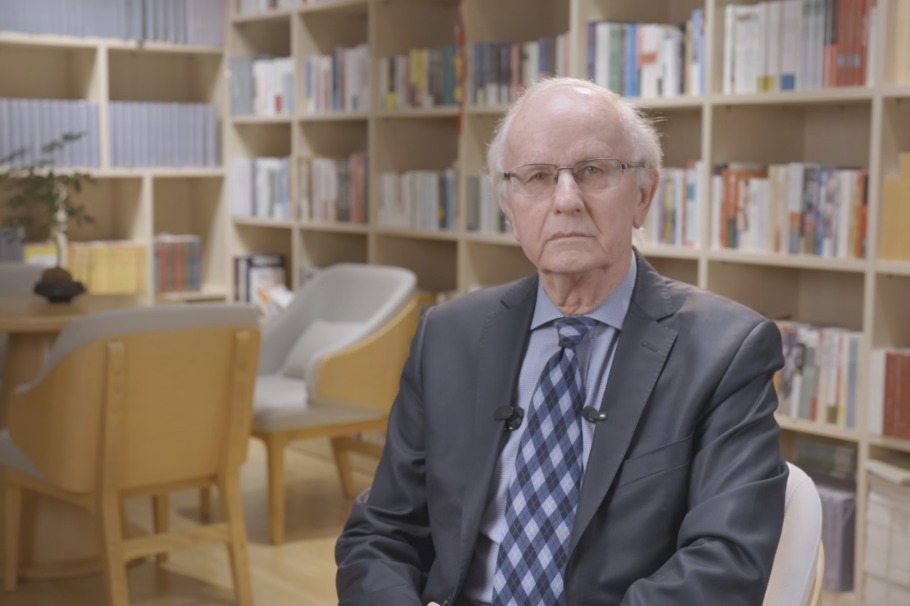
This is the result of helping people see the importance of having a sense of community of the Chinese nation in the past decade, after the concept was first brought up by President Xi Jinping during a symposium on the affairs of the Xinjiang Uygur autonomous region in May 2014, said Pan Wei, chair professor of the faculty of social sciences and director of the Institute of Global and Public Affairs at the University of Macao.
The introduction of the concept also marked the start of a new era in how the country, which has 56 ethnic groups with different traditions and religious beliefs, handles ethnic affairs by seeking unity in diversity, he said.
Pan made the remarks on the sidelines of the International Forum on the History and Future of Xinjiang, which was held in Kashgar in southern Xinjiang on Wednesday.
In an article by Xi, who is also general secretary of the Communist Party of China Central Committee and chairman of the Central Military Commission, that was published in January in Qiushi Journal, the flagship magazine of the CPC Central Committee, he said that forging a strong sense of community for the Chinese nation is to guide people of all ethnic groups to uphold the vision of a community with a shared future by standing together through thick and thin.
"Ethnicity is the concept in terms of language and culture, and the Chinese nation is the political entity that all Chinese people belong to, no matter which ethnic group they are from," Pan said.
By enhanced extensive exchanges and interactions during the past 10 years, people from different ethnic groups in China have learned more about one another and become more united, which has brought stability and prosperity to the country, he added.
"A country's strength will be weakened in global competition when people aren't united within. Letting people put aside the differences and realize that they are all members of a community of a shared future is China's solution to the world on how to avoid domestic conflicts triggered by ethnic issues," Pan said.
Very often, because people from different ethnic groups within the same political entity have their own languages and religious beliefs that aren't mainstream, they may lag behind in social and economic development, he said. It's a common issue globally, he added.
Pan said the solution to the problem is to ensure that the benefits of development are delivered fairly to people of all ethnic groups, which China has been focusing on.
"Helping people to improve their life is the foundation of forging a strong sense of community for the Chinese nation, because they can vividly feel the support from the country," he said.
Turgunjan Tursun, a distinguished professor at Zhejiang Normal University, said that people in Xinjiang, which is home to people of many ethnic groups, have forged a stronger sense of belonging to the Chinese nation in recent years, as they have been the primary beneficiaries of the rapid social and economic development in the region.
"Xinjiang people are more aware that their future is closely tied with the development of the country and the well-being of people of different ethnic groups," Turgunjan said.
Meanwhile, efforts to protect the cultural heritage of different ethnic groups will be further stepped up in the future instead of being weakened, as some in the West claim, Pan said. "It's the Chinese nation's responsibility to protect ethnic languages and cultures that have always been inseparable parts of the Chinese civilization."
Barry Sautman, a retired professor from the Division of Social Science at Hong Kong University of Science and Technology and a distinguished professor at Tsinghua University, said statistics have shown that the achievement of cultural preservation in Xinjiang is obvious.
The Chinese civilization has always been inclusive and never sought to replace diverse cultures with a single one, but has instead formed a common culture through the convergence of multiple cultures of various ethnic groups, Pan Yue, director of the National Ethnic Affairs Commission, said at the forum.
"In China, unity fosters diversity, and the diversity enriches the unity. And the process of collision and integration was not aimed at eliminating each other but at enhancing each other, resulting in the emergence of more inclusive civilizations," he said.



- Hundreds gather in Guangzhou for ninth Understanding China Conference
- Landmark reached in construction of Jintang Undersea Tunnel
- Shanghai Disney Resort hosts disability inclusion forum
- Guizhou university campus evacuated over suspected gas leak
- China launches online platform for drug price registration
- Beijing enters peak flu season with adolescents most affected