Cooperation frameworks serve as guide for Sino-Arab shared future







China and the Arab states have a remarkable history of strategic engagement that has developed over time. The "five cooperation frameworks" put forward by President Xi Jinping in his keynote speech at the 10th Ministerial Conference of the China-Arab States Cooperation Forum on May 30 can serve as more than a thorough guide for Sino-Arab relations going forward.
Focusing on innovation and development, the frameworks include collaborative innovations, finance and trade, new energy and cultures, and demonstrate a dedication to working together on modernization and addressing global concerns.
The two sides are further deepening cooperation and moving forward to step up the building of a China-Arab community with a shared future. At the China-Arab Summit in Riyadh, Saudi Arabia, in 2022, Xi put forward eight major cooperation initiatives, all of which have achieved early harvests.
"Moving forward, China is ready to work with the Arab side on that basis to put in place the following 'five cooperation frameworks' to step up the building of a China-Arab community with a shared future," Xi told the Beijing meeting in May.
The first cooperation framework is for innovation and it highlights high-quality development including collaborative labs for health, artificial intelligence and environmental projects, demonstrating a dedication to addressing global concerns together. Establishing monitoring stations for space debris and working together on space missions are brave steps toward a shared future in science research. Here, China shows its willingness to share with others its newly gained technological advantages.
The second is an expanded framework for investment and finance cooperation, with intentions to establish an investment cooperation forum and strengthen interbank associations. A growing degree of financial integration is demonstrated by the invitation extended to Arab states to apply for China's bonds and special loans intended for industrialization in the Middle East. Both areas' economies are expected to grow and stabilize as a result of this financial cooperation.
The third is a more multifaceted framework for energy cooperation, which includes strengthened strategic alliances for renewable energy and oil and gas projects. China's support for Arab renewable energy projects with over 3 million kilowatt installed capacity demonstrates a shared commitment to energy security and sustainable development, as it has been a leader in new energy development.
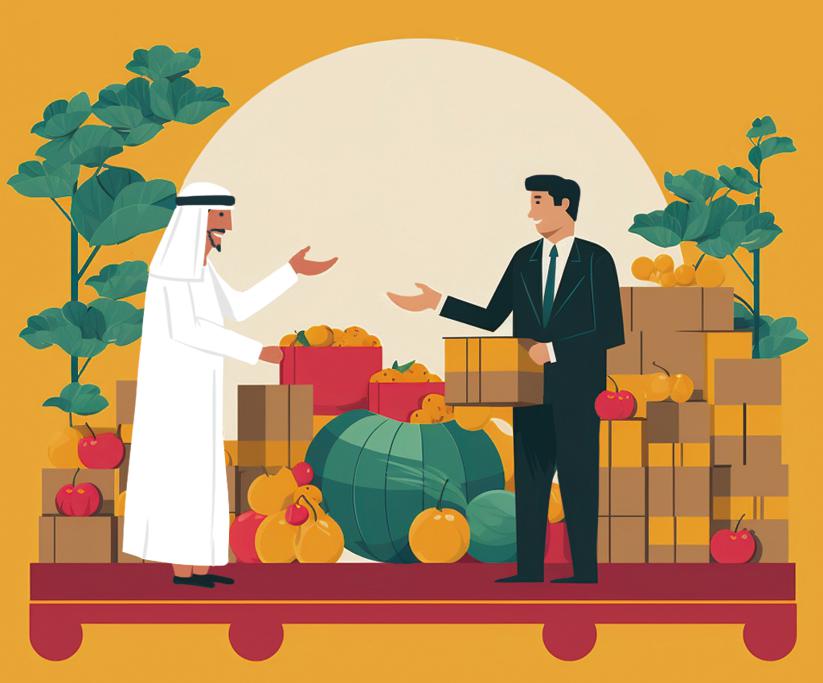
The fourth is a more balanced framework for mutually beneficial economic and trade ties. China is expected to accelerate talks for a regional free trade agreement and push for projects worth 3 billion yuan ($414 million). The Arab states' participation in the China International Import Expo highlights a mutually beneficial and balanced approach to economic cooperation.
The fifth fosters collaboration and understanding based on people-to-people and cultural exchanges. The establishment of the China-Arab Center of the Global Civilization Initiative, think tank development, university collaborations and youth conferences are examples of a comprehensive approach to cultural diplomacy. An additional indication of this commitment to building lasting partnerships is that China will invite 200 leaders of Arab political parties to visit the country every year.
The "five cooperation frameworks" proposed by Xi serve as the foundation for the Sino-Arab cooperation ahead, and ultimately represent a substantial advancement in international diplomacy.
Deepening of China-Arab cooperation is propelled by a range of positive motivations, including robust economic partnerships, strong political alliances and shared geopolitical interests. Economically, Arab states, particularly the United Arab Emirates, benefit immensely from their burgeoning trade relationships with China. In turn, China actively pursues a free trade agreement with the Gulf Cooperation Council, which promises to further enhance regional prosperity.
Politically, their mutual understanding extends to advocating peace in the Gaza Strip and promoting the two-state solution, with China incessantly working to de-escalate and end the Palestine-Israel conflict. These cooperative efforts highlight the strategic and diplomatic synergy between China and the Arab world, fostering a partnership that contributes to regional stability and global harmony.
The China-Arab community has significant implications for the world's future. Both sides are not only securing immediate economic and strategic benefits by fortifying their relationships through the "five cooperation frameworks", they are also laying a foundation for a new paradigm of international relations. By fostering creativity, financial integration, cooperative energy production and cross-cultural interactions, these frameworks forge a complex relationship that is resistant to outside influences.
The China-Arab partnership also acts as a role model for other countries looking to broaden their foreign partnerships. It shows that strong regional players can work together productively outside of the conventional Western sphere of influence in South America, Africa and Asia. This change may lessen the influence of Western-led organizations and programs, promoting a more inclusive system of global governance, which more accurately represents the needs of emerging economies.
Furthermore, this expanding role of the Global South emphasizes how important it is for the United States and its allies to reevaluate their foreign policy. At a time when the world is becoming more interconnected, the West cannot afford to overlook the justifiable hopes and concerns of other powerful regions. Finding common ground and having constructive conversations with China and the Arab states could help lessen the adversarial tone of the current state of international relations.
The author is editor-in-chief of the Observer Diplomat magazine in Pakistan.