EU stands to lose the most with EV tariff hikes







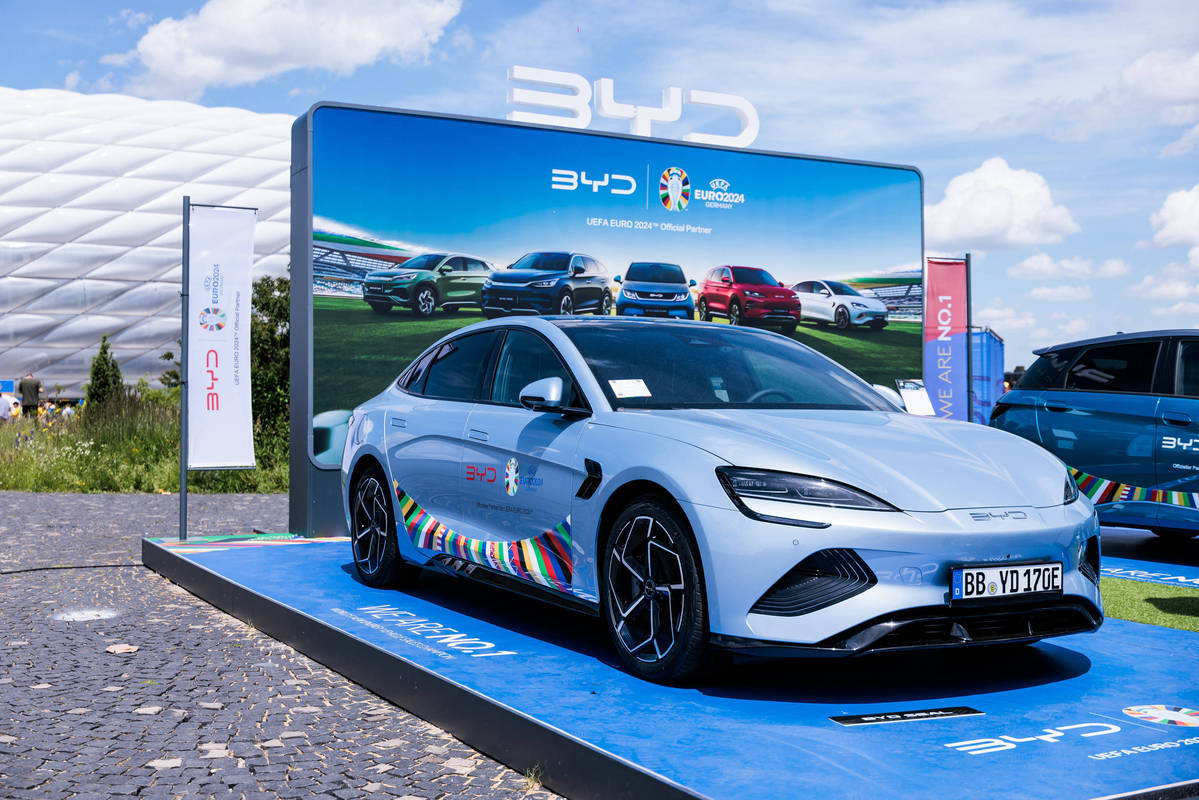
Electric vehicles are the need of the hour due to their efficiency and environmental benefits, and are vital for achieving carbon neutrality goals. So the European Commission's controversial decision to significantly raise tariffs on electric vehicles made by Chinese manufacturers BYD, Geely and SAIC to up to 38.1 percent, raises significant concerns as it disrupts the world's transition to a net-zero economy.
It should be noted that this decision is going to be critical for the global economy. A recent study by the Kiel Institute for the World Economy in Germany highlights that the tariffs imposed on Chinese EVs would lead to a whopping loss of around $3.8 billion in the bloc's EV imports, which make up almost 25 percent of the current value of its trade.
The European Commission's act is aimed at protecting its industries from the rapid growth of Chinese-made EVs in the global market. Not only is the action a blatant instance of protectionism but it also violates the trading rules of the World Trade Organization.
It is interesting to note that the European automotive industry has expressed severe discontent with the tariff increases, arguing that this can erode the competitiveness of EU enterprises in the EV sector on the global stage.
The "unfair subsidy" narrative was considered an integral element in Ursula von der Leyen's reelection campaign during the EU elections. Yet this move mirrors the United States strategy of "de-risking" and decoupling from Beijing, highlighting the growing instances of economic nationalism and isolation.
The exports between China and the EU account for over a third of world trade. The two economic powerhouses trade goods worth over $800 billion annually, underlining the fact that the EU needs China for survival, that both sides are dependent on one another and the tariffs disrupt the vast cooperation between the two sides in green means of transport.
Furthermore, an addition of 10 percent tariffs costs the EU importers around $1 billion which further highlights that the decision would have severe economic repercussions and disrupt the growth of a sector that is already struggling with falling prices and slowing demand.
As production, energy and labor costs in Europe are higher than in China, the tariffs will only exacerbate these differences. The value of EU imports of Chinese EVs has increased significantly from $1.6 billion in 2020 to $11.5 billion in 2023. These tariffs are likely to impede the progress made in the transition to electric vehicles and disrupt achieving the reduction of greenhouse gas emissions by at least 55 percent by 2030, under the EU's Green Deal.
The tariffs will certainly have an impact on the Chinese EV industry in terms of both profits earned and employment generated. But it would have an even worse impact on the EU as it would result in increasing the prices of the EVs because of which domestic automobile producers would face less competition and this would disrupt the transition from highly polluting automobiles that operate on fossil fuels to clean energy vehicles.
Simultaneously, the tariffs would open new markets for Chinese EV manufacturers as by shutting the Chinese EVs out of the EU markets, the demand for Chinese exports will increase elsewhere. This would result in benefiting the consumers of countries other than European ones, and would aid their transition to cleaner transportation, thus achieving carbon neutrality goals.
Chinese firms have also started picking up shares in countries with small domestic auto industries, such as Australia and New Zealand, which shows that the EU is the obvious loser in this case. Some experts argue that the decision to impose tariffs on foreign goods is an act of subsidies on domestic EV production because the EU is already burdened with a high level of debt.
However, Beijing's willingness to resolve the issue through dialogue should not be taken as a sign of weakness as Beijing has indicated that it is ready with retaliatory measures in the form of an antidumping investigation into European pork imports and an antisubsidy investigation into European dairy goods and tariffs on large-engine petrol cars if the EU does not back down.
In summary, it is a good omen that both sides have agreed to resume talks to propose a solution to the tariffs problem and hammer out their differences, and it would be in the best interest of both parties that the tariffs are removed through constructive dialogue.
The author is president of The Society of International Relations& Law, TILS, and director of Pak-China Corridor of Knowledge, Pakistan. The views do not necessarily reflect those of China Daily.