Collaborative effort key to sustainable growth







The challenges posed by climate change are becoming more and more urgent, and there is already a global consensus that only by transforming the development paradigm from quantitative growth to sustainable development and jointly achieving a more rapid energy transition can we help the human race and our future generations.
The history of sustainable development is rather short. The Report of the World Commission on Environment and Development, titled Our Common Future, conceptualized the terminology in 1987. The report outlined the three major areas of sustainable development as economic growth, social inclusion and environmental protection.
In 2015, the United Nations General Assembly formulated the sustainable development goals which are composed of 17 global goals and 169 targets. After almost three decades since its inception, the concept of sustainable development took a much more concrete shape. In order to achieve these goals, a strong collaborative effort of the people, governments, businesses and civil society the world over was called for. Unfortunately, it is not easy to achieve this collaborative effort.
Compared with the past, the world today is much more interconnected through trade, economic integration, artificial intelligence, the internet and other digital mediums.
However, we are increasingly facing a reality that we do not want to see. Since the time the world united to overcome the financial crisis caused by the collapse of Lehman Brothers in 2008, which strengthened the Group of 20, it has been moving in a less desirable direction. Globalization is giving way to "slowbalization", a word coined by The Economist, or even deglobalization, and from multilateralism to pluralism or even to unilateralism. The global divide has become more evident and in this dire situation, the reality is that poverty continues amid plenty, widening inequalities as well as deepening the environmental crisis.
In order to get back to the basics, Antonio Guterres, secretary-general of the United Nations, called for the opening of the Summit of the Future at the UN in late September this year. The main reason for hosting this global event is that as humanity is facing a set of unprecedented challenges, this can only be solved through global cooperation. Therefore, major topics at the Summit of the Future would be sustainable development, global peace, control of new technology such as AI, empowerment of future generations and reform of the UN system.
As you know, we have been experiencing an unprecedented rise in global temperatures and the warming of ocean basins. These changes are profoundly altering climate and have already begun to unleash catastrophic consequences from rising sea levels to extreme weather events. Therefore, putting the world on track to net zero is a monumental task that requires not only good policy frameworks, investments or technological innovations, but also strong partnership, as well as leadership.
We have long been used to the paradigm of quantitative growth which helped national economies grow at the expense of environmental sustainability. That is why the Organization for Economic Cooperation and Development ministerial council meeting unanimously passed a resolution-Toward Green Growth — in June 2010 and based on that resolution, the OECD Secretariat produced a monumental document on green growth in 2012 on the occasion of its 50th anniversary.
Now I am glad to note that we are trying to move away from the traditional quantitative growth paradigm to the new paradigm of growth, the green growth.
It is needless to say that to promote sustainability, or to achieve the UN sustainable development goals, one of the core challenges is global finance, particularly green finance.
Finance plays a critical role insustainable development by mobilizing and allocating to the projects that promote environmental, social and economic sustainability. Green finance is the financing of investments that provide environmental benefits in the broader context of environmentally sustainable development. This includes financing for initiatives aimed at reducing carbon emissions, increasing energy efficiency and enhancing natural resource conservation.
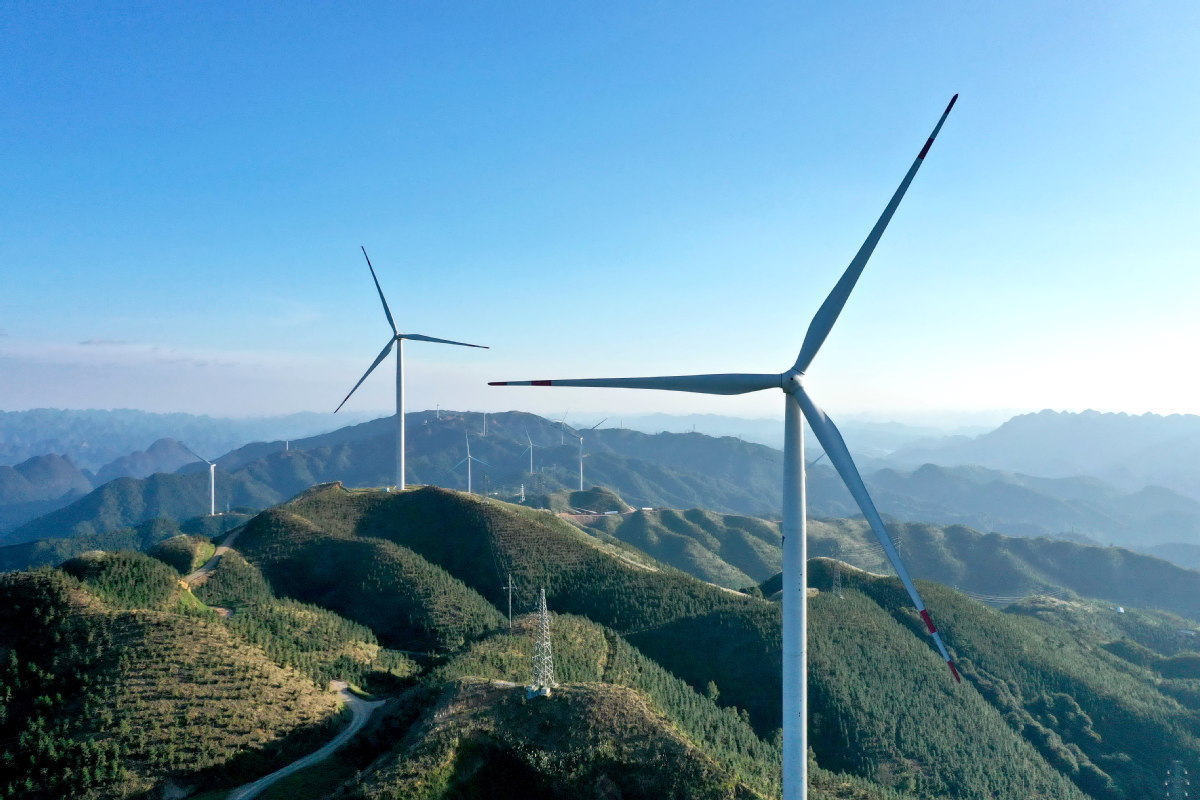
Energy is at the heart of climate change solutions and the transition to green growth. China, as the second-largest economy in the world, has a clear roadmap for green and energy transition and achieving carbon neutrality, and has already done a great job.
In 2020, the country announced its dual carbon goals — achieving peak carbon before 2030 and carbon neutrality before 2060. Once done, it will significantly contribute to global actions against climate change. Chinese companies have emerged as global leaders in renewable energy innovation and investment, leading advancements in solar, wind and hydroelectric technologies. In 2023, renewable energy accounted for over 50 percent of the country's total installed capacity. China is also spearheading global efforts in electric vehicles, lithium batteries and photovoltaic products, which are all part of the country's commitment to its dual carbon goals and outstanding achievement in energy transition.
There are some important experiences that the world can learn from China's success, including the key instruments of green finance. For example, green bonds that are specifically earmarked for funding projects with environmental benefits, green loans that are granted to projects which contribute to environment sustainability often with favorable terms, and green investment funds that pool capital from multiple investors to finance a diversified portfolio of environmentally sustainable projects and companies.
In this connection, I am very pleased that recognizing the importance of the role that green finance plays in sustainable development and in order to reward innovative green finance solutions worldwide, the International Finance Forum launched the IFF Global Green Finance Award in 2020. The award leverages IFF's global resources and aims to support to achieve the sustainable development goals.
As we are already a team in the fight against climate change, let us embrace the spirit of partnership and innovation. Let us commit ourselves to advancing sustainable energy solutions that are key to our survival. Let us dedicate ourselves to making our planet more sustainable for future generations.
The author is cochairman of the International Finance Forum, chair of the Council of Presidents of the United Nations General Assembly and former prime minister of the Republic of Korea.