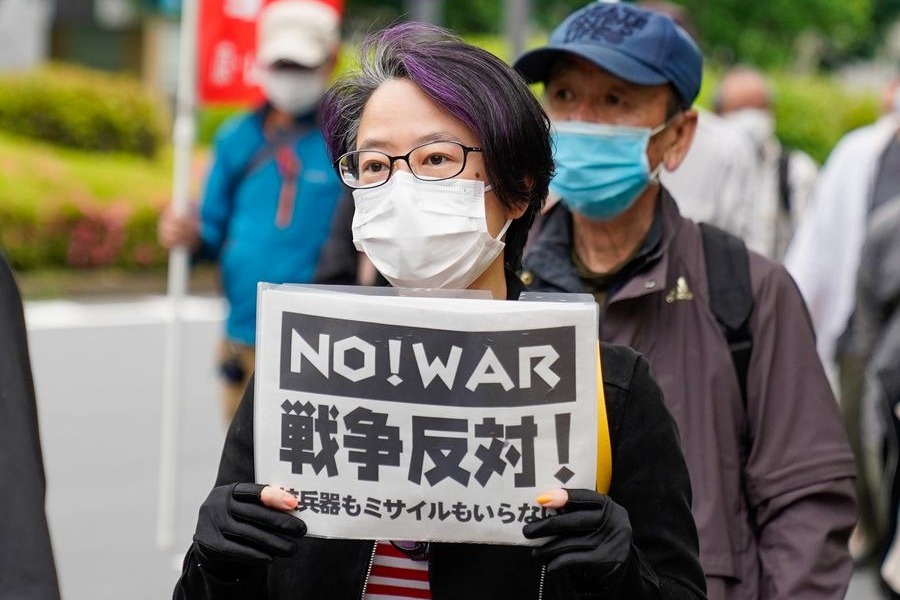
The US deployment of intermediate-range missiles abroad turns back the wheel of history







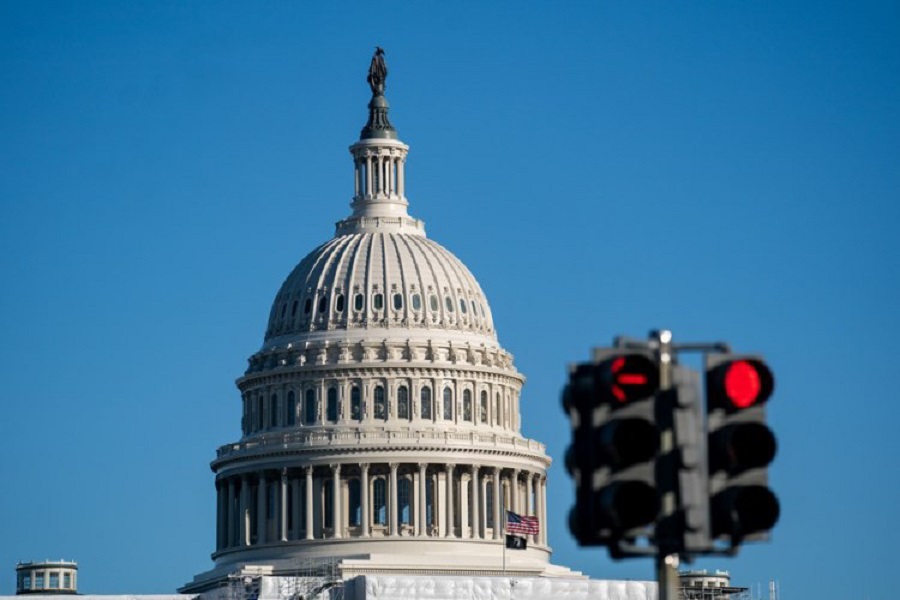
Recently, the United States has accelerated its plans to deploy intermediate-range missiles in allied countries. In April 2024, amid joint military drills with the Philippines, the US deployed the "Typhon" intermediate-range missile system on Luzon Island. This was the first deployment of intermediate-range missiles system by the US after its withdrawal from the Intermediate-Range Nuclear Forces Treaty (INF Treaty). On July 10, the US and Germany issued a joint statement announcing that the US would begin deploying the "Typhon" intermediate-range missile system in Germany starting in 2026. The deployment of intermediate-range missiles system by the US in allied countries is a harmful move that stimulates an arms race, triggers geopolitical crises, and threatens world peace and stability.
As a modern weapon for highly practical operation, the US's intermediate-range missiles pose a far greater threat to regional and global peace than conventional weapons when forward deployed outside US territory:
1. Intermediate-range missiles are offensive precision-strike weapons capable of penetrating deep into enemy territory to eliminate specific targets. Their cost-effectiveness allows for large-scale deployment, making them ideal for preemptive strikes.
2. Due to their dual nuclear-conventional capability, these missiles can be used tactically or operationally. During wartime, it is difficult for adversaries to distinguish between nuclear and conventional launches, which increases the risk of miscalculation and may trigger a nuclear war.
3. The "forward deployment" of intermediate-range missiles undermines strategic stability and mutual trust among major powers. By deploying such missiles in allied countries, the US aims to establish a deep strike capability into Chinese and Russian territories, while geographic constraints prevent China and Russia from obtaining a similar capability against the US homeland.
Due to the dangers of forward-deployed intermediate-range missiles, the US and the Soviet Union reached the INF Treaty in 1987, during a period of intense confrontation. The INF Treaty was the first genuine disarmament treaty between the two superpowers, aimed at eliminating an entire class of missiles. It played a significant role in preventing misjudgments and lowering the risk of war, contributing to global peace and security. The INF Treaty paved the way for further negotiations and agreements, including the Strategic Arms Reduction Treaty (START I), the START II and the New START Treaty. These treaties led to a significant reduction in the US and Russian nuclear arsenals, decreasing the level of nuclear confrontation and reducing the threat of nuclear war, thus promoting world peace and security.
Now, in pursuit of absolute military dominance, the US is reversing the course of history by not only unilaterally withdrawing from the historic INF Treaty in August 2019 but also implementing its post-withdrawal plan and deploying intermediate-range missiles abroad. Undoubtedly, this action will make serious negative impacts on strategic stability, security landscape and geopolitics:
1. It stimulates an arms race and escalates strategic competition among major powers. The US move poses grave threat to the security of the countries in this region. Russia has warned that it will take counter-measures at US missiles deployment. An escalation of the arms race and strategic confrontation is inevitable.
2. It increases the risk of conflict and war among major powers. When intermediate-range missiles are forward deployed, the warning time available to adversaries is extremely limited. This increases the likelihood of misunderstandings and miscalculations that could lead to war.
3. It exacerbates the geopolitical environment. Viewing China and Russia as imaginary enemies, the US is promoting the deployment of intermediate-range missile weapons in its Asian and European allies, driving a wedge between these countries and China and Russia, which will cause geopolitical tensions and undermine the security environment in Asia and Europe.
History demonstrates repeatedly that pursuing national interests by adopting a warmongering policy and building one’s security on threatening others lead to the opposite outcome: a loss of one's own interests and a decrease in security. The world trend is vast and mighty. Those who follow it prosper, those who go against it perish. As humanity increasingly becomes a community with a shared future, where all suffer together or prosper together, the Cold War mentality and zero-sum game are outdated and contrary to the historical trend.
In the current era of great changes in the global landscape, international order, and global situation, peace and development face unprecedented challenges. The world needs new concepts and solutions to guide its path towards a peaceful, cooperative, and mutually beneficial future. The concept of building a community with a shared future for mankind, along with the Global Development Initiative, Global Security Initiative, and Global Civilization Initiative, provide wisdom and solutions to the question of what kind of world we should build and how to build it. These initiatives chart the course for a more peaceful, prosperous, and cooperative future for the world.
Zou Zhibo, Deputy Director of the Institute of World Economics and Politics, Chinese Academy of Social Sciences, and Committee Member of the National Institute for Global Strategy at the CASS.
The views don't necessarily reflect those of China Daily.
If you have a specific expertise, or would like to share your thought about our stories, then send us your writings at opinion@chinadaily.com.cn, and comment@chinadaily.com.cn.