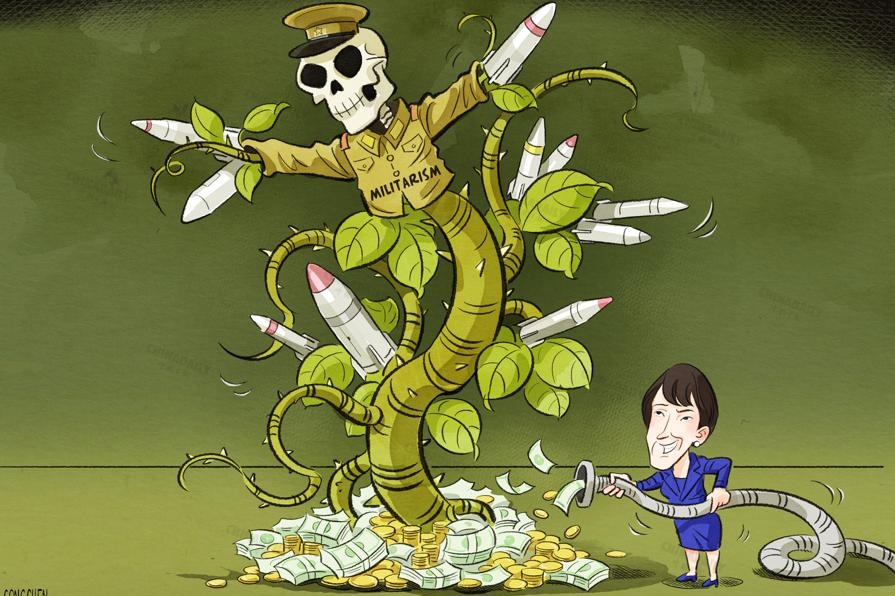
Planned tariff hikes targeting China self-serving show by US politicians: China Daily editorial








As the US presidential election approaches, raising tariffs to appear tougher on China may seem a vote-winning choice for politicians in Washington. But as the domestic chorus of opposition indicates, few others are benefiting from them. That is why the United States Trade Representative's Office has again delayed an announcement of its final determination on steep tariff increases on Chinese products including electric vehicles, batteries, semiconductors and solar cells.
Under Section 301 of the Trade Act of 1974, the USTR initiated an investigation to determine whether "China's acts, policies and practices related to technology transfer, intellectual property, and innovation are unreasonable, unjustifiable or discriminatory". The Joe Biden administration in May announced a quadrupling of tariffs on Chinese electric vehicles to 100 percent, a doubling of duties on semiconductors and solar cells to 50 percent, as well as new 25 percent tariffs on lithium-ion batteries and other strategic goods including steel to protect US companies from what it claimed was Chinese excess production.
The White House initially said the new tariffs would take effect on Aug 1, but the USTR on July 30 delayed their implementation until sometime in September, saying it needed more time to study the more than 1,100 industry comments it had received. It set a new deadline of Aug 31 to announce the tariff plan. But a USTR spokesman said on Friday the agency "continues to develop the final determination regarding proposed modifications" to tariffs on Chinese goods, adding it will make the final determination public in the coming days.
Various concerns and objections have been expressed, as the planned tariff hikes have not been welcomed by many US industries and even some Congress members. Those critical of the tariffs point to the increased costs they impose on US businesses that rely on imports from China, which affects the profitability, competitiveness and ability of these businesses to offer affordable products to consumers.
Also, many US businesses have complex global supply chains that involve components and products from China, and many companies have complained about the tariffs disrupting their supply chains, leading to uncertainties, delays and increased operational challenges. The tariffs have also negatively impacted US businesses that export their products to China, as the ongoing trade tensions and uncertainties surrounding US-China trade relations have created a volatile and unpredictable business environment.
As a result, concerns have been raised about the long-term consequences of the tariffs, including potential damage to relationships with Chinese partners, loss of market share, and the difficulties faced in making long-term investment decisions.
And, since the costs of the tariffs are passed on to consumers in the form of higher prices for goods, they have the effect of reducing consumer purchasing power, which in turn dampens overall economic growth.
An analysis from nonpartisan Tax Foundation estimates that the tariffs the Donald Trump administration imposed on Chinese imports from 2018 till the end of 2020 has already cost Americans about $80 billion as US families have had to pay an additional several hundreds of dollars annually due to the tariffs.
And rather than protecting jobs in the US, higher tariffs on Chinese products have only led to job losses.
Sanjay Patnaik, director of the Center on Regulation and Markets at the Brookings Institution, has looked at the record of the Trump and Biden administrations in terms of tariffs, and he told the NPR last week that "the latest studies show that there is a net loss in jobs, at least of 140,000 to 275,000 jobs across industries".
With the effectiveness and impact of Section 301 trade remedies being so prominently called into question, the US would be better served by the Biden administration — or its successor if the buck continues to be handled like a hot potato and is passed to it — heeding those advocating for a more strategic and collaborative approach to address trade issues with China.