Plans for 2063 should be launched now







For centuries, Africa has been like the big tree, the fruits of which always fell behind the fence, benefiting others rather than its own people. In the colonial period, its raw materials were looted, and its human resources were taken as slaves to produce crops and goods for others. In the post-colonial era, under different complex mechanisms, the same process continues. Special agreements with former colonial powers help multinational corporations to control large chunks of the mining resources of Africa under the "free market" label and neoliberal rules promoted and imposed by Western institutions such as the World Bank and the International Monetary Fund. Financial resources are also fleeing the continent to Europe and tax havens elsewhere, bleeding the monetary and credit worthiness of its nations. Its educated and talented youth are also leaving the continent in search of a better life abroad.
The 2024 Summit of the Forum on China-Africa Cooperation to be held in Beijing from Wednesday to Friday, is a major opportunity for African nations to launch a second liberation movement and together with China and the Global South, create a completely new paradigm of international economic cooperation. Many African nations are realizing that their resources must benefit their people, and that there is a better way out of poverty and into modernization. A major source of inspiration is China, which was until a few decades ago, poorer than many African nations. The rise of China, of the BRICS, ASEAN, and the Global South in general, means that the level of ambition and vision has become commensurate with the new opportunities.
Like China's ambitious plans for 2035 and 2049, Africa's plans for 2063 should be launched now with a new spirit: They have to be large in scale and effect, not piecemeal and micro projects that run into the sand like many aid programs that treat the symptoms of poverty rather than the causes. There is an attempt in Western circles to describe large scale infrastructure projects under the Belt and Road Initiative as "white elephants" with no tangible effect on the population.
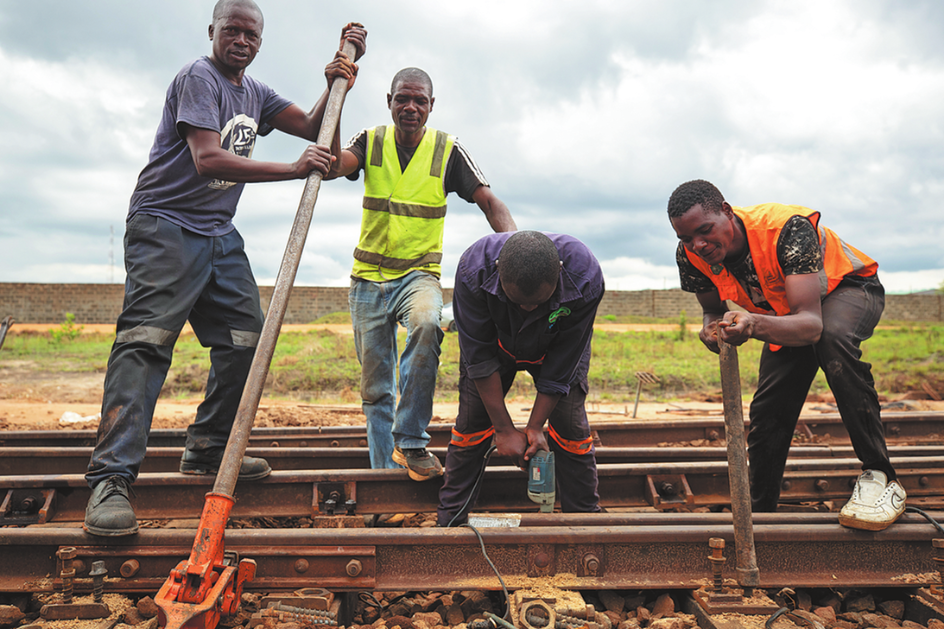
This view has to be rejected, since it is only through major projects in transport, power, water, agriculture and industrial development that any meaningful development can be achieved. China itself is a good example. It was with mega projects like the high-speed rail system, the Three Gorges Dam and the South-North Water Transfer Project, that China's economy was boosted. Africa's plans have also to be long term in nature, and not merely attempting to fill short-term gaps. They need to utilize the highest technological and scientific levels available to leapfrog in the process of development.
China as a reliable partner has shown willingness to transfer technology to other partner countries. Finding new mechanism for long-term low interest credits for infrastructure projects is also a key factor now. Finally, the goal should be the achievement of industrialization of the nations of Africa that are projected to become a major economic factor in the coming decades. With a population of 1.3 billion which is poised to reach 2.9 billion by 2050, Africa will gradually become the largest consumer market of technology and industrial goods.
While China stood by and assisted many African nations in their struggle for liberation from colonialism since the 1950s, a qualitative shift took place in the relationship after the launch of the BRI in 2013. One major milestone stands out in this context. In the speech delivered during the 2015 FOCAC Summit in Johannesburg, South Africa, President Xi Jinping said that it was entirely possible for African nations to leverage their resources to achieve modernization, and that "industrialization holds the key" to eliminating poverty. This is possible, he added, if the three main "bottlenecks of development" are resolved. These are "the lack of capital, lack of infrastructure, and shortage of skilled labor". Since then, China has contributed more than any other nation to help resolve these three by providing long-term, low interest credit to infrastructure projects and helping the capacity building of the labor force through education to the extent that by 2018, China surpassed both the United States and the United Kingdom with the number of African students enrolled in its universities.
Inspired by these developments, in 2017 my colleagues in the Schiller Institute and I composed a special report titled, "Extending the New Silk Road to West Asia and Africa: A Vision of an Economic Renaissance", which I recently had the great honor of personally giving a gift copy to China's Minister of Foreign Affairs Wang Yi. In this report, we outlined the issues facing development in Africa and also the solutions that are now available due to China's involvement as a major industrial and technological powerhouse. We outlined a number of sectors that require urgent attention as continental projects that would have positive spillovers for every corner of the continent. Many of the projects have been on the drawing board for decades, but never managed to get the right partners to finance and build them. These include transcontinental connectivity with rail and roads, mega hydropower projects like the Grand Inga Dam, the Transaqua Canal, which is a 2000-km long water transfer canal from the Congo River to save Lake Chad which has been shrinking, and other riparian multimodal transportation systems. The blue print also included pan-African nuclear power and space programs. Agriculture development to achieve food sovereignty for all nations of the continent must become a priority. However, irrigation infrastructure, fertilizer and machinery production must be localized within the continent. China-Africa agricultural research cooperation since the late Yuan Longping's hybrid rice was introduced meant a great hope for the nations of Africa who import 80 percent of their staple food. Dealing with climate issues like drought and desertification is extremely important. China has become a model for controlling desertification and increasing the green cover of the land in an unprecedented manner. The lessons learned from China's Great Green Wall and development of modern agriculture in dry regions like Xinjiang Uygur autonomous region are of great benefit for Africa.
Although the world is facing unprecedented challenges and threats today, it is at the same time opening the gates for a potentially dramatic and positive change and a bright future for all mankind. Seizing the opportunity now with a grand and clear vision will determine the direction for Africa and the rest of the Global South. Success here and now will create the possibility for inviting the West and Global North to join a more equitable, peaceful and prosperous paradigm for mankind.
The author is Vice-Chairman of the Belt and Road Institute in Sweden, and Distinguished Research Fellow at the Guangdong Institute for International Strategies.?The views do not necessarily reflect those of China Daily.