No longer merely world's factory, China also sets trend








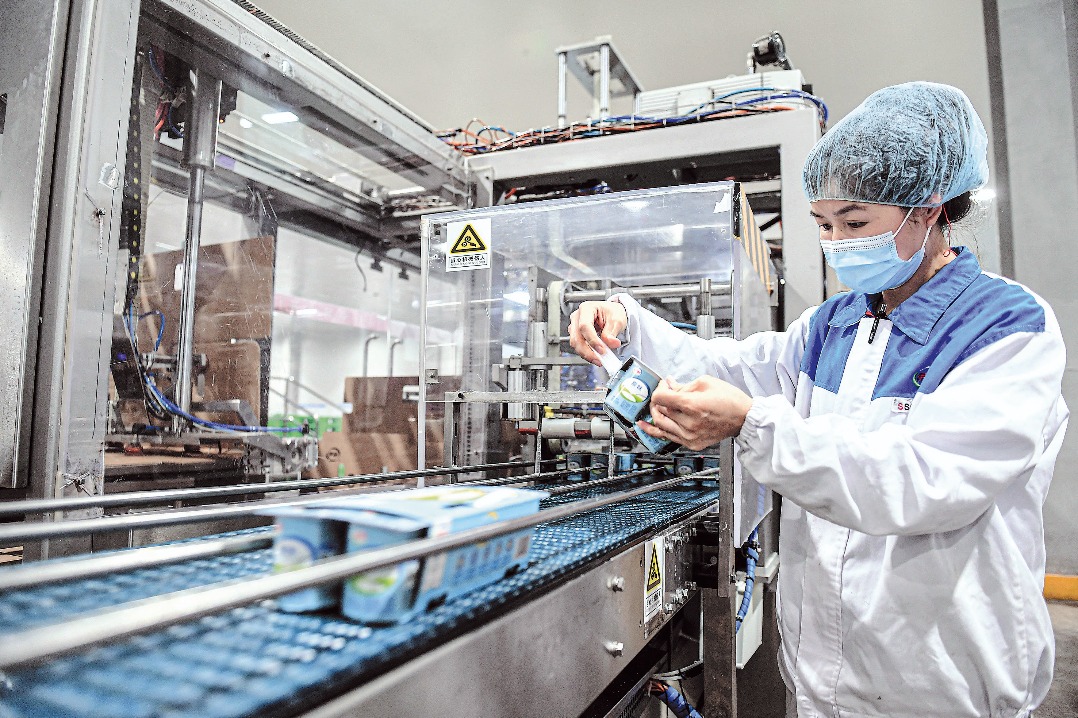
On a narrow one-way street in Guangzhou, South China's Guangdong province, Yihong Precision Technology Co Ltd, a manufacturer of type-C adapters with only 45 skilled workers, provides 300,000 such components every day to electronics companies, including big names such as Japan's Sony and Nintendo, as well as domestic smartphone maker Xiaomi Corp.
Despite a global downturn in consumer electronics over the past year, the company still enjoys a steady increase in sales thanks to its well-rounded and flexible supply chains.
Yihong is not alone. Powered by advancements in manufacturing and supply chain strength over the past decade, China is no longer just the world's factory, but a critical player in shaping the future of global manufacturing.
From agile manufacturing supply chains powering the rise of e-commerce giants like Shein and Temu to new energy vehicles and 5G factories, China is reshaping the global manufacturing landscape.
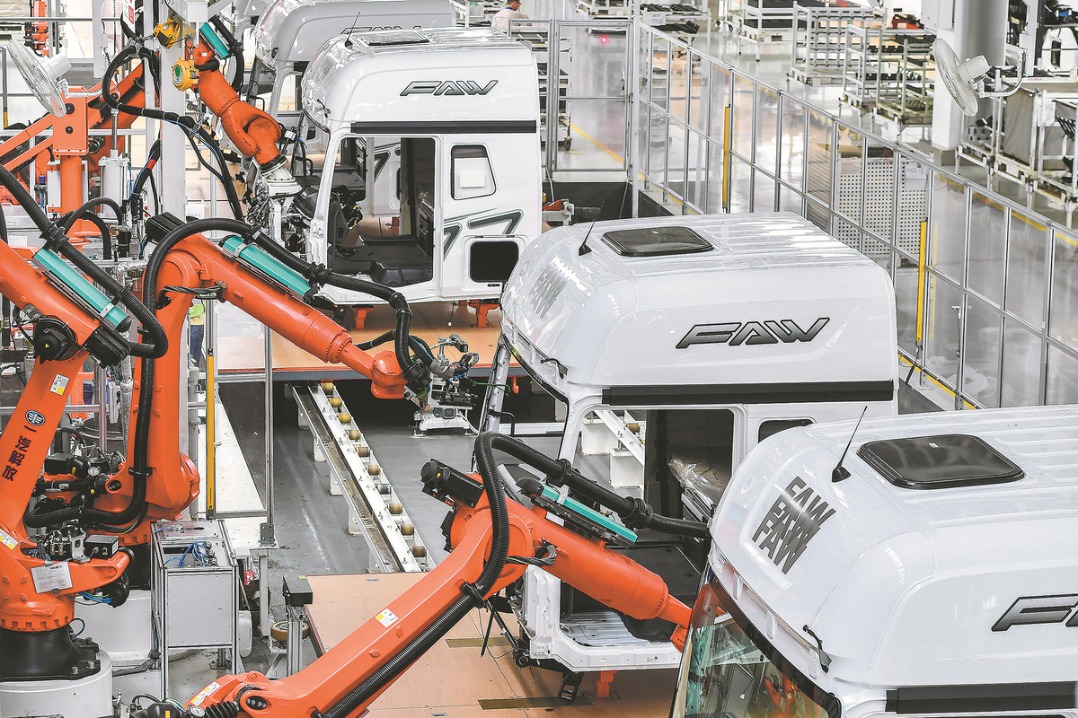
In an interview with China Daily in March, Tim Cook, CEO of Apple, said that Apple's Chinese suppliers now have the most advanced manufacturing in the world.
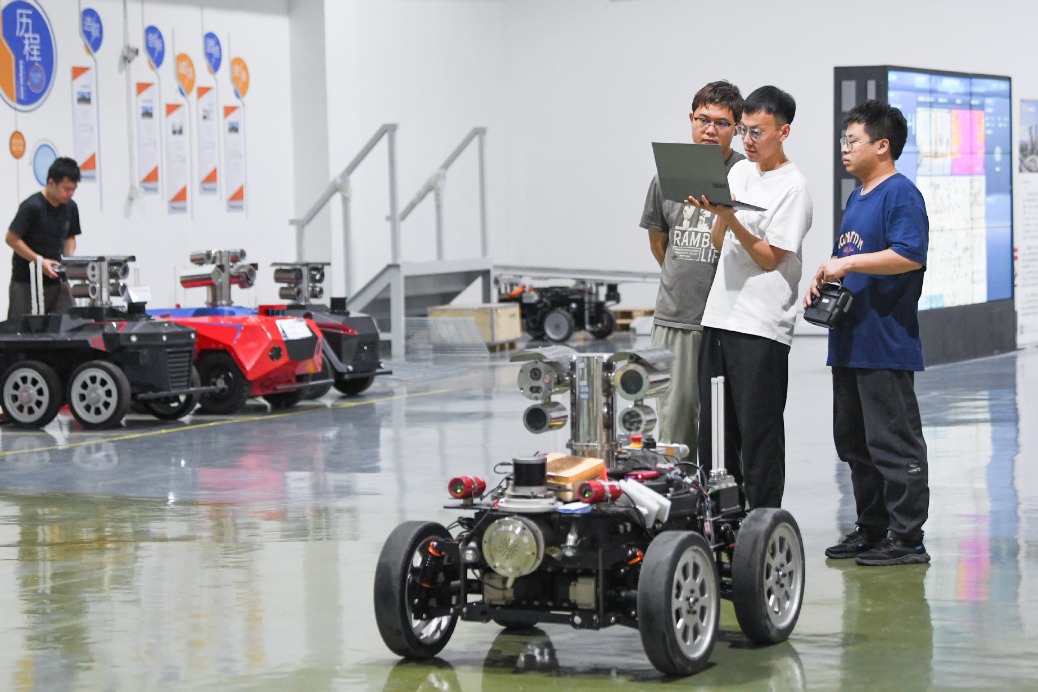
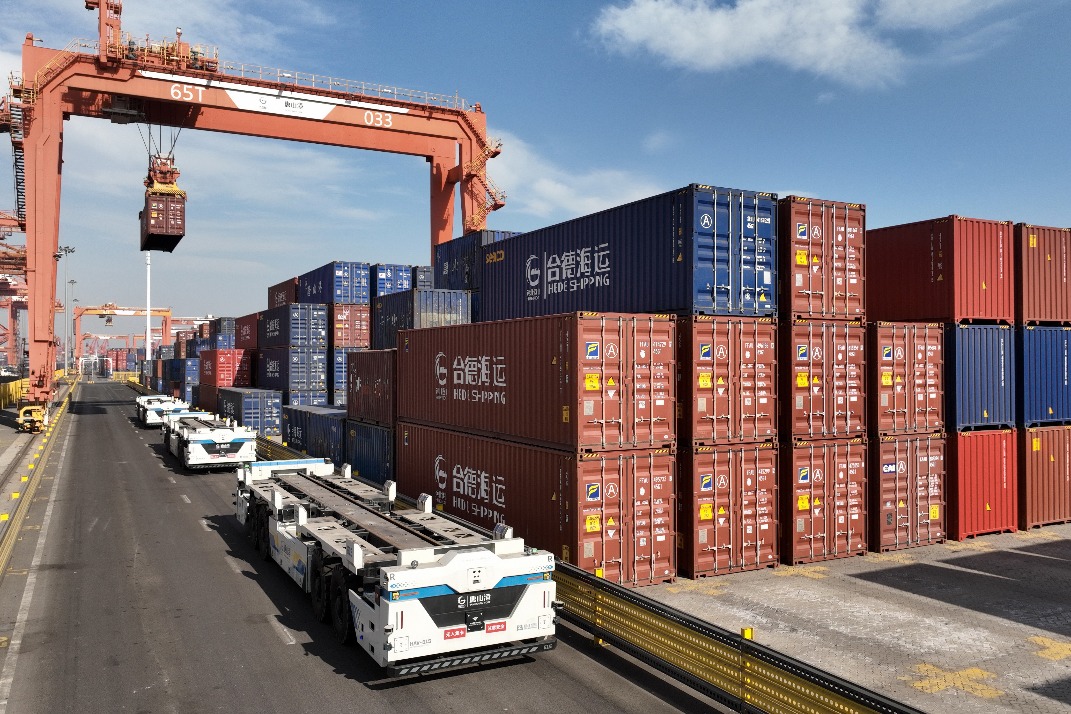
"If you look at the automation level, it's not just off-the-shelf automation. It is customized automation. They have robotics, automatic guided vehicles and very precise vision systems. There's no supply chain in the world more critical to Apple than that of China. We've been building up and investing more and more here," Cook said.
China's manufacturing success can largely be attributed to its mastery of flexible, data-driven supply chains that power Shein and Temu over the past decade.
Shein, a name now synonymous with ultra-fast fashion, has revolutionized the way garments are produced and distributed. The company's innovative supply chain model allows it to identify global fashion trends and get new designs from the design stage to the customer's doorstep in as little as three weeks.
With factories in China operating 24/7 and leveraging AI to monitor shifts in consumer demand, Shein produces in small batches, reducing waste and keeping inventories flexible.
Temu, a rising star in the e-commerce sector, operates in a similar way, enabling on-demand manufacturing of consumer goods. Temu's use of big data enables its suppliers to react instantly to consumer preferences, with factories producing exactly what is needed — nothing more, nothing less.
Li Mingtao, chief researcher of e-commerce at the China International Electronic Commerce Center, said: "These companies are not just fast in terms of manufacturing. They are smart, demonstrating the future of global supply chains. China's momentum in digitalizing the manufacturing process is expected to minimize overproduction and maximize manufacturing efficiency."
When talking of China's manufacturing prowess, the country has well positioned at the forefront of the global green revolution, powered by electric vehicles, lithium-ion batteries and solar cells over the past decade.
Yu Xiangrong, a Citigroup economist, said: "China's exports have seen a marked shift, with the 'old three' — household appliances, furniture and clothing — giving way to the high-tech 'new three' — EVs, lithium-ion batteries and solar cells. The shifting export drivers demonstrate progress in China's industrial upgrading. China has clearly risen up the value chain and remains competitive amid a reconfiguration of the global supply chain.
"This ability to manufacture a range of products from low-value consumer goods to high-tech innovative products provides resilience for China's exports, and continuous upgrades to manufacturing capabilities, R&D investment and emphasis on cost controls should help sustain its competitiveness in trade."
Over the past decade, the country has become the world's largest market for new energy vehicles. In 2023, China exported 4.91 million automobiles, of which 1.2 million were NEVs, a year-on-year increase of 77.6 percent and marking the ninth consecutive year when Chinese NEV production and sales volume were tops globally, said the Ministry of Industry and Information Technology.
China's dominance in NEVs isn't just about vehicles. It's also powered by its prowess in a critical component — lithiumion batteries. According to global consulting firm SNE Research, in 2023, Chinese companies occupied six of the top 10 positions in global power battery installations, with a market share of 63.5 percent.
Chinese companies like Contemporary Amperex Technology Co Ltd have become the world's largest producers of such batteries, supplying not only Chinese automakers, but also foreign brands like Tesla, Volkswagen and BMW.
Nevertheless, the foundation of China's future industrial landscape also lies in its leadership in 5G technology, which is transforming everything from factories to city infrastructure.
Over the past decade, China had nearly 3.65 million 5G base stations and the penetration rate of 5G users exceeded 60 percent. This massive infrastructure rollout has allowed the country to implement cutting-edge smart manufacturing processes, where factories operate with near-zero latency, machines communicate seamlessly and real-time data analytics drive efficiency.
In comparison, a study by market consultancy 5G Americas showed that the 5G penetration rate in North America reached 40 percent by end-June last year. Data from the Republic of Korea's Ministry of Science and data showed 38 percent of the total mobile subscribers in the ROK were made up of 5G users by the middle of last year.
Zhao Zhiguo, chief engineer of the Ministry of Industry and Information Technology, said that China's demand for high-end or smart 5G mobile phones remained high as shipments of such smartphones accounted for 83.7 percent of the total in the first quarter. He added that the world's first 400G all-optical interprovincial backbone network was also officially commercialized in the country recently, whose speed was also the highest globally.
"The country will now make more efforts to construct new information infrastructure and promote the research, development and application of cutting-edge technologies like 6G, next-generation internet and quantum communications," he said.
Zhang Liqun, a researcher at the macroeconomic research department at the Development Research Center of the State Council, said: "Over the past decade, the growth of the high-tech manufacturing and other emerging industries has been steadily growing. This shows innovation-focused sectors have increasingly led the country's pursuit of high-quality manufacturing. With continued investment and innovations, China's manufacturing sector is poised for greater development in the years to come."