Rebuilding Sino-US trust crucial for world







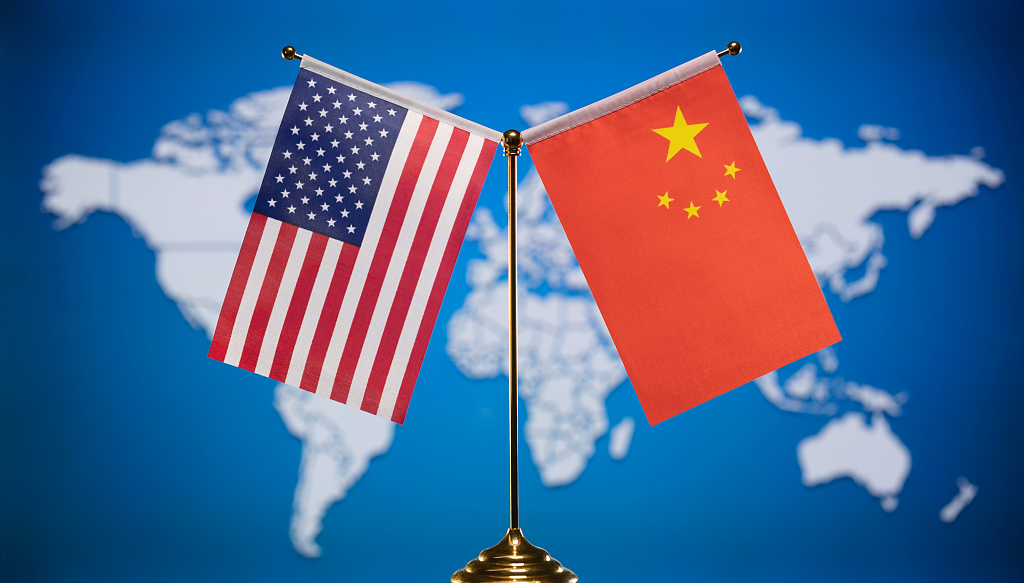
In recent years, rising tensions between China and the US have led to bleak predictions of bilateral relations and potentially dangerous global fragmentation. Hostility has escalated to the point where the possibility of not just a cold war but even a hot war is becoming threateningly real. With the passage of time, it is becoming increasingly difficult to envision how Beijing and Washington could steer their relationship toward the much-needed warming that would benefit the world.
Today, it is essential for everyone to think about how to foster non-confrontational and manageable competition between the two major countries guided by mutually agreed-on principles and norms. The key to making this shift is acknowledging that a less aggressive and more consensual approach is possible and aligns with their security and interests.
In their quest for global leadership, Beijing and Washington leverage different strategies. The United States' primary advantage lies in its military might and readiness to offer security guarantee to its allies. Consequently, the US has collective defense agreements with 56 countries across Asia, the Americas and Europe.
Besides, the US has about 750 military bases in at least 80 countries and territories, more than any other country in history. As of September 2022, the US had 171,736 active-duty troops stationed in 178 countries. In contrast, China has a treaty of friendship, cooperation and mutual assistance with only one country, the Democratic People's Republic of Korea.
China is focusing on expanding its outward investment and promoting trade on a global scale. Before 2001, the year China joined the World Trade Organization, 80 percent of the world's countries traded more with the US than with China. Today, thanks to the China-proposed Belt and Road Initiative, 128 out of 190 countries trade more with China than the US. Additionally, 90 countries trade twice as much with China as they do with the US. Over the past decade, China has invested more than $1 trillion in infrastructure projects in more than 140 countries, consolidating its status as the world's largest creditor and trading nation.
Yet bilateral trade is essential for both the US and China despite the unilateral and aggressive actions taken by the previous and current US administrations, which have imposed sanctions on Chinese imports. In 2022, the US exported $154 billion worth of goods to China, making China the third-largest market for its exports. Also, US investment in China remained robust, with outbound foreign direct investment averaging $10 billion a year from 2019 to 2022.
What's more, both countries are highly interested in preserving their economic relationship, as they rely on each other's market for economic stability. Maintaining stable and predictable economic relations can facilitate military restraint. When the parties recognize that their future is intertwined with access to each other's market, they are less likely to engage in aggressive actions against one another.
Competition for advanced technologies is expected to remain a significant point of contention between the two countries due to their effects on the two countries' national economic and military strengths. Experience shows the US cannot block China's access to advanced technologies by taking restrictive measures.
Furthermore, such restrictions motivate Beijing to intensify its scientific and technological development, which has frequently outpaced that of the US. Technological knowledge relies on scientific research, and China's research capability has significantly improved over the past decade, particularly in applied technology.
According to an Australian Strategic Policy Institute study published last year, the US and other Western countries are falling behind China in developing advanced technologies. The study found that Beijing is leading in 37 of 44 technologies and has six times as many patents in artificial intelligence.
Beijing and Washington are competing with each other in nearly all economic fields, and their growing rivalry means the world's two largest economies are less likely to work together to address common global challenges that threaten our planet. These challenges include but are not limited to the climate crisis, norms for AI governance, nuclear risks and global pandemics.
While this competition often has different goals and can lead to intense struggles, it does not rule out the possibility of cooperation or finding shared interests. Both countries and the rest of the world would benefit from collaboration and fair competition on critical issues at this pivotal historical moment. How two major powers manage their relationships in the coming years will be crucial for the future of all humanity.
It is essential to be realistic and recognize that geopolitical rivalry between Beijing and Washington will persist. Each country will likely continue to build and strengthen its alliances and partnerships in the evolving political landscape. At the same time, the two sides are likely to maintain mutually beneficial economic interdependence. In this context, the two sides must engage in dialogue to prevent potential differences and tensions from escalating into conflict.
An optimistic yet realistic scenario for developing relations between the two countries is that they agree to coexist peacefully and engage in fair competition. In this scenario, they would manage their frictions and confrontations with calm, and avoid conflict.
But the two sides will continue to compete with each other on the economic front to enhance their national wealth, but they must do so without intentionally harming one another. To make such a scenario a reality, the two sides need to make compromises which, incidentally, cannot happen without dialogue and goodwill.
The primary issue between Beijing and Washington is mutual distrust, making short-term cooperation unlikely. Nevertheless, both sides should prioritize discussions and swiftly implement effective confidence-building measures and start doing it as soon as possible.
The writer is a former prime minister of the Kyrgyz Republic, a professor at the Belt and Road School of Beijing Normal University and the author of the book Central Asia's Economic Rebirth in the Shadow of the New Great Game (Routledge, 2023). The views don't necessarily represent those of China Daily.
The views don't necessarily reflect those of China Daily.
If you have a specific expertise, or would like to share your thought about our stories, then send us your writings at opinion@chinadaily.com.cn, and comment@chinadaily.com.cn.