APEC beneficial to both Australia, China








In these turbulent times, Asia-Pacific leaders have a golden opportunity to re-invest in those things that have delivered success for the Asia-Pacific region's economy and avoid what would put it all at risk, when they meet in Lima, Peru, for the Asia-Pacific Economic Cooperation meeting this week.
APEC accounts for 60 percent of the world's economy and is home to 3 billion people. It's a forum in which Australia and China have many common interests, including sustaining free trade and the rules enabling our small, medium-sized and large businesses to access markets and create jobs, in the face of growing protectionism in many economies.
For Australia and China, APEC provides another opportunity for Chinese and Australian leaders to meet and to strengthen the bilateral economic relationship, as well as to explore new areas of cooperation in fields such as the emerging green economy.
One of the architects of the APEC Leaders Meeting, former Australian prime minister Paul Keating, understood very well the value of personal meetings between leaders, as well as building permanent regional structures and agreements to embed the habit of dialogue between leaders, and rules to govern free and fair trade among APEC members.
Since its first ministerial meeting in Canberra in 1989, and then the first leaders' meeting in Seattle in 1993, APEC has advocated for an open multilateral trading system. The lowering of trade barriers has supercharged economic integration, creating growth and new jobs, and improved the living standards of hundreds of millions of people.
The Asia-Pacific's has been an economic success story, unlike the slower growth and trade imbalances of other regions of the world. Australia and China have been two of the biggest beneficiaries of the Asia-Pacific model of free trade, and integration of global supply chains.
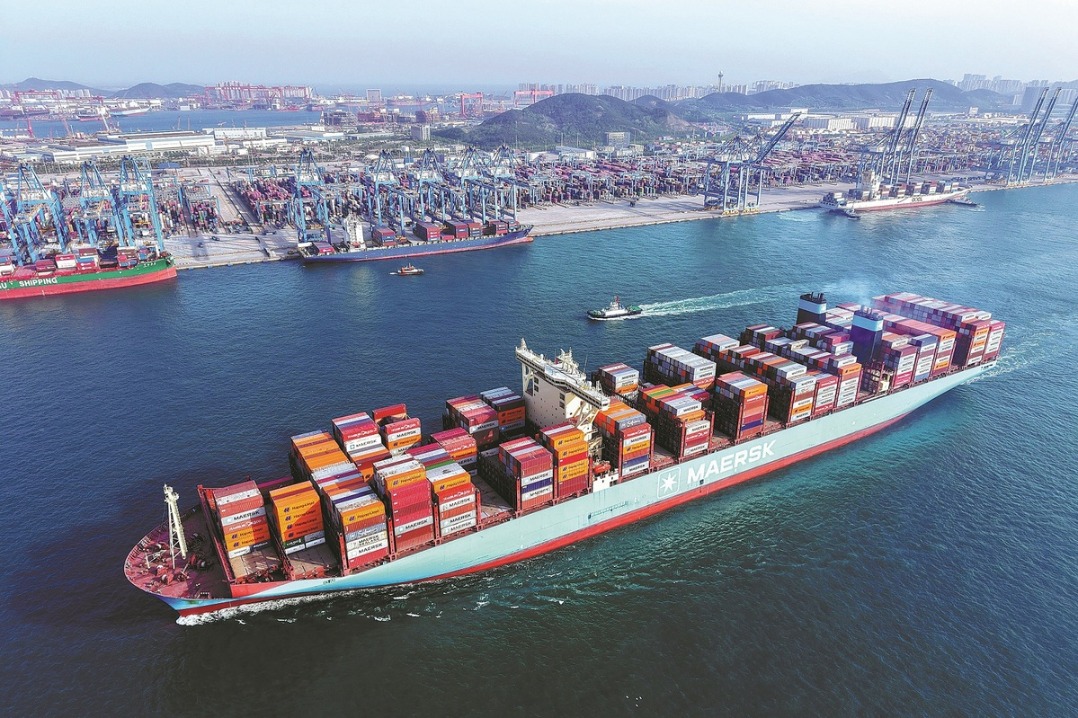
More than 80 percent of Australia's exports are now destined for the region, up from 60 percent in 1989 when APEC was created. Since then, Australia's economy has grown nearly sevenfold, by supplying regional countries with the goods and services they need, from iron ore to education. Unlike most other rich countries, Australia enjoys a trade surplus with Asian economies. And unlike the United States or other major powers, Australia has a small domestic market and therefore relies on trade and regional peace for its prosperity. One quarter of Australian jobs rely in one way or another on trade, and those jobs generate higher incomes.
China's economy today is dozens of times its size in the 1980s, with its rapid development enabled by access to regional and global markets, supplying the world with affordable products, especially since China's accession to the World Trade Organization in 2001.
Today, China accounts for 30 percent of global manufacturing and leads the world in the rollout of new green industries, from solar and wind energy to electric vehicles and EV batteries. China enjoys a trade surplus with the world — $800 billion last year — while also importing more than 50 percent of the world's commodities.
APEC member states are not immune, however, to global headwinds of rising protectionism and geopolitical contest. That makes the APEC Leaders Meeting in Lima all the more important. It's an opportunity for APEC members, which have benefited so much from open regionalism, to re-invest in APEC's purpose and to re-commit to driving the Asia-Pacific region's growth and development. That means freer flows of trade, investment, finance, tourists and students, as well as strengthening the rules underpinning economic cooperation.
A host of new leaders — from Indonesia, Japan, Mexico, New Zealand, Singapore, Thailand and Vietnamwill attend the APEC meeting this year. Each will bring his or her own perspectives and priorities but for them, doubling down on the region's free trade is a no-brainer. Indonesia and Vietnam, for example, will be keen to follow the model developed by other Asian economies to further integrate into the global supply chains and create new jobs and business opportunities. Australia and China, on the other hand, continue to be important, complementary partners for these fast-developing economies.
To be sure, the events of the past few years have injected a dose of pessimism into international affairs. Fears are often expressed that we are headed towards worst-case scenarios of confrontation and conflict, with deepening strategic distrust. That's why APEC remains very important as a platform that enables leaders of the region to pragmatically focus on what works rather than what would throw all the hard-won gains away. A steady hand on the tiller of regional trade can keep Asia on route to becoming the center of the world economy, and with wise leadership that can benefit the entire region.
The author is a former Australian diplomat, a non-resident senior fellow at the Beijing-based Center for China and Globalization. The views don't necessarily reflect those of China Daily.
If you have a specific expertise, or would like to share your thought about our stories, then send us your writings at opinion@chinadaily.com.cn, and comment@chinadaily.com.cn.