Developing industries as carriers of new forces








New quality productive forces, which take innovation as the driving force and industry as the carrier, feature high technology, high efficiency and high quality.
Developing new quality productive forces requires production relations and institutional arrangements that meet the characteristics of this new productivity.
China has included the development of new quality productive forces in a top-level document.
During the first and second industrial revolutions, the country missed the opportunity to advance, but we must rise where we once fell.
Under the leadership of the Communist Party of China, through 75 years of relentless efforts, especially the reform and opening-up, China has achieved an average annual GDP growth of 8.9 percent and expanded its economic scale by 46-fold.
Today, China is the world's largest manufacturing country. Not only have we made up for the lessons missed, but we have also caught up to, and even surpassed, developed countries in many industries during the third industrial revolution.
This is evidenced by advancements in computer production, application, the widespread development of information technology, and the deployment of 4G and 5G networks, as well as a leading position in 6G research.
These achievements make our country closer than ever in history, and more confident, in achieving the great rejuvenation of China.
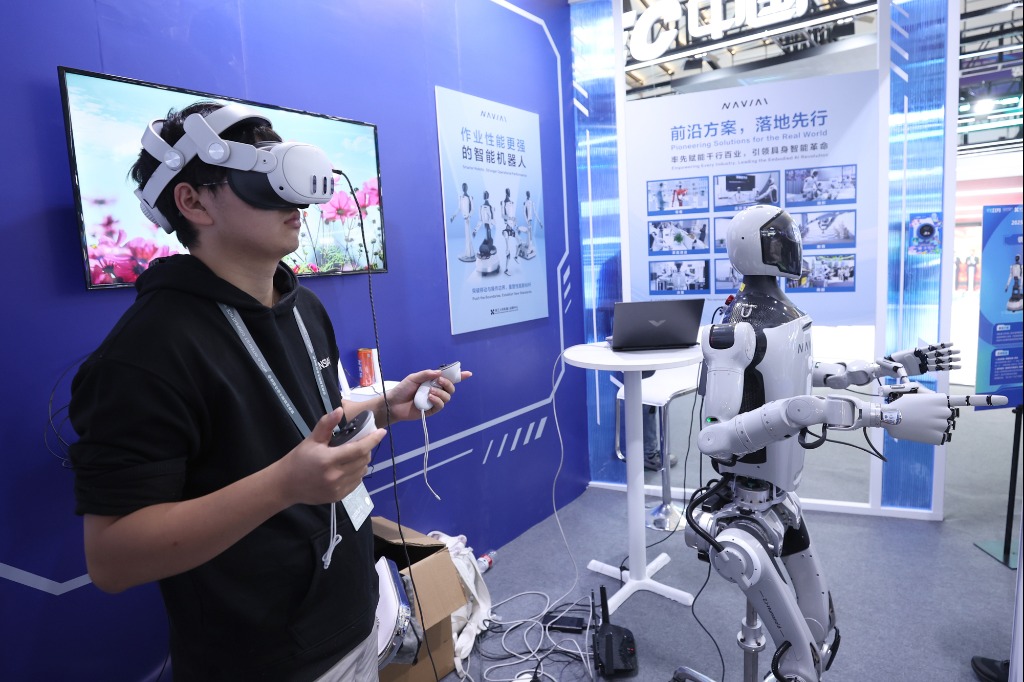
However, currently, the world is witnessing the rise of a fourth industrial revolution characterized by artificial intelligence, clean energy, robotics, quantum information technology, virtual reality and biotechnology.
If China fails to keep pace with this wave of industrial revolution, the country may once again fall behind developed countries.
Faced with such challenges, how can we promote the development of new quality productive forces?
As we can see, every industrial revolution is marked by the emergence of entirely new industries. The fourth industrial revolution has already given rise to a number of emerging industries, such as new energy vehicles, AI, robotics, drones and genetic engineering. Moreover, future industries like quantum communication and nuclear fusion are expected to become industrialized in the coming years.
The core essence of new quality productive forces lies in the qualitative enhancement of productivity levels brought about by technological transformation.
Traditional industries, through the integration of digital intelligence and green technologies, can also embody the characteristics of high technology, high quality and high efficiency, thus becoming carriers of new quality productive forces.
Different provinces and regions across China are expected to develop new quality productive forces without neglecting or abandoning traditional industries, and must prevent bubbles.
Generally speaking, development should be based on existing industrial foundations, adhering to the principles of pragmatism and local adaptability and leveraging comparative advantages. New industries should be developed where feasible, and traditional industries should be transformed and upgraded where appropriate.
According to new structural economics, existing industries can be classified into five categories — catch-up industries, leading industries, transition industries, emerging industries and strategic industries.
They are based on three criteria, namely the gap between local industries and global frontiers, alignment with local resource endowments, and whether they represent new industries arising from technological revolutions.
Catch-up industries are prevalent in developed regions or countries, where Chinese industries hold comparative advantages at the mid-to-low end. The technologies and product quality in these industries are still catching up with their counterparts in developed countries. Many local chip manufacturing and photolithography industries exemplify this type.
Leading industries include home appliances such as televisions and air conditioners. In many regions of China, the home appliance sector not only has a comparative advantage, but also often leads the world in product quality and technology.
Transition industries used to possess comparative advantages and lead globally, but have lost that advantage due to economic development, changes in capital accumulation and resource endowment structures.
Labor-intensive processing industries that developed in the 1980s and 1990s, such as footwear, bags and textiles can explain it. Additionally, industries that have shifted their technological pathways and lost markets, like the transition from color film to digital technologies, represent this category.
Some of these emerging industries result from the fourth industrial revolution, particularly those with short research and development cycles primarily reliant on human capital.
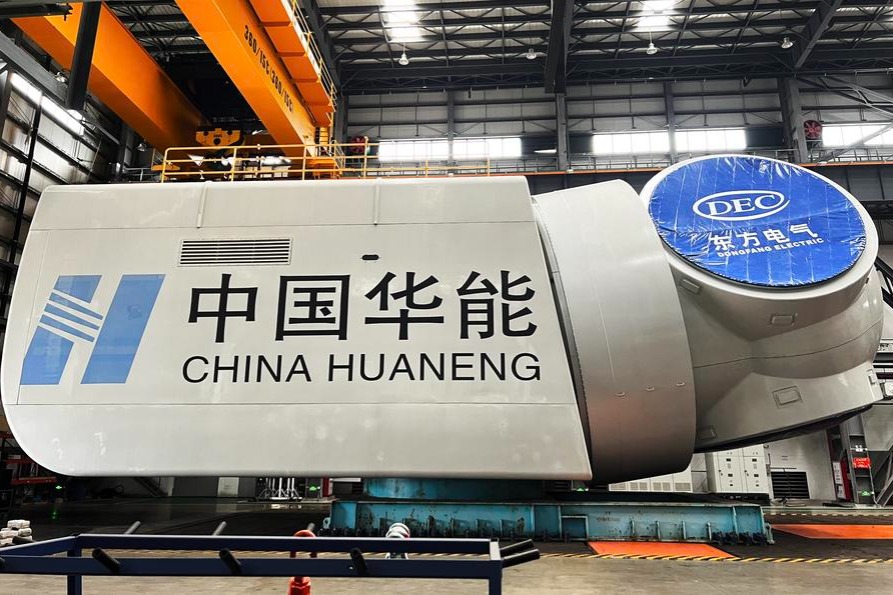
Regions in China rich in human capital have a comparative advantage in these industries. Others arise from new technologies that provide developmental opportunities based on specific natural resource endowments, such as solar and wind energy technologies in sparsely populated desert regions. Additionally, some mature industries can become emerging in less-developed areas where they had previously lacked comparative advantages.
Characterized by long R&D cycles — often requiring 10 to 20 years — strategic industries necessitate substantial financial and material capital investments.
While developed countries have a relative abundance of capital for these industries, China currently lacks comparative advantages. However, these industries are crucial for national and economic security, necessitating domestic development to avoid being suppressed.
For catch-up industries, enterprises can leverage latecomer advantages to catch up with developed counterparts, employing digital and green technologies to enhance quality and efficiency. Some may even utilize revolutionary new technologies for leapfrog development.
For example, China's automotive industry, which was once in a catch-up phase, has transitioned to lead the world with new energy and AI technologies.
For leading industries, companies must continuously leverage new technologies and enhance quality productivity to maintain their competitive edge while staying vigilant against potential competitors.
For transition industries, capable enterprises can focus on the high-value ends, managing brands, developing new products and mastering market channels, or utilize digital tools to create new business models.
Production-oriented companies should consider adopting AI and automation to reduce costs and can shift operations to regions with lower labor costs or participate in the Belt and Road Initiative for new development.
Emerging industries result from the fourth industrial revolution. For some developed regions in the country, they have the necessary capital, talent and industrial support.
With efficient market and facilitating government involvement, these regions can foster an environment for entrepreneurs to seize opportunities in new technologies.
For relatively underdeveloped regions, similar strategies can help them capitalize on new technologies and industry transfers based on their unique resource endowments, using digitalization and green technologies to enhance productivity.
Strategic industries are vital for national or economic security, even if they currently lack comparative advantages. Some of these industries may be new, with long R&D cycles, while others may be legacy industries that require State support for development.
In summary, when developing industries that serve as carriers of new quality productive forces, regions must adhere to the principle of pragmatism, base their strategies on existing capital, human resources, and natural conditions, leverage comparative advantages and work collaboratively with efficient market and facilitating government to strengthen these industries.
Such efforts will solidify the foundation necessary for achieving high-quality development and the great rejuvenation of China.
The writer is a former chief economist of the World Bank, honorary dean of the National School of Development at Peking University and dean of the Institute of New Structural Economics at PKU.
The views do not necessarily reflect those of China Daily.