Jilin's Yanji brewing brisk coffee biz in Northeast







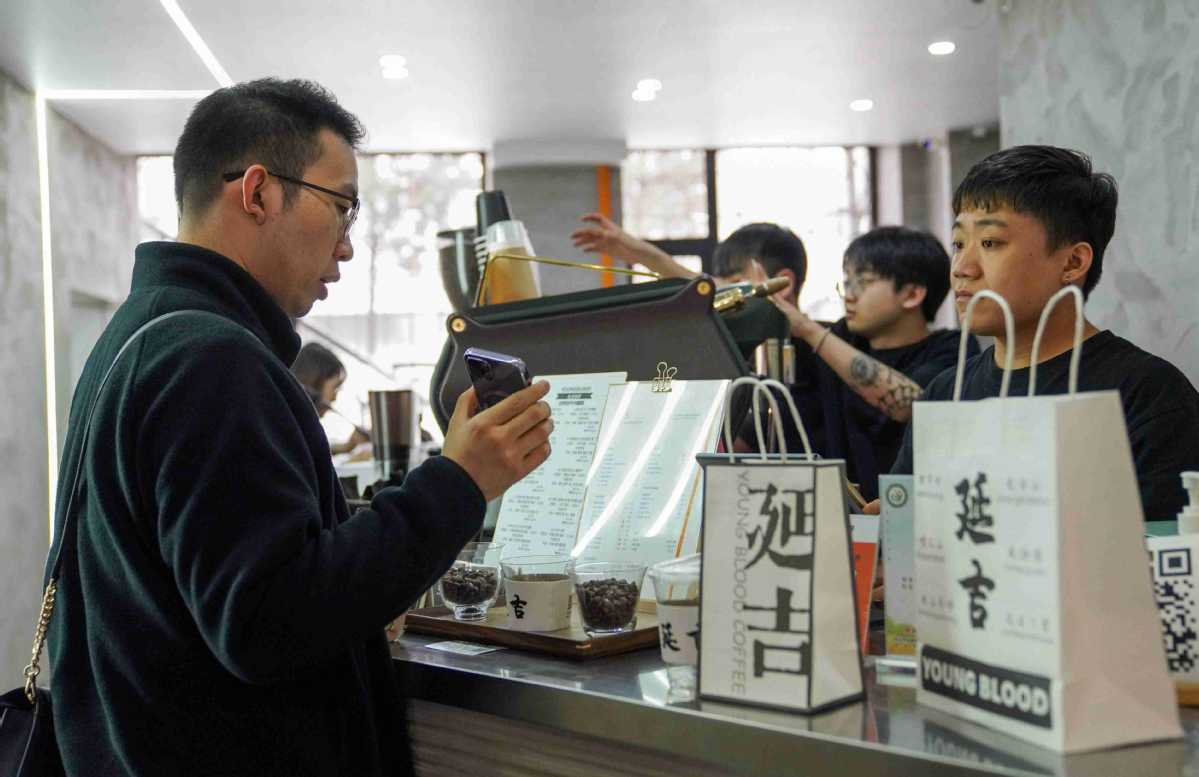
Chang Jiaxin, a tourist from Zhejiang province who claims to be a "level-10 coffee enthusiast", gives a big thumbs up to the coffee offerings in Yanji, a small border city in Northeast China, after visiting its coffee shops on a "must-try list".
"The city's coffee not only boasts excellent quality, but also integrates local characteristics," she said.
Yanji, capital of Yanbian Korean autonomous prefecture in Jilin province, has seen a boom in the coffee business in recent years, with its density of coffee shops significantly surpassing that of first-tier cities, earning it the title of the "city strung together by cafes".
Official figures show that the city, with some 670,000 residents, has over 1,000 cafes, with the number of coffee shops per 10,000 people nearly four times that of Shanghai, China's economic hub.
An average of over 27 metric tons of roasted coffee beans are consumed monthly in Yanji, with a daily sales volume of about 45,000 cups. The annual per capita coffee consumption in the city is 24 cups, according to a survey report by the city's commerce bureau.
Cui Fenghua, president of Yanbian's coffee culture exchange and development association, said coffee entered local residents' daily lives in the 1990s, thanks to its unique geographical location at the border area.
Cui recalled that her first experience with coffee was in the 1990s when a relative brought back instant coffee from Russia.
Later, many Yanbian residents who had worked in South Korea, returned to their hometown and opened coffee shops, bringing back the design, service details, and the concept of private rooms from foreign cafes.
"In recent years, young people who are eager to innovate have incorporated more creativity and distinctive personalities into their coffee shops, resulting in more diverse and vibrant business formats," Cui said.
Li Meiying, who quit her job in Shanghai in 2020, returned to her hometown of Yanji and opened a coffee shop specializing in Korean ethnic fruit tea and coffee.
A type of coffee she developed, infused with the flavor of Yanbian's specialty apple-shaped pears, quickly became a sought-after "fashion item" among tourists.
"We hope to tell the story of Yanji through coffee," Li said.
By leveraging the rich ethnic cultural resources, local authorities and coffee industry practitioners have integrated coffee with its culture and tourism industry, making coffee shops an important part of the tourism experience.
Tourists often flock to capture moments in front of an internet-famous wall outside Yanbian University in the city, holding a coffee cup with a sleeve featuring "Yanji" characters.
The city's coffee industry is experiencing a surge in consumption this winter, thanks to its abundant ice and snow tourism resources. In December, group-buying orders for coffee in Yanji increased 184 percent year-on-year, and the number of coffee shops in the city on the Meituan app rose 202 percent, said Meituan Travel.
"The city's unique cultural genes have led us to discover a distinctive development path," said Huang Chunshan, one of the founders of Yanji's coffee association, who runs 27 chain coffee shops.
However, the city's rapidly developing coffee industry also faces challenges, such as cutthroat competition, Huang said.
To address these challenges, Yanji established the coffee association in December, formulated an industry self-discipline convention, and encouraged its members to pursue differentiated and personalized development paths, she added.
Xinhua contributed to this story.