Panel: US tariffs will alter global trade







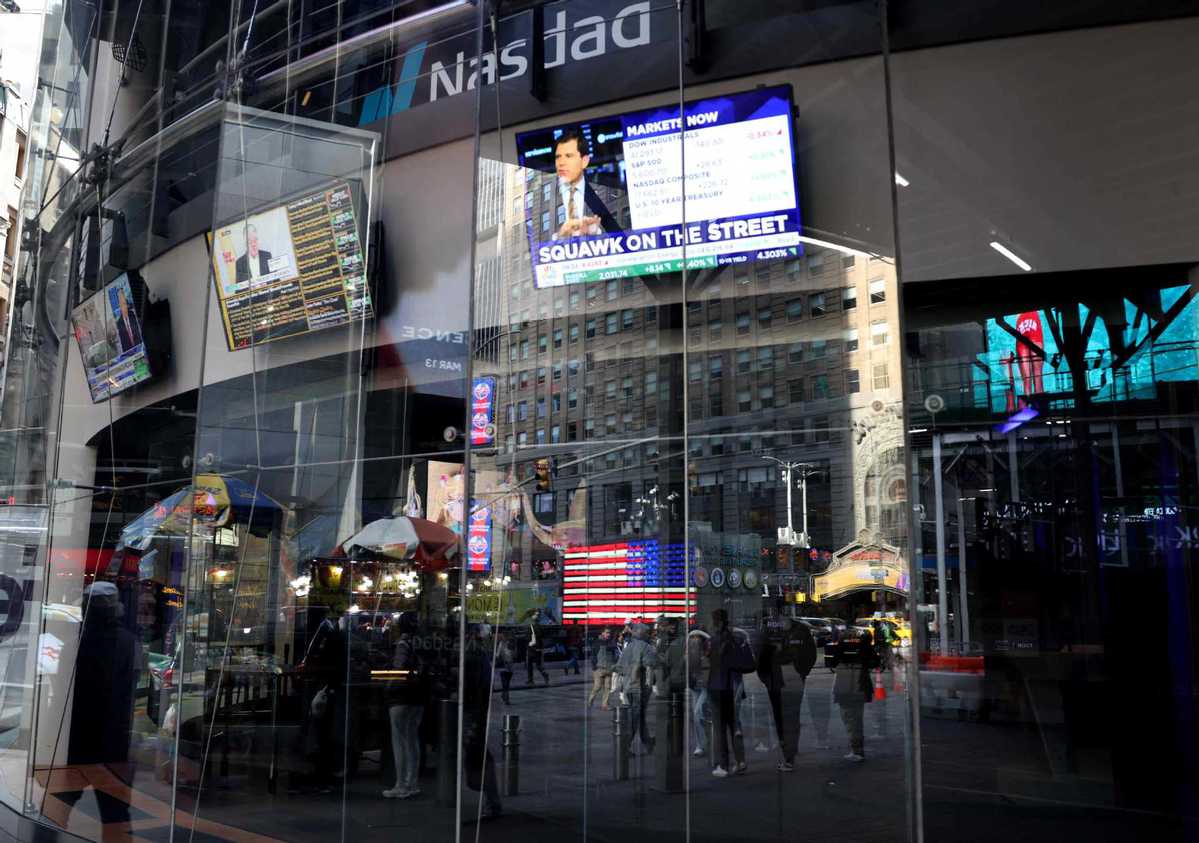
Participants in a discussion on US tariff policy said that it could have a long-lasting impact on the American economy, trade with key partners, and international relations.
The discussion on Tuesday was held at the China Institute in America, a 100-year-old organization based in New York City that strives for better relations between China and the United States.
Panelists included Craig Allen, former president of the US-China Business Council; Brad W. Setser, a senior fellow at the Council on Foreign Relations and former senior adviser to the US trade representative; and Susan Yuqing Feng, journalist and director of programs at the China Institute in America, who moderated the discussion.
Feng stated that US President Donald Trump has placed tariffs on more than $440 billion of Chinese imports, and the current tariffs on Chinese goods are around 39 percent. The president has also threatened to enact tariffs of up to 60 percent on China. She asked what effect that would have on global trade relations.
"If President Trump does what he says he is going to do, yes, I do think we're going to have something that's close to the end of the modern era of globalization," Setser said.
"If you do 50, 60 percent tariffs on China, standard economic analysis would say the trade between the US and China, the direct part, will go to zero. If you put 25 percent tariffs on the entire world or 20 percent tariffs on the entire world, the US will import less. We'll also export less," he said.
Since the beginning of his second term, Trump has placed 20 percent tariffs on Chinese imports to the US. He also has threatened to place tariffs of 25 percent and more on goods from Mexico and Canada. But they have been on again, off again. He enacted tariffs of 25 percent on all steel and aluminum imports in March, and plans reciprocal tariffs for most trading partners on April 2.
Allen said that it was important to understand what the Trump administration is trying to achieve by using tariffs, that it is mainly to bring back manufacturing and jobs to the US. But he said the levies have several other purposes.
"They're to raise revenue, tariffs can also be used for retribution. … Tariffs can be used for reciprocity to encourage other countries to lower their tariffs for perceived harms," Allen said.
Mexico, Canada and China are the US' top three trading partners.
Feng said she wanted to understand the president's reason for increasing tariffs on China.
"I don't think the goals that this administration has set out are clear yet," Setser said. "There's obviously tensions. There's obviously contradictions. If you follow their own rhetoric, we are just actually getting started.
"These are the appetizers, so to speak. The main course perhaps comes on April 2 with the reciprocal tariffs, so perhaps it gets delayed and pushed beyond."
Allen noted that the trade landscape between the US and China has changed over the past decade.
"In 2017, Chinese imports into the US as a percentage of our total imports peaked at a little bit above 21 percent," he said. "In 2024, they were about 13 percent, and so while our total trade deficit has gone up enormously, the share from China has gone down, and I suspect that both parties approve of that."
He said that China's exports are growing rapidly and will go from 33 percent of global manufacturing to 42 percent by 2030, according to the United Nations.
American and Chinese companies are now diversifying which countries they work with, which could mean that goods shipped to the US will avoid tariffs.
Economists are closely watching how the pending reciprocal tariffs will work out.
Feng asked if the levies would have any benefits.
Setser said that if reciprocal tariffs are imposed on many countries worldwide, then the levies on China will seem less significant.
Allen added that reciprocal tariffs could flout World Trade Organization rules.
In 2018, during his first term in office, Trump placed tariffs on $300 billion of Chinese-made goods, sparking a trade war. President Joe Biden maintained those original tariffs and increased levies on $18 billion of Chinese imports in September.
Setser explained that at the offset, Trump's goal was to get China to buy more goods from the US. But he said that at present, Trump is more focused on a trade war with Canada, Mexico and the European Union. He also has repeatedly suggested that Canada become the 51st US state.
Overall, Allen believes that tariffs are not an effective measure to increase employment across the economy. He said that the US had experimented with it, and it did not work out well and contributed to inflation in 2023, which he said "Americans were very resentful about."
Setser added that "we could certainly throw the US and the global economy into a downturn with this level of tariffs introduced this quickly. … We are at least taking policy decisions that put us at risk of a self-inflicted recession."
belindarobinson@chinadailyusa.com