Palace Museum bridging civilizations







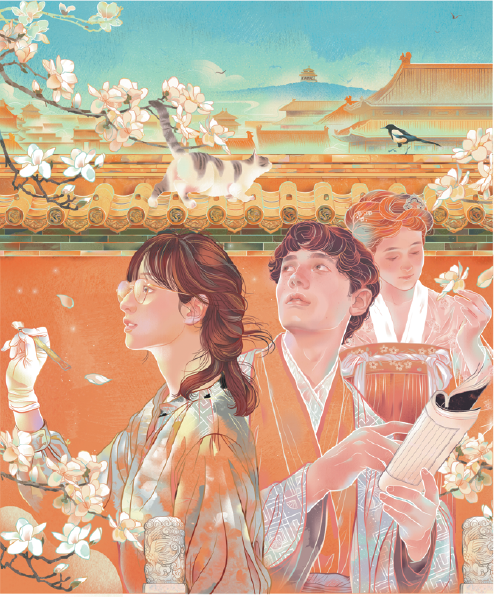
The Palace Museum in Beijing, which was called the Forbidden City, is an important repository of China's 5,000-year-old civilization and traditional Chinese culture. The establishment of the Palace Museum in 1925 marked the transformation of the former royal palace into a people's museum. Since then, the museum has been safeguarding the historical treasures of China and promoting dialogue among civilizations.
Promoting dialogue and exchanges among civilizations and fostering cultural prosperity have become the common goals of many countries. Following the proposal of the Global Civilization Initiative in 2023, the Palace Museum has been developing an innovative model for popularizing China's fine culture and promoting international dialogue, exchanges and cooperation. As a cultural center, it has also been facilitating mutual learning among countries.
A conservation haven for cultural relics
The Palace Museum prioritizes conserving China's cultural relics, ensuring the preservation of cultural heritage through innovative approaches and international collaboration in the face of modern challenges like climate change and social transformations, including the establishment of a standard organization and the implementation of a zero-waste campaign.
In 2022, the museum initiated a quality management system to enhance heritage conservation standards and advance conservation technology and management. Two years later, in 2024, it was appointed as the secretariat and inaugural chair of the Technical Committee for Cultural Heritage Conservation within the International Organization for Standardization, pioneering efforts to standardize heritage monitoring, evaluation, restoration, and conservation practices in China.
The museum's zero-waste campaign since 2020 aligns heritage conservation with sustainable practices. Through seminars, UN conferences, and showcasing of green initiatives at Chinese heritage sites, it shares Chinese expertise on global energy conservation and emissions reduction.
Academic exchanges insightful
The Palace Museum prioritizes academic principles and fosters international exchanges with an open mindset, emphasizing mutual learning through research. It has established an inclusive international academic exchange mechanism to promote the development of civilizations. Notably, the museum houses diverse scientific research platforms, including the China-Greece Belt-and-Road Joint Laboratory on Cultural Heritage Conservation Technology, dedicated to creating a global platform for collaborative innovation and resource-sharing in cultural relics protection technology.
The Palace Museum engages in advanced cultural relic preservation techniques, such as high-definition relic acquisition and multidimensional display technology, while establishing workstations in the Xinjiang Uygur autonomous region, and Sanxingdui, an ancient archaeological site in Sichuan province, known for its mysterious and significant Bronze Age artifacts and relics. Collaborative archaeological projects with international museums in countries like India, Kenya, and the United Arab Emirates focus on trade relations across the Indian Ocean and ceramic archaeology, shedding light on cultural exchanges along the ancient Silk Road.
In terms of talent exchange, the museum partners with organizations like the International Council of Museums and the International Institute for Conservation of Historic and Artistic Works, establishing training centers and fellowship programs to promote dialogue and knowledge sharing. Additionally, it inaugurated the Centre of Preservation and Transmission for Cultural Heritage of the Palace Museum in Macao and hosts international forums like the Taihe Civilizations Forum and "culture plus tech international forum" to facilitate collaboration among experts, scholars, and industry representatives for heritage conservation and museum development.
An exhibition platform of global perspectives
The museum is striving to become an exhibition platform with a broader global perspective. Exhibitions are the most direct way museums promote cultural exchanges. Leveraging its rich collection of cultural relics, the museum has been organizing exhibitions to facilitate cultural exchanges between China and other countries, sharing its cultural achievements and fostering mutual understanding.
Since 2012, the museum has organized more than 50 exhibitions of cultural relics from other countries and regions, and participated in more than 20 overseas exhibitions. It has also collaborated with more than 20 countries and regions to organize 18 high-quality exhibitions. For example, a large-scale cultural relics exhibition, "Empresses of China's Forbidden City", was held in Boston and Washington in the United States in 2018. And the Hong Kong Palace Museum, inaugurated in 2022, has become a cultural exhibition platform, bridging tradition and modernity, and China and the world.
On March 15, 2023, the day China proposed the Global Civilization Initiative, the Palace Museum co-organized the "Gandhara Heritage along the Silk Road: A Joint China-Pakistan Exhibition" with the Department of Archaeology and Museums of Pakistan. It was the largest Gandhara art exhibition held in China.
And in 2024, the museum held joint exhibitions — "AlUla — Wonder of Arabia "with Saudi Arabia; and "The Glory of Ancient Persia" with Iran, as well as the "Historic Encounters: Interaction Between China and West Asia", highlighting the exchanges and mutual learning between the ancient civilizations of China and West Asia. These exhibitions were significant diplomatic achievements for China in the cultural field.
An innovative public service provider
The Palace Museum is dedicated to enhancing public cultural services through multi-field innovation, emphasizing education, communication, and the inheritance and innovation of traditional Chinese culture for creative transformation and development.
The museum has collaborated with multiple social institutions to produce a variety of cultural products, including the TV documentary Masters in the Forbidden City, the cultural relics exploration TV show National Treasure, the dance drama A Tapestry of a Legendary Land and the musical Lu Duan. Notably, A Tapestry of a Legendary Land, inspired by the iconic scroll, A Thousand Miles of Streams and Mountains, has been performed nearly 700 times worldwide, becoming a shining emblem of Chinese culture.
Since 2016, the Palace Museum's educational projects have traveled to 15 countries, including France, Japan and Australia. Currently, the museum is collaborating with the University of Stirling in the United Kingdom to promote Chinese cultural heritage overseas.
Cultural products also facilitate international dialogue. Beginning 2019, the museum has participated in 23 domestic and international exchange activities. During the 2023 Hangzhou Asian Games and the Paris 2024 Olympic Games, the museum partnered with the China House, a dual architecture of online virtual space and offline entity sponsored by Chinese sports authorities, to showcase traditional Chinese sports culture through cultural and digital products, strengthening cultural and sports exchanges between China and other countries.
This year marks the second anniversary of the Global Civilization Initiative, which coincides with the Palace Museum's 100th anniversary celebrations. On this historic occasion, the museum pledges to continue upholding its mission, expanding international cooperation, and enhancing the breadth and depth of cultural communication, and make cultural relics protection as the foundation, academic research as the core, exhibitions as the window and education and communication as the link to help advance the Global Civilization Initiative.
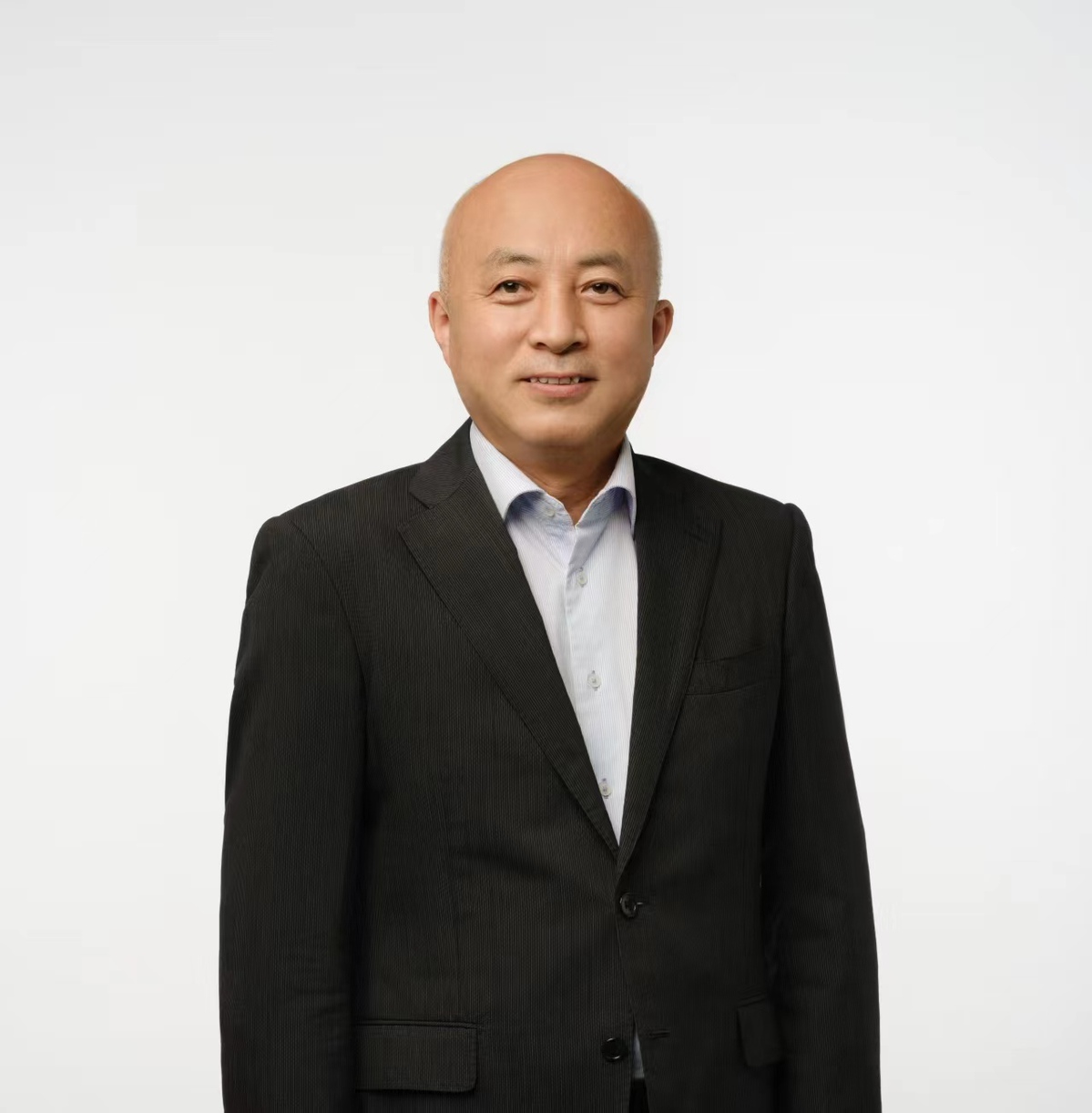
The author is director of the Palace Museum.
The views don't necessarily represent those of China Daily.
If you have a specific expertise, or would like to share your thought about our stories, then send us your writings at opinion@chinadaily.com.cn, and comment@chinadaily.com.cn.