


Bridging cultures, connecting worlds







In 2019, I began my Chinese language journey at the Confucius Institute in Rome. At the time, I already spoke several European languages, and I wanted a new challenge — something truly different that would expand my worldview. Chinese fitted that bill perfectly. From the very first lesson, I found it simultaneously daunting and exciting. The intricacy of the characters, the melodic nature of the tones, and the unique sentence structures captivated me.
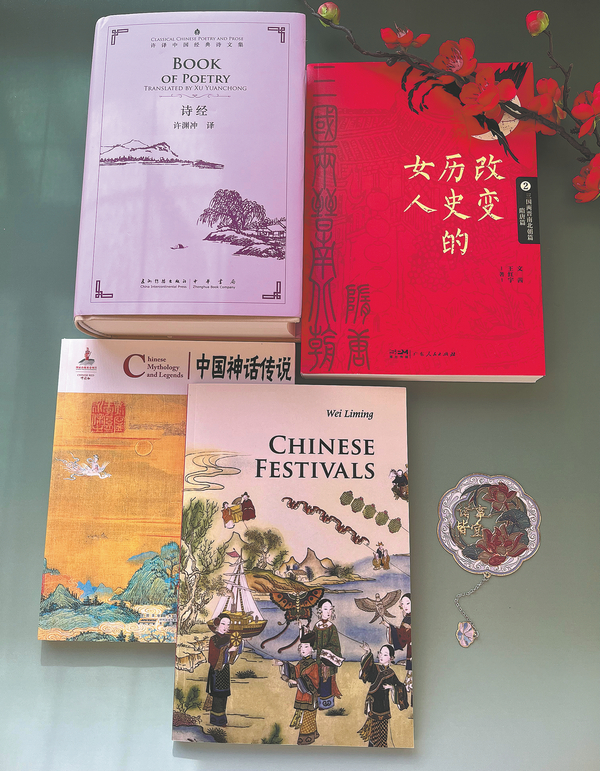
However, my interest soon branched out far beyond linguistics. As I delved deeper, I discovered that learning the language was just the gateway to a vast cultural heritage stretching back thousands of years. Eager to understand the literary heart of China, I began with Tang Dynasty (618-907) poetry, renowned for its concise elegance and emotive power. Poems by Li Bai and Du Fu introduced me to China's poetic tradition. Intrigued by its roots, I then turned to earlier works like the Shi Jing (The Book of Songs), an anthology of poems often attributed as one of the earliest reflections of the Chinese soul. Later, I explored the Chu Ci (Songs of Chu, or Poetry of the South), further broadening my understanding of regional literary expressions.
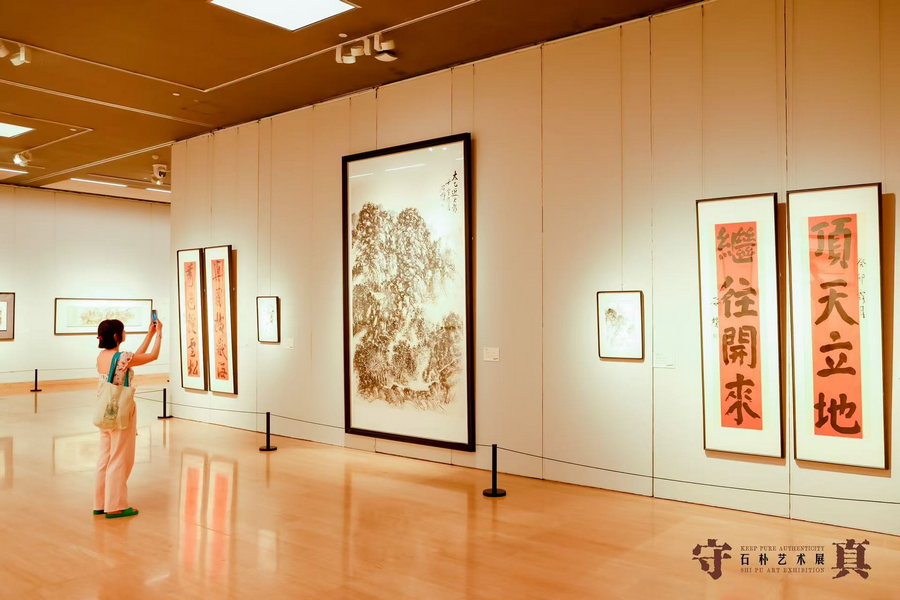
My classes soon multiplied, as I took courses on Chinese history, literature, philosophy and art history. The vibrant range of the country's philosophical heritage — Confucianism, Daoism and Buddhism — provided rich insight into core values and practices. In each new topic, I discovered a kaleidoscope of perspectives on life, governance, art and morality. Yet it was Chinese art history, especially scroll painting, that truly fired my imagination. The graceful brush-strokes, the interplay of ink and water, and the visual storytelling contained within those scrolls made me see art in an entirely new light.
During my journey, I was particularly intrigued by the stories of influential women throughout Chinese history. The accounts of figures like Fu Hao — an ancient military leader and priestess — showed me how women have shaped China's past in ways that might surprise many. The life of Wu Zetian, China's only female emperor, further underscored the complexities of power and gender in a dynasty-based society. The Empress Dowager Cixi from the Qing Dynasty (1644-1911), who navigated immense political turbulence, offered another fascinating narrative of leadership in a rapidly changing era. Learning about these extraordinary women expanded my understanding of China's societal transformations and how women's contributions have often been overlooked, yet undeniably crucial.
All these discoveries ignited a passion within me to share what I was learning. I wanted to become a cultural bridge, introducing Chinese traditions, stories and innovations to people back home. This is how I conceived the idea of a bilingual magazine — written in both English and Montenegrin — dedicated to Chinese culture and traditions. My vision is to create a resource that does more than just recount historical facts; I hope to showcase the timeless spirit that infuses Chinese civilization. Each issue will cover diverse topics such as history, mythology, literature and art, along with special columns on tea culture and regional cuisines. I believe that by tying these threads together, readers will gain a holistic understanding of how ancient customs continue to influence modern China.
In Montenegro and the wider Balkan region, there is a growing curiosity about international cultures, including China's. While there are academic materials available, they can often be dense and less accessible to general readers. My goal is to produce something lively, visually appealing, and intellectually engaging — an inviting portal into a part of the world that some might consider distant or mysterious. By highlighting lesser-known facts, folklore and personal perspectives, the magazine can connect with individuals who have never formally studied Chinese but are nonetheless curious about its depth and breadth.
Embarking on this publishing adventure has been both exhilarating and challenging. From selecting articles and editing translations to collaborating with experts who can provide unique insights, I feel like I am constantly learning. And that, in itself, is part of what fascinates me so much about China: the realization that even after years of study, there is still so much more to uncover. China's vast array of regional differences, historical timelines, and cultural nuances is like an ever-expanding puzzle — one that can never be fully completed, but becomes more fascinating with each piece we add.
Ultimately, my hope is that by creating this bilingual magazine, I can contribute to a mutual understanding between cultures. While I continue to study Chinese art history, philosophy and language, I look forward to facilitating dialogue that spans continents and generations. I want to encourage my fellow Montenegrins — and indeed all Balkan readers — to see that China is not a monolith, but a dazzling mosaic of perspectives and voices. If my journey from a curious language student in Rome to a budding cultural ambassador helps spark new conversations or inspire others to explore, then I will have found my personal "China moment".
The author is Ivana Milanovic, a language and culture enthusiast from Montenegro. She began studying Chinese at the Confucius Institute in Rome in 2019, and her passion for the language soon led her to explore Chinese poetry, philosophy, history and art. She has funded a bilingual magazine on Chinese culture, in English and Montenegrin, to share these discoveries and foster cultural connections in the region.