Getting world drawn to China
UK archaeologist explores nation's development via ceramics, jades







Difference is an invitation
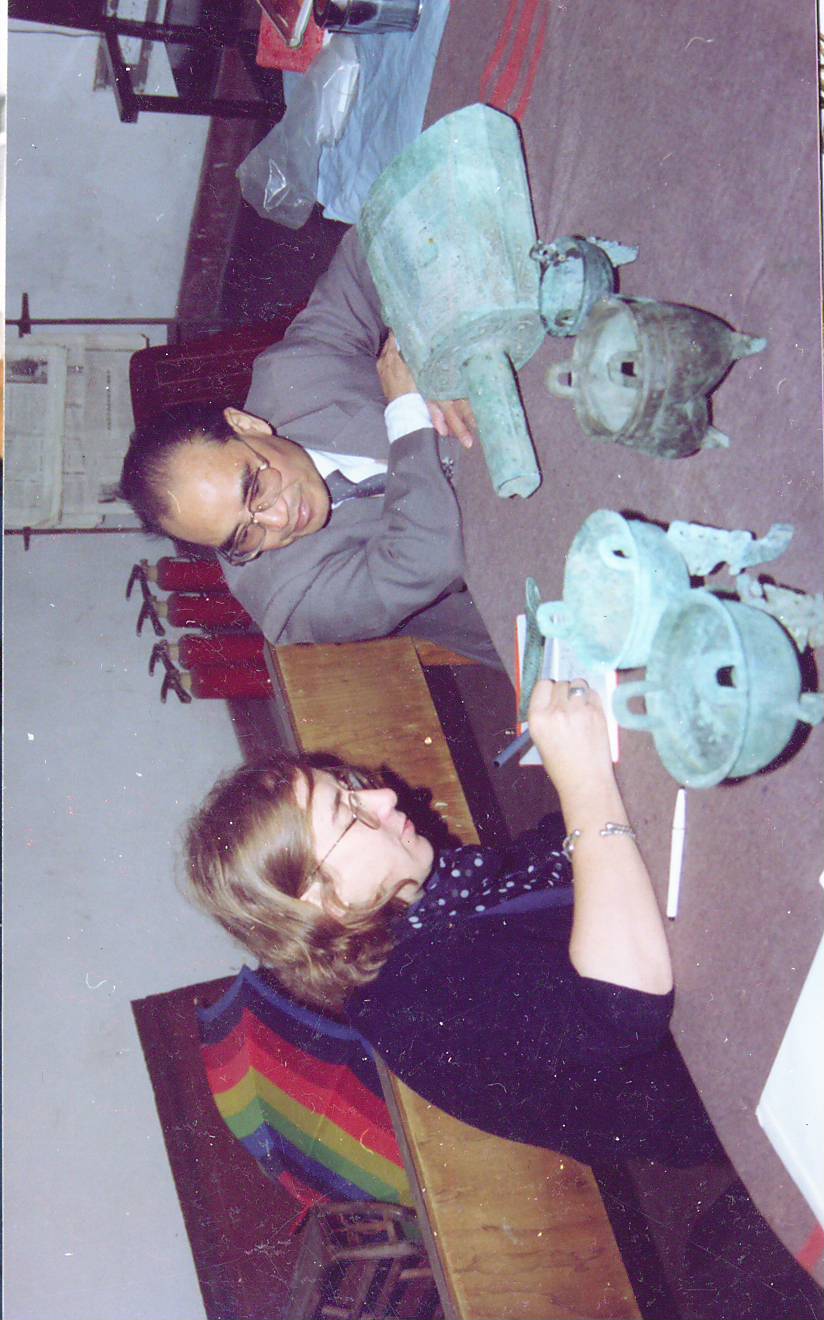
There are no shortcuts for a foreigner to study Chinese archaeology, Rawson once said.
In 1975, she set foot in the Far East land for the first time. It was a time when the country only owned trains in green that chugged her through the vast landscape, from the plains with fields of rice to the endlessly stretching plateau.
"I realized how complicated China is. It's a shock to realize how big China is, how many regions are different from each other, and how they're all different from the West and, above all, from Western Asia," she says.
To truly get an impression of the place, the only way is by traveling it, she believes. For the next 44 years, from 1975 onward, Rawson returned to China nearly every year, traveled alone sometimes, and even once slept at a train station to catch the earliest service.
"China is not a quick thing to learn," Rawson says. But she did not give up trying to get closer to that dream path. "I always wanted to work on China. In a way, people would say I am always addicted to China. I am happier thinking about China or reading about China than doing anything else."
"You can see the genuine reasons why China is challenging. What I like is a challenge, and my daughter always says, 'Jessica, you always like things to be difficult.'"
Engagements
What might be more difficult is introducing what sets China apart to the West, Rawson admits, yet she remains committed to doing so.
As the British Museum stands as one of the most-visited attractions in the UK, the former keeper prioritized her work, especially the refurbishment of the China gallery, both in 1992 and 2016, as a top priority.
The 1990s saw a prolonged blackout on the study of China, leaving nearly everything in the gallery outdated. Rawson was in charge of refreshing the entire space, from the lighting and the interior design to the exhibits and the display boards.
Her career as a curator did not mark a break, even after leaving the museum; she continued to curate blockbuster China-related exhibitions in the UK, such as China: The Three Emperors, 1662-1795, which was opened by Queen Elizabeth II in 2005 at the Royal Academy of Arts in London.
During her years at the University of Oxford, a major grant by the Leverhulme Trust, which she bid on and received, not only supported the founding of a contemporary China studies program in 2002 but also led to the creation of a China center in 2008 there.
She also supervised Chinese students, held visiting professorships worldwide, and organized trips with Chinese colleagues to China and Central Asia, all resonating with one aim — to make China better known.
Her efforts to promote exchanges somehow mirror another of her other research achievements — the interactions in ornament culture between China, Inner Asia, and the West.
While China's path has been independent, it has never been completely isolated, and "we need to see how much we get from each other," she says.
50 years seems to go by in the blink of an eye.
"I am so old, but if I last long enough, I might write one more book thing to explain the differences and interactions more, in a more direct, simple, and less specialized way," she says. "It has been proving hard; I have no optimism about my ideas getting to anybody else. But I am prepared to talk to other people about it."
Rawson believes that the past profoundly informs the present, and without acknowledging China's history, the world restricts its engagement with th economic powerhouse, for we are all the product of our histories, languages, and traditions.
"Differences in material life and belief do not have to be, and should not be boundaries," she writes in the ending chapter of Life and Afterlife in Ancient China. "If our planet is to remain safely shared, we must see them as invitations to interact, learn and prosper."
zhengwanyin@mail.chinadailyuk.com