


Joining ingenuity with culture
Craftsman honored by Forbes China for transforming traditional architectural techniques into a phenomenon, Yang Feiyue reports.







Inspired to innovate
In 2016, Liu enrolled in the China Academy of Art to pursue traditional Chinese landscape painting, which he feels represents the essence of Chinese art, to deepen his understanding of the aesthetic principles that underpin his craft.
However, his journey to further revive ancient mortise-and-tenon craftsmanship was far from smooth. Unlike industries such as porcelain or tea, which have enjoyed uninterrupted development and possess complete industrial chains, the ancient art of mortise-and-tenon had largely faded into obscurity in modern life.
The lack of a preexisting ecosystem meant Liu had no established suppliers, no reference points and no roadmap to follow.
When his mortise-and-tenon studio was established, Liu faced many challenges ranging from construction deciphering to artistic design and model-making.
He even sold his house to fund his creative endeavors.
Initially, Liu relied on outsourcing his designs. However, the suppliers he approached struggled to meet his standards.
"The precision required for mortise-and-tenon joints is incredibly high," Liu says, adding that he knew he had to take control of the entire process.
While pursuing his studies at the academy, he established his production plant, investing heavily in equipment and training, hiring skilled craftsmen, and teaching them the intricacies of mortise-and-tenon construction.
However, Liu hit a bump in 2019 when he found his "heavy toys "could only reach limited clientele due to their higher costs.
It inspired him to innovate. By combining traditional craftsmanship with modern manufacturing techniques, he streamlined production while maintaining the integrity of the ancient art form.
"We reduced the number of parts needed for each structure, making it easier to assemble while preserving the design complexity," he explains.
Liu's perseverance paid off. What began as a small workshop has grown into a thriving business, expanding from 200 square meters to 2,000 sq m.
His products have found a strong market, with annual revenues peaking at 15 million yuan, a growth rate of 30 percent over the past two years.
Wang Yongxian, a cultural relics protection expert from Shanxi, says: "Liu has carried the cultural mission of bringing ancient Chinese architectural craftsmanship to life."
"The dougong and mortise-tenon structures are not only living specimens of traditional craftsmanship but also enduring spiritual symbols of Chinese civilization," Wang says. "As modern urbanites at home and abroad touch the intricate structures of mortise-and-tenon and appreciate the interplay of mechanics and aesthetics, this once-dormant art, long confined to ancient texts, is becoming a cultural calling card for Chinese civilization to the world."
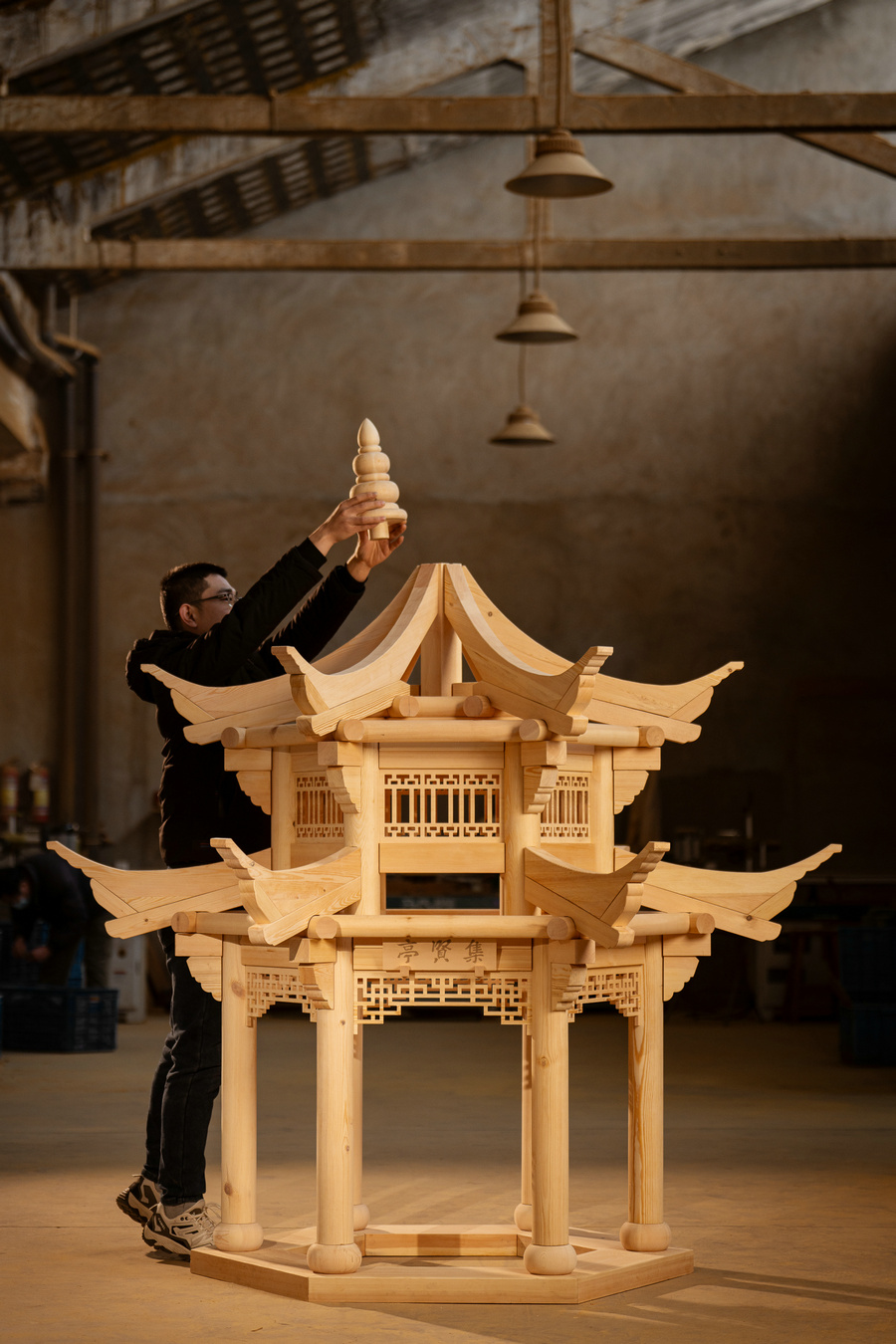
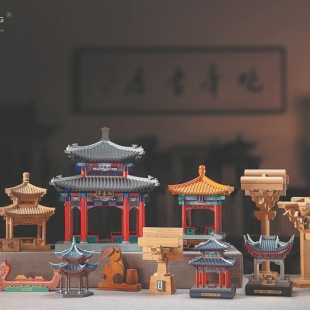
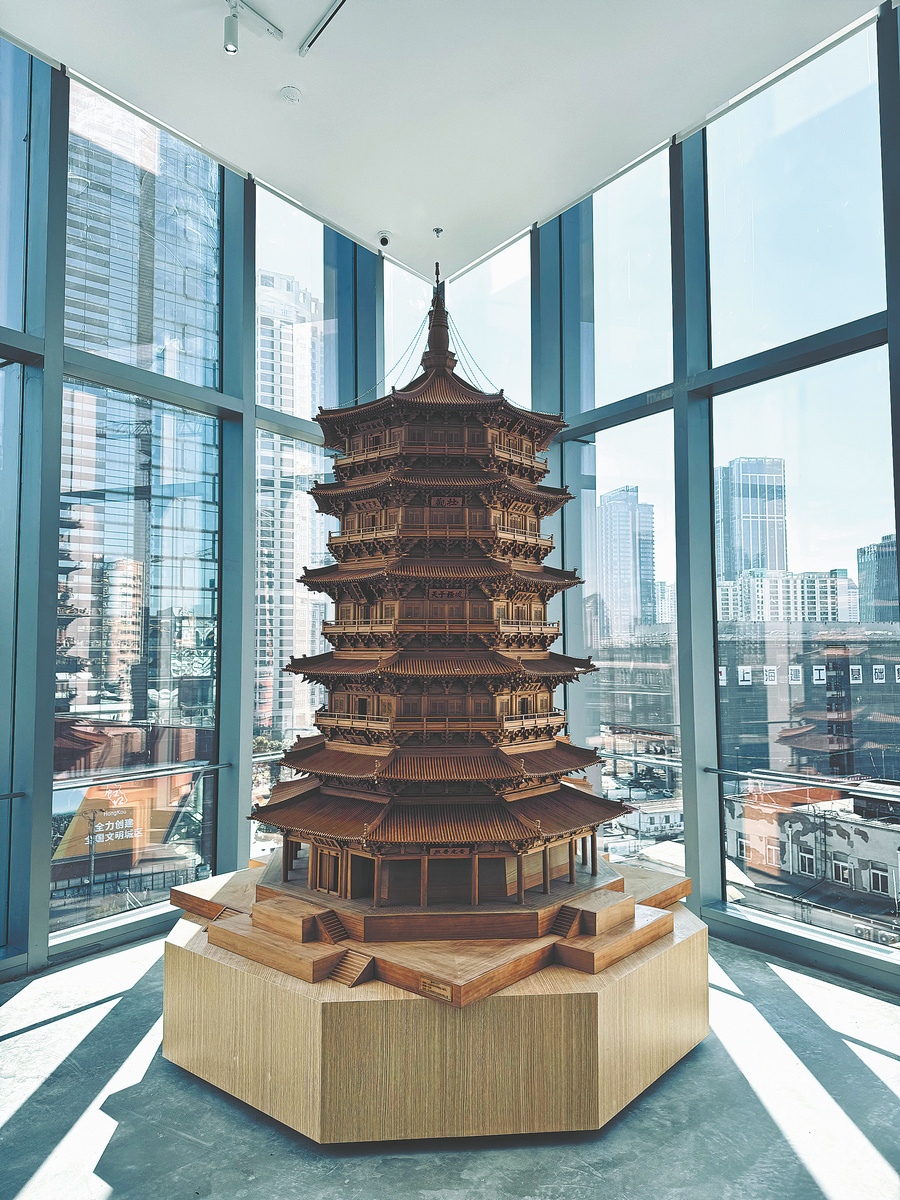
To date, Liu has developed sets of blocks for more than 80 ancient buildings, including those from the Palace Museum in Beijing and pavilions around West Lake in Hangzhou. Years of experience have enabled Liu to make interior analysis of various ancient architectural structures by seeing their exterior without using pen, paper or computer.
"I need to check the information to verify and fine-tune my drafts before the 3D modeling and printing," he says.
Liu believes his recognition by Forbes China has opened new doors for international expansion.
"I hope to collaborate with global partners and bring mortise-and-tenon craftsmanship to the world," he says.
"This craft is not just about architecture. It's a symbol of Chinese ingenuity and culture."
Contact the writer at yangfeiyue@chinadaily.com.cn