Levies to hit SE Asia economies







Higher-than-expected new tariffs unveiled by the United States are likely to hurt Southeast Asian economies, analysts warn, saying that the region has long relied on free trade to boost its growth.
The impact of Washington's so-called reciprocal tariffs would be uneven among members of the Association of Southeast Asian Nations, they said.
Vietnam and Thailand, which have bigger export sectors, are expected to bear more of the brunt of the increased tariffs. Meanwhile, the impact on the Philippines and Singapore would be limited as these two countries were slapped with relatively lower rates.
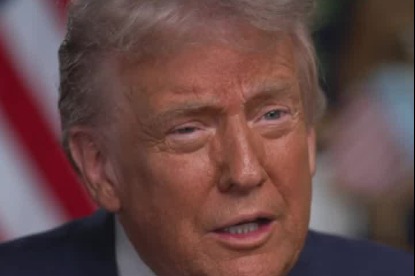
US President Donald Trump on Wednesday signed an executive order for "reciprocal tariffs", imposing a 10-percent "minimum baseline tariff" on all imports to the US and higher rates on certain trading partners. The tariff hike will take effect as early as Saturday.
Trump, who delivered a speech at the Rose Garden of the White House in Washington DC, presented a chart on "reciprocal tariffs" which showed that different countries and regions face different tariff rates.
For example, China will face a 34-percent tariff while a 20-percent duty will be imposed on the European Union.
In the case of ASEAN, Cambodia was slapped with the highest rate at 49 percent, followed by Laos at 48 percent, Vietnam 46 percent, Myanmar 44 percent, Thailand 36 percent, Indonesia 32 percent, Brunei 24 percent, Malaysia 24 percent, and the Philippines 17 percent.
Singapore, ASEAN's key trading and finance center, was not slapped with a specific tariff apart from the universal 10 percent tariff that will be imposed on all countries.
"The ASEAN economies we cover were hard hit by tariffs as we had expected, but the magnitude of the hit is much larger than we (envisaged)," Lavanya Venkateswaran, senior ASEAN economist at the Singapore-based OCBC Bank, wrote in her research note.
Venkateswaran estimates that Vietnam's exports to the US, which would be the hardest hit by reciprocal tariffs, would go down by as much as 35 percent to 40 percent this year.
Cambodian Minister of Commerce Cham Nimul said the country is actively addressing concerns over the newly imposed 49 percent US tariffs on Cambodian goods, AKP reported.
She said Cambodia does not impose a 97 percent tariff on US imports, as Washington claimed. Instead, Cambodia adheres to World Trade Organization regulations, with its highest tariff on US goods set at 29.4 percent — well below the WTO's allowable limit of 35 percent.
Voicing concerns
Son Nguyen, a lecturer of logistics and supply chain management at the RMIT University Vietnam, raised concerns over the significant tariffs imposed on Vietnam's goods.
Ahead of the US tariff announcement, Vietnam on March 31 cut import taxes on key goods such as automobiles and ethanol. The import taxes on wood and wooden products were eliminated totally, from the previous rates of 20-25 percent.
Yet these measures failed to shield Vietnam from the new US tariff measure. The Trump administration has accused Vietnam of imposing a 90 percent tariff on US imports and announced a "reciprocal tariff" of 46 percent on Vietnamese exports.
"Vietnam, and many countries on the list, will need to think long and hard (about) their relationships with the US," Son told China Daily.
Lawrence Loh, director of the Center for Governance and Sustainability at the National University of Singapore's Business School, said the tariffs will backfire and marginalize US influence in the Asian region, including in ASEAN.
Loh said Washington's latest announcement showed that the US "will only advance self-interest with no consideration for exercising its global responsibilities as the world's largest economy and superpower".
Even before Trump announced the new tariffs, ASEAN has been wary of increased trade protectionism.
According to "The State of Southeast Asia: 2025 Survey Report", over 40 percent of 2,023 respondents said they prefer ASEAN members to accelerate regional integration when confronting rising protectionism and nationalism around the world.
The ASEAN Studies Centre at the ISEAS-Yusof Ishak Institute in Singapore conducted the survey from January to February. The report was presented on Thursday via a webinar in Singapore.
Yenny Wahid, director of the Jakarta-based nonprofit Wahid Foundation, said at the report's presentation that this is a good time to focus on ASEAN centrality, noting that the US' latest trade policy has shown that the region "can no longer rely on superpowers. So, we need to devise our own ways to strengthen the region".
Yang Han and Xu Weiwei in Hong Kong contributed to this story.