Duty-free curb called 'self-defeating'







The Trump administration's latest tariff policy to cancel tax exemptions on low-value packages from China will disrupt the international trade order and increase costs for US consumers, according to Chinese industry associations and experts.
The policy to end the de minimis exemption for imports from China is "a blatantly self-defeating move" that will not only undermine the stability of global consumer goods supply chains, but also severely harm the interests of US consumers, the China National Light Industry Council said in a statement on Friday.
The association also called on the international community to stand united against this "trade bullying" and resolutely uphold a fair and mutually beneficial global trade system.
The statement follows the US administration's announcement that, starting on May 2, packages valued at up to $800 from the Chinese mainland and the Hong Kong Special Administrative Region will no longer be exempt from duties. They will now be subject to a duty rate of either 30 percent of their value or $25 per item, with that rate increasing to $50 per item after June 1.
The China National Textile and Apparel Council and the China Express Association have also voiced firm opposition to the policy change.
Over the years, Chinese postal and courier enterprises have used international delivery networks to transport cross-border e-commerce packages to US consumers, meeting their personalized shopping demands, reducing costs and improving their quality of life, the China Express Association said in a statement.
The sudden revocation of the exemption is expected to have severe implications for international trade and will particularly affect US families and younger consumers who rely on affordable cross-border shopping, potentially leading to higher costs and slower deliveries, it said.
Trump had signed an initial order on Feb 1 ending duty-free entry for low-value packages from China, but later paused the order because of logistical issues complicating the inspection of millions of the low-value shipments.
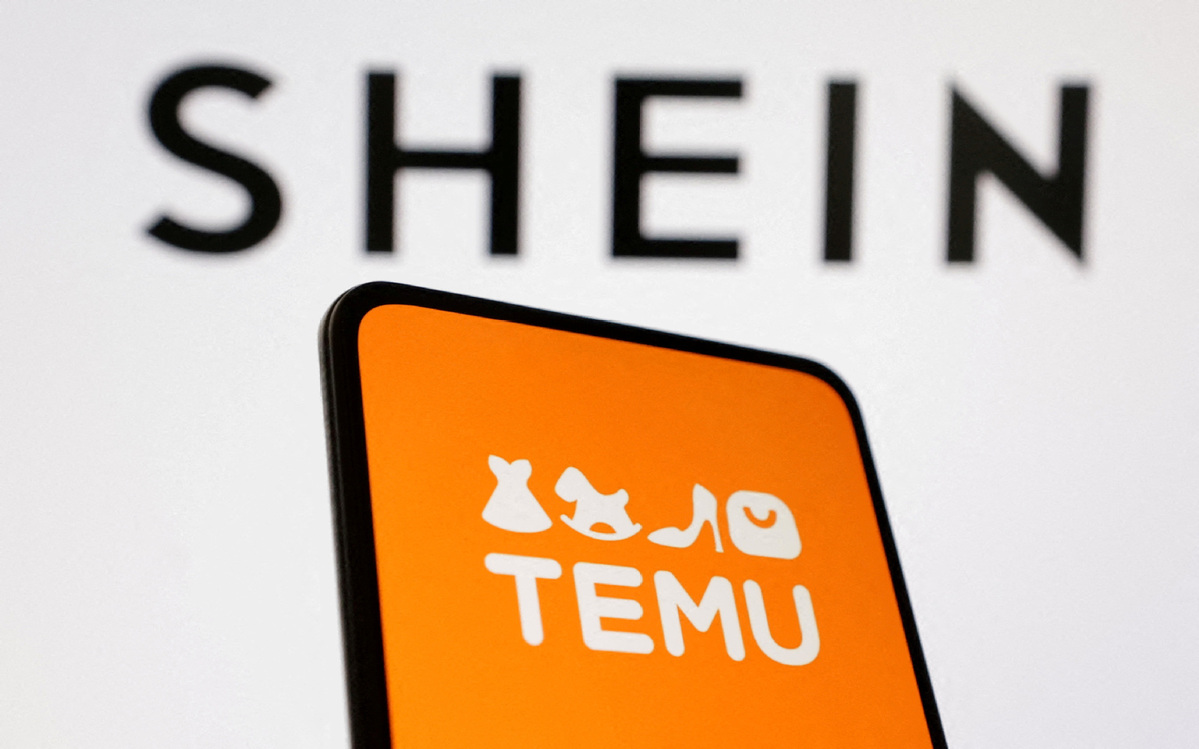
The number of packages entering the US through the duty-free route reached nearly 1.4 billion last year, according to Reuters. More than 90 percent of all packages coming into the US now enter via de minimis, and of those, about 60 percent come from China, led by direct-to-consumer retailers such as Temu and Shein, the report said.
If the US implements the new tariff rule on low-value packages from China, each US household, based on rough estimates, is projected to face an additional annual expenditure of over $100, Song Guoyou, deputy director of the Center for American Studies at Fudan University, told China Daily.
"The burden resulting from the removal of de minimis will not immediately be reflected in inflation indices; rather, it will be directly felt in the increased costs borne by every American household," he said.
Song added that since lower-income populations are more likely to buy de minimis shipments, this additional expense would pose a significant financial strain on them.
The view was echoed by a wide range of experts.
Inu Manak, a research fellow at the US think tank Council on Foreign Relations, said in an X post on Wednesday: "De minimis is not a loophole. … Collecting tariffs on low-value shipments creates an unnecessary administrative burden on CBP (US Customs and Border Protection) and raises costs on US businesses and consumers."
Chen Hong, executive director of the Asia Pacific Studies Centre at East China Normal University, said that as high quality and affordability have made Chinese goods popular among US consumers, eliminating the tax exemption "runs counter to the global trade trend and suspends the US integration into the world's e-commerce landscape".
He added that after years of globalization, Chinese manufacturers have built resilient and adaptive industrial and supply chains worldwide that will remain largely unaffected by the new US tariff measures.
"The US market has never been, and is not, and will never be the sole destination for China's e-commerce businesses," Chen said.
Song, at Fudan University, also said that the policy shift is expected to have a limited impact on Chinese cross-border e-commerce enterprises in the short term, as they might bypass tariffs by redirecting shipments to distribution centers in the US or third-party countries.
In this regard, Shein and Temu, two popular Chinese-owned e-commerce platforms, have already taken steps to offset elimination of de minimis by expanding their operations in the US, diversifying their supply chains and shifting to bulk orders.
For example, Temu's strategy includes significantly enhancing the promotion of sellers with inventory in local warehouses to adapt to changes that will be brought about by the new tariff policy, according to media reports.