Tariff barrage hits harder in Washington
Former World Bank economist: 'If the US wants to talk, our door is wide open'







Washington's so-called "reciprocal tariffs" are hurting the United States more than China, and if the US wants to talk, China is expected to be open only to negotiations based on equality and fairness, said a senior economist.
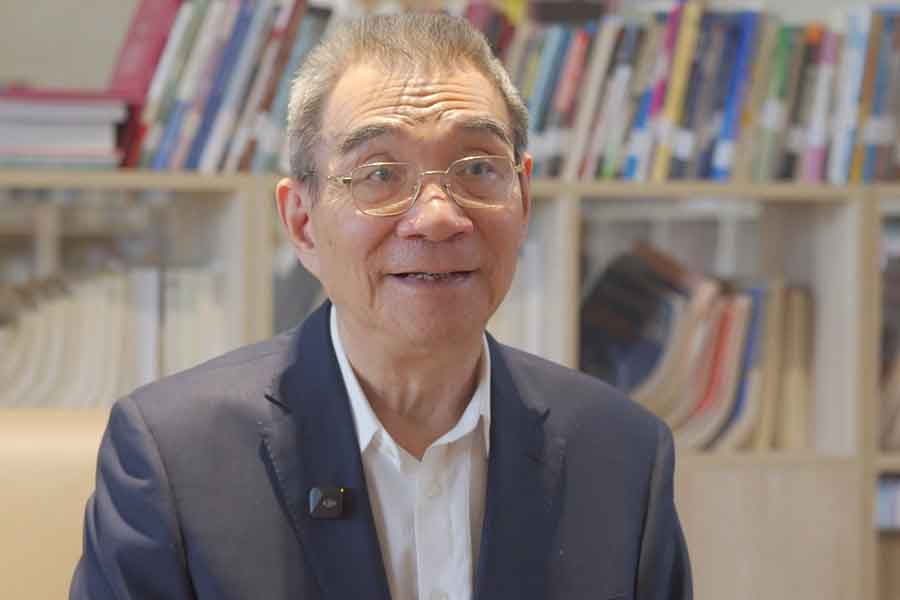
In an exclusive interview with China Daily, Justin Yifu Lin, dean of the Institute of New Structural Economics at Peking University, said the US ignores basic economic rules when it claims to suffer losses from trade with China, and what is happening has already proved its tariff policies are hurting itself badly.
Lin, who is also former chief economist at the World Bank, stressed China has ample room for policies to expand domestic demand and fend off external challenges, including high tariffs. Moreover, he expects China to be the winner in the US' strategic competition.
"Trade is mutually beneficial. Different countries have different comparative advantages. The US buys Chinese products because they are of better quality and cheaper than those produced in the US, and vice versa," said Lin.
Lin said that "the US tariff policy is actually hurting its own people and economy, and now they can't stand it, so they want to negotiate with China," adding that: "If the US wants to talk, our door is wide open. However, negotiations must be based on the premise of fairness, not based on intimidation."
Lin said: "We welcome open consultations. There must be mutually beneficial ways to be found through negotiations to solve trade disputes."
The so-called "reciprocal tariffs "announced in April have so far driven down US bond prices, share prices and investor sentiment, while morphing into a heavy burden borne by US consumers and businesses.
The latest forecast by S&P Global said the US economy will expand 1.5 percent and 1.7 percent on an annual average basis in 2025 and 2026, respectively, down from 1.9 percent in its March forecast, with domestic demand growing at less than 1 percent on an annualized basis for the rest of this year.
It expects tariff-induced price shocks will raise core consumer prices to 4.0 percent by the end of this year.
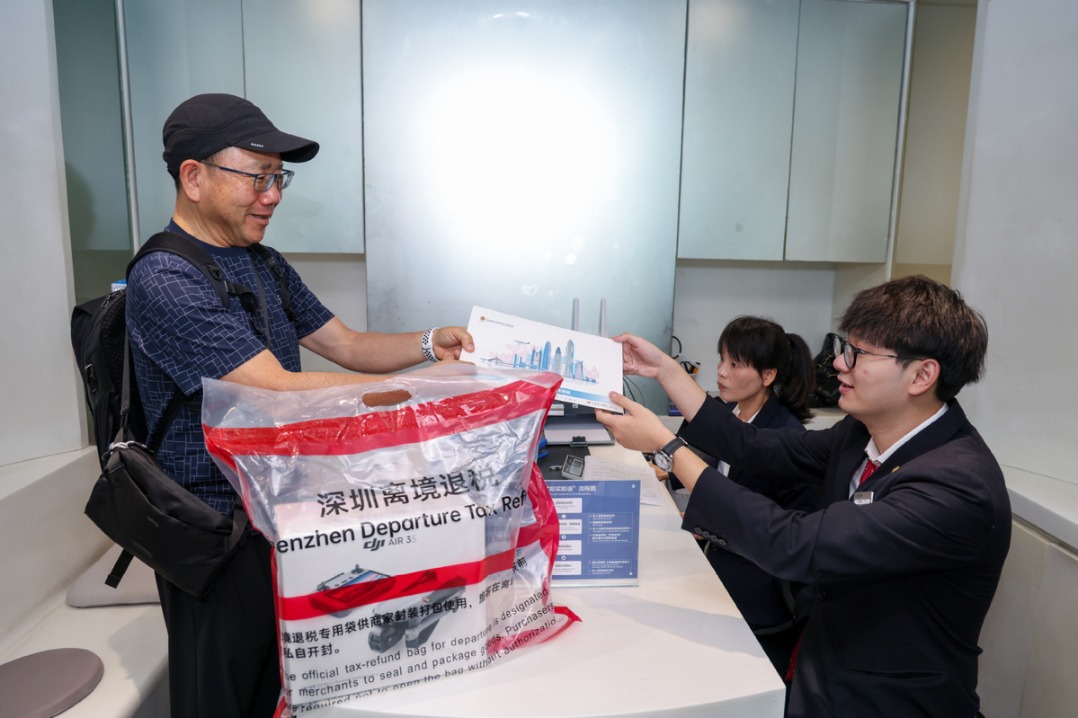
As a matter of fact, US consumers flying to China for shopping sprees have made headlines recently, as it is ultimately easier on household budgets.
Lin said China has undertaken thorough preparations and scenario simulations since the last round of China-US trade dispute began in 2018.
As for the potential impact of US trade policies, China is prepared with well-calibrated response strategies, Lin said, adding that such measures include fostering a new development pattern, which enables China to have more policy space to address external uncertainties and challenges.
"It does not make any sense for the US administration to claim it suffers losses from trade with China. We have a saying that you can never wake up a person who pretends to be asleep. Not until the US discovers that it is more severely hurt by trade frictions will it wake up."
However, despite the better-than-expected economic growth of China in the first quarter, Lin acknowledged the Chinese economy faces challenges, such as insufficient domestic demand, and negative impacts from the US tariff policy.
The tariff impact may gradually become more apparent after April. "To address those challenges, China needs to make the most of its policy space, introducing more fiscal and monetary policy measures," he said.
For instance, fiscal stimulus strategies could be used to promote household consumption and support more new infrastructure projects. On the monetary front, he said that cuts to reserve requirement ratios and interest rates would help increase liquidity, while using structural monetary tools to channel more lending to emerging sectors would help boost investment and support consumption.
"China, as a large economy, has far greater fiscal and monetary policy space compared with many other countries. As long as we fully utilize this policy space … we can expect stability and continued progress this year and beyond."
Lin also said the impact of the US tariffs has actually strengthened his confidence in achieving China's national rejuvenation.
As for products and technologies the US does not sell to China, the country can source them from other countries, or rely on the new national system mobilizing resources to make breakthroughs in self-reliance, he said.
Moreover, given limited resources, China is actually allocating resources to support high-productivity industries, while the US hopes to reshore manufacturing through high tariffs and direct resources toward manufacturing sectors in which it has lost comparative advantages, which will lower its productivity.
"In such a competition pattern, who will be the eventual winner is clear," he said.
Liu Ran contributed to this story.