Beijing, Moscow key contributors to global governance







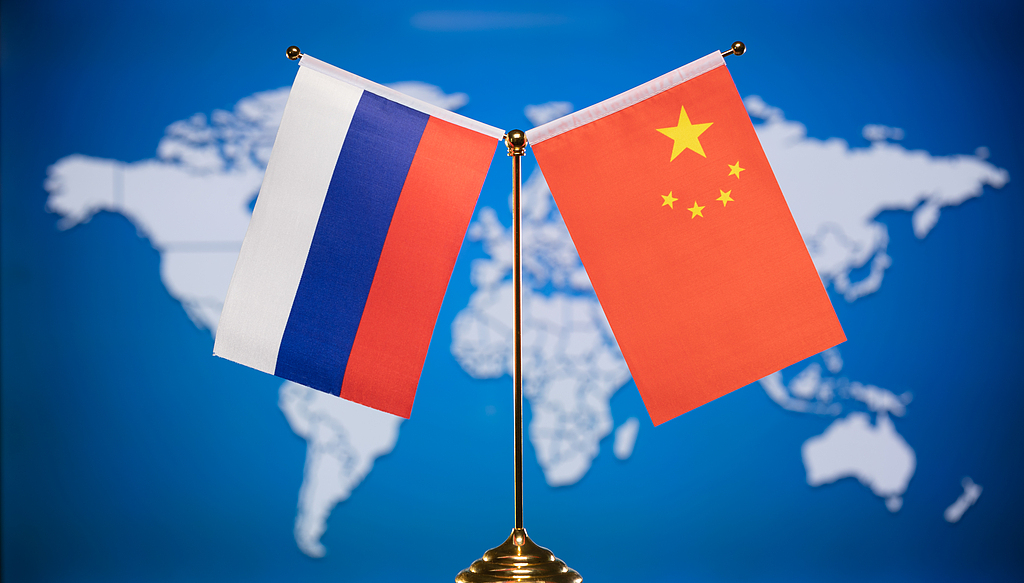
Intensifying unilateralism and bullying tactics by certain countries have significantly impacted international relations and the global governance system centered on the United Nations, undermined sustainable development, and is threatening global peace and development.
Fortunately, China and Russia remain committed to upholding the UN-centered global governance system and international law-based world order. The two countries are collaborating in many multilateral platforms and groupings including the UN, the Shanghai Cooperation Organization and BRICS, and promoting an equitable multipolar order and inclusive globalization by adhering to multilateralism.
As advocates for multipolarization and democratization of international relations, China and Russia, apart from issuing joint statements during head-of-state visits, have also issued a series of joint political documents in 2008,2011, 2017 and 2021, emphasizing the vital role of the UN, opposing any acts that undermine its functions, and supporting the world order centered on the UN to ensure fairness and justice in global affairs.
Both China and Russia respect history, support the rights of countries to independently choose their development path, and oppose external interference in any other country's internal affairs.
In response to attempts by certain countries to deny history and misrepresent the victory in World War II, the joint statement China and Russia issued in 2015 re-affirmed their commitment to promoting equitable international relations based on consultation and respect for cultural and civilizational diversity. The document also called on the international community to further strengthen the UN's authority and its central role in international affairs.
In light of the attempts of some big powers to interfere in other countries' internal affairs under the guise of "human rights protection", China and Russia made their stance on the issue clear in a 2020 joint statement. In the statement, the two countries' foreign ministers opposed the politicization of the international human rights agenda and condemned the attempts of some countries to interfere in the internal affairs of sovereign states.
Instead of standing by and watching some countries resorting to abusive practices, and exploiting the international law and the dispute-resolution mechanisms, China and Russia have signed a declaration highlighting the need to respect international law, oppose external interference in any country's internal affairs, and stop the abuse of the dispute-resolution mechanisms.
While the current global governance system faces many challenges because of some powers' unilateral practices, the two sides have called for improving the system in order to overcome global challenges, restore global peace, and promote inclusive development.
Using the platforms provided by the UN, the two countries have engaged in constructive collaboration to improve the global governance system. For instance, in 2019, they prompted the UN General Assembly to establish the UN Open-Ended Working Group on the use and security of information and communications technology, promoting the construction of a community with a shared future for humankind. Additionally, Russia has repeatedly lauded in its official documents the China-proposed Global Security Initiative, Global Development Initiative and Global Civilization Initiative.
Aside from the UN, other multilateral organizations and groupings such as the SCO and BRICS serve as crucial platforms for communication and coordination between China and Russia. Through the efforts of both sides, the SCO has evolved from a security organization centered on mutual trust to the most influential organization in Eurasia. As for other countries, they have joined or want to join the SCO because they appreciate the "Shanghai Spirit". The Shanghai Spirit can be summarized as the safeguarding of peace through dialogue, promotion of development through cooperation, adherence to non-alignment, non-targeting of any third party, embracing of openness, rejection of the Cold War mentality and advancing with the times.
BRICS, despite its initial focus on economic cooperation, has expanded its role to safeguarding political security, promoting public health, and facilitating sustainable development and cultural exchanges, increasing the grouping's appeal and influence among other countries. The expansion of the grouping has made it a model for building global development partnerships that embrace diversity in all its forms.
China is the chair of the SCO for 2024-25, while Russia chaired BRICS in 2024. With mutual support for each other's roles, the two sides have deepened cooperation under the frameworks of the SCO and BRICS, promoting the development of the Global South, and helping reform the global governance system to make it fairer and equitable.
This year marks the 80th anniversary of the victory in the Chinese People's War of Resistance Against Japanese Aggression (1931-45), the Great Patriotic War and the World Anti-Fascist War and the establishment of the UN.As two of the five permanent members of the UN Security Council, China and Russia are set to deepen their strategic collaboration, promote the right view of history, cherish the victory in the World Anti-Fascist War, uphold multilateralism, and help reform the global governance system, so as to contribute to global peace and economic development.
The author is deputy director of the Department for European-Central Asian Studies, China Institute of International Studies. The views don't necessarily reflect those of China Daily.
If you have a specific expertise, or would like to share your thought about our stories, then send us your writings at opinion@chinadaily.com.cn, and comment@chinadaily.com.cn.