New rules set to guide auxiliary power services
Electricity consumption, generation to be more market-oriented, experts say







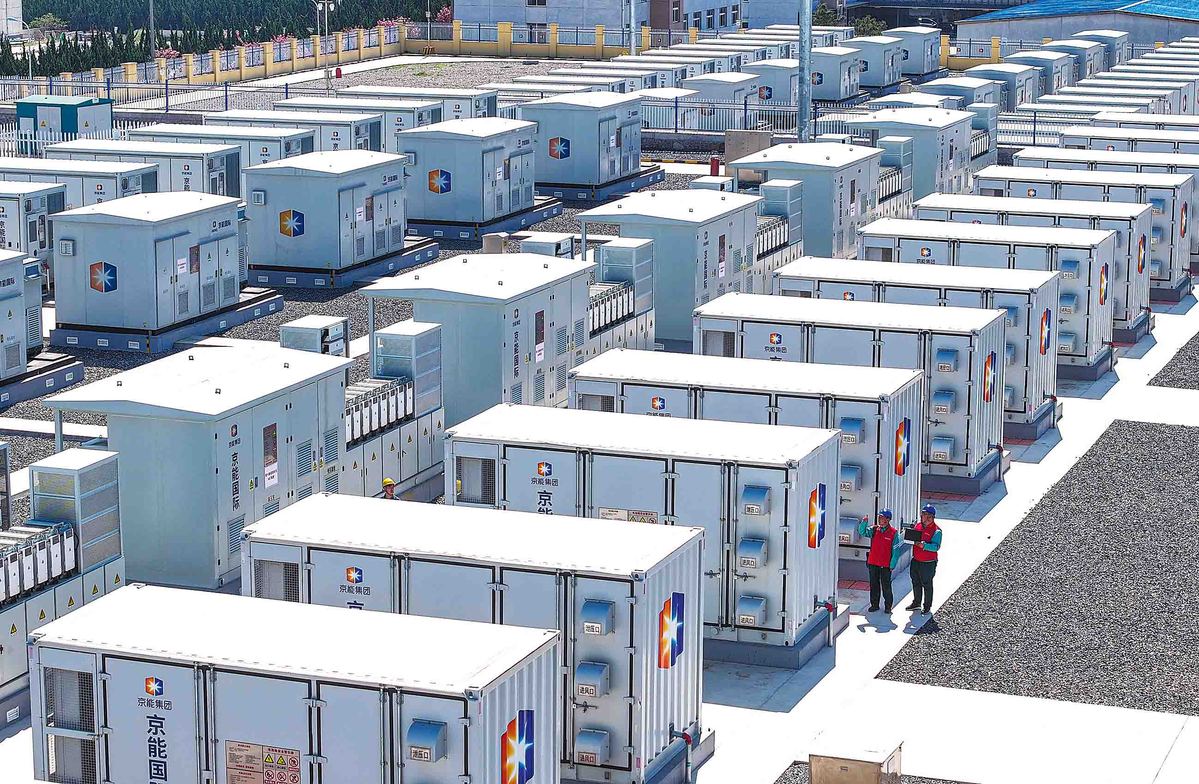
China has released new rules to guide more auxiliary electricity services into the market to ensure a steady power system, which industry experts believe will create significant opportunities for new energy technologies like energy storage, virtual power plants, smart microgrids and vehicle-to-grid operations.
The National Development and Reform Commission and the National Energy Administration recently published basic guidelines for the auxiliary electricity services market to ensure that the power system runs safely and smoothly, especially as China builds a new energy system with more renewable power.
Aiming to create a clear market where providers of these services are paid based on the principle of "who provides gets paid; who benefits pays", the initiative is seen as a key step toward creating a unified national electricity market in China, the NEA said.
Auxiliary services are essential for grid stability as they act as the grid's "regulators". They include functions like quickly increasing or decreasing power output (peak shaving), keeping the grid frequency steady (frequency regulation), providing backup power, and managing how fast power plants can change output (ramp rate).
According to the NEA, in the past, these services were often free or managed by plans. The new rules push them more toward a market-based system where providers can be paid.
One of the key changes is that the rules allow new types of players to join this market. This includes companies that operate energy storage, virtual power plants, smart microgrids and services that connect electric vehicles to the grid, it said.
Industry experts and company executives believe the initiative is set to accelerate the deployment of new energy storage and other flexible resources.
New energy technologies like energy storage, virtual power plants, smart microgrids and vehicle-to-grid operations are set to embrace massive growth opportunities as the nation adds more wind and solar power facilities. Renewable energy resources can be less predictable, so the grid requires more ways to maintain stability, they said.
Deng Simeng, a senior analyst for renewables and power research at global consultancy Rystad Energy, said as much as 80 percent of China's power consumption and generation will be transacted through competitive markets this year, a significant rise from 61 percent in 2024.
Zhu Gongshan, chairman of GCL (Group) Holdings Co Ltd — China's largest private power firm — said this policy marks a pivotal step in the country's energy transition by formally integrating emerging players like energy storage systems and virtual power plants into the auxiliary power services market.
"Granting these entities equal market status with traditional generators unlocks the flexible potential of distributed resources. For example, virtual power plants can leverage smart technologies to provide real-time grid balancing, while energy storage firms benefit from a dual-revenue model combining energy sales and auxiliary services, accelerating the shift from policy-driven to market-driven growth," Zhu said.
He said that despite the opportunities, technical and regulatory hurdles remain.
"Standardizing EV charging infrastructure, enhancing grid interaction capabilities and addressing data security concerns are critical for scaling vehicle-grid integration. Virtual power plants must also overcome inefficiencies in resource aggregation and cross-regional coordination. Furthermore, regional variations in implementation rules risk fragmenting the market, underscoring the need for unified national standards to ensure fair competition and interprovincial synergy."
He added that a power sector driven more by market forces is likely to enhance the efficient allocation of resources. This is because the government is actively working to make pricing for new energies more market-based while also encouraging the integration of renewable resources like wind and solar into the electricity market.
As a leader in clean energy innovation, GCL will intensify research and development in virtual power plants and vehicle-grid interaction technologies, fostering integration between energy storage and renewables, Zhu said.
"We urge policymakers to refine peak-valley pricing mechanisms and cross-market coordination frameworks, ensuring the new power system evolves into a resilient, market-driven ecosystem that balances sustainability and economic viability."