All change
Anti-European agenda integral to 'Make America Great Again' heralds end of the West as we know it







Editor's note: The world has undergone many changes and shocks in recent years. Enhanced dialogue between scholars from China and overseas is needed to build mutual understanding on many problems the world faces. For this purpose, the China Watch Institute of China Daily and the National Institute for Global Strategy, Chinese Academy of Social Sciences, jointly present this special column: The Global Strategic Dialogue, in which experts from China and abroad will offer insightful views, analysis and fresh perspectives on long-term strategic issues of global importance.

Today the Chinese economy is no longer as tightly coupled with the United States as it was just a few years ago. China has strengthened its international economic position, concluding trade agreements with several countries in Africa, South America and Southeast Asia, and is currently the largest trading partner of more than 120 countries. In this context, the erosion of US leadership and credibility caused by the destabilizing actions of its new administration will be beneficial to China. In the post-COVID-19 pandemic period, Beijing, unlike Washington, supported key international institutions such as the World Bank, the World Trade Organization, the World Health Organization and the United Nations Educational, Scientific and Cultural Organization, as well as the Paris Climate Agreement.
In the early days of Donald Trump's second term as US president, US-European relations have taken the lead in global affairs due to the frictions resulting from the US administration's protectionist moves on the one hand, and the growing dilemmas already occurring within the European Commission and NATO headquarters in Brussels, on the other. Eventually — once the tensions in transatlantic relations subside — the most important aspect of international affairs, with fundamental implications for the entire world, will be the US-China relationship. Before this bond starts to improve, which is not likely be seen soon, it will first deteriorate. This will also happen in economic terms, with negative consequences not only for both the US and China, but also for other economies. However, despite the intentions of the US president, it is the US that will pay the most for his political whims.
China will maintain its current political course and seek to maintain and further increase its influence on the international stage. As long as the Chinese government's policy delivers what the people expect — and they expect, first of all, continued improvement in their standard of living — such a policy will be appreciated and supported by the vast Chinese population.
Increasing economic openness, engaging in cooperation with other regions and countries, making inward and outward foreign investment, taking part in WTO rules-based trade, transferring technology, strengthening peopleto-people contacts — these are China's positive and pragmatic responses to development challenges. The intensification of activities within the framework of the Belt and Road Initiative may contribute to the further strengthening of multilaterally beneficial economic cooperation. In an era of turbulent evolution of the international situation, every opportunity to improve external relations must be used wisely. China does this skillfully.
For example, they used the 16th BRICS Summit in Kazan, Russia, to discuss the launch of a system of international financial transfers that is not based on the US dollar. Now, in the context of the radicalization of the US' foreign policy, the BRICS members should intensify the conceptual and implementation work regarding an alternative settlement system. A growing proportion of Chinese exports and imports with various countries will be invoiced and settled not in dollar but in the renminbi. The share of the Chinese currency in foreign exchange reserves of many countries may also increase, although the dollar will continue to dominate.
China's leaders and diplomats use various international forums to talk and negotiate with countries seeking to resolve conflicts of interest, numerous not only in structures as loosely coupled as BRICS or APEC, but also in the far more deeply integrated European Union, with which China wants to maintain the best possible economic relations. The EU should exploit this pragmatically, without taking a biased position in the China-US rivalry, where the latter will now push even harder. Such persuasions will be of little use because, with the aggressiveness of the politics practiced under the name of "Make America Great Again" agenda, which is in fact anti-European in more than one respect, China becomes de facto an economic partner of Europe, in particular of the EU. The sooner this is grasped by the political elite in Brussels, the better.
Rather than accepting the antagonistic division into the West, led by the US, together with the EU subservient to it, and the East, led by China — two great spheres of the world competing both directly and indirectly for influence in the Global South — it is better to see two peacefully competing mega-systems: Euro-Atlantic and Eurasian. The EU belongs to both and should effectively benefit from this fact for its own socioeconomic development. Contrary to appearances, there are more differences and less in common within each side. What we can be sure of is the internal evolution of these blocs and shifts in linkages both with each other and with external partners. We are facing the end of the West as we know it. And if it has not happened yet, it will likely happen quickly, with the politics and policies of the second Trump presidency.


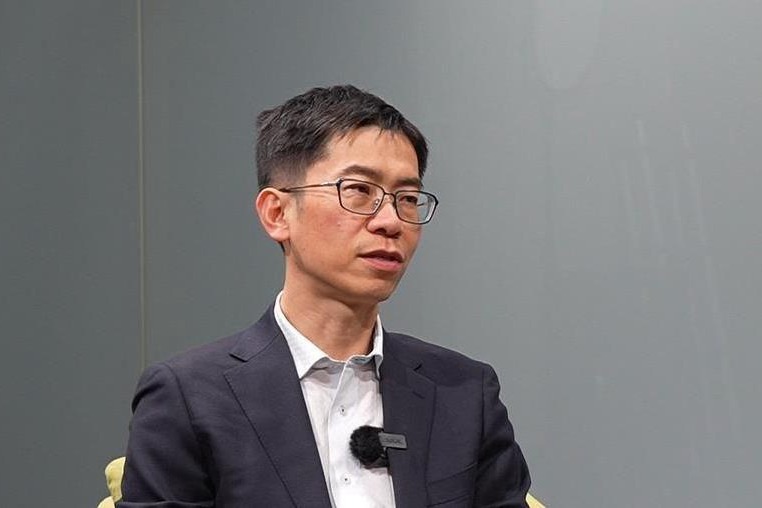
The author is director of TIGER — Transformation, Integration and Globalization Economic Research — at Kozminski University in Warsaw, former deputy prime minister and minister of finance of Poland, and a distinguished professor at the Belt and Road School at Beijing Normal University. His latest book Trump 2.0: Global Disruptions and Power Shifts will soon to be published by SPRINGER. The author contributed this article to China Watch, a think tank powered by China Daily.
Contact the editor at editor@chinawatch.cn.