Texas passes restrictive land laws







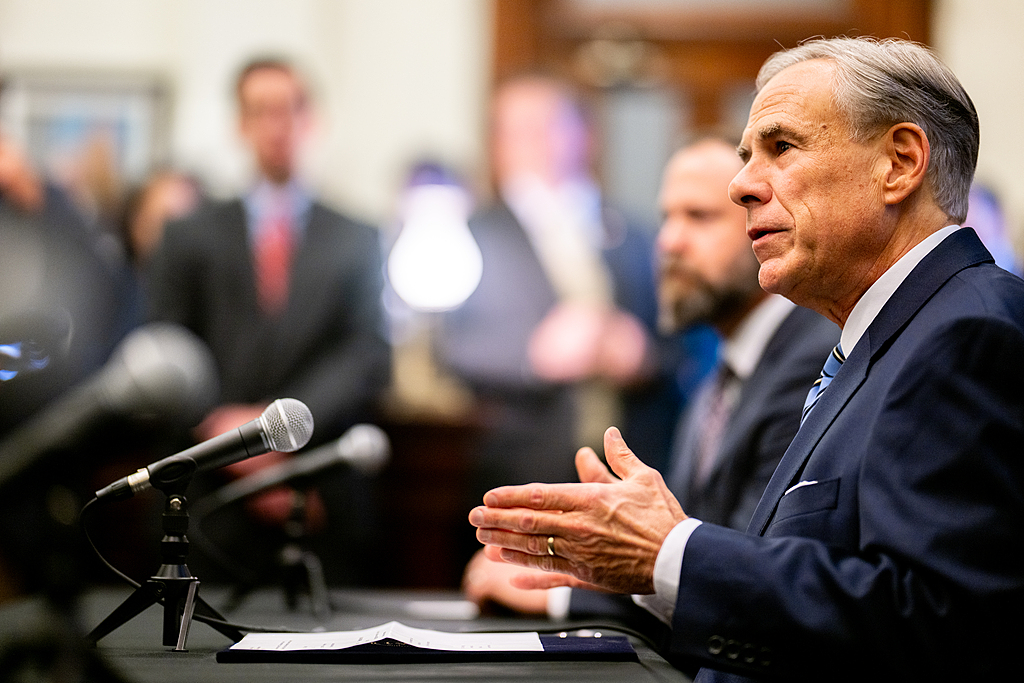
For one businessman, it's regrettable that the Texas Legislature passed SB17, a bill prohibiting primarily Chinese nationals from purchasing real property in Texas and limiting renting to less than one year. If Governor Greg Abbott signs the bill, it will take effect on Sept 1.
Zhang, a Chinese businessman who asked to be identified by his last name only, has visited Texas a few times in the past two years looking for a site to set up a battery factory. That plan is now scrapped, Zhang said.
SB17 prohibits citizens without green cards from countries determined to pose a threat to the United States by the federal government and any entities they control from purchasing any real estate in Texas — residential, commercial or agricultural.
The current list includes China, Russia, Iran and the Democratic People's Republic of Korea. In addition, the law gives the governor the power to designate additional countries, transnational crime organizations or other entities to the ban list.
The group that will be most impacted by SB17 is Chinese nationals due to their large number in the US.
The law allows one narrow exception: one homestead residence if the buyer is lawfully present in the US on a valid visa and intends to reside on the property long term.
The bill makes it a criminal offense for any violator, and the state has the power to create "in rem" action against the property in violation, meaning that the state can confiscate and dispose the property without notifying the property owner personally.
In addition, SB17 prohibits the banned group from renting any property unless the lease is less than one year.
"Basically, I won't be able to purchase any property to set up a factory in Texas under this new bill," said Zhang. "I will be able to rent a facility, but the lease term has to be less than one year. Without a long-term lease, investment in the nature of a factory operation is virtually impossible."
In Texas, a common lease duration for industrial factory properties typically ranges from three to 10 years, with five to seven years being the most frequent.
Legal experts said the bill also presents issues to Chinese students, scholars, and H1B workers who need to rent a place for living because the most common residential lease term in Texas is one year.
The Chinese American Legal Defense Alliance (CALDA) announced immediately after the passage of SB17 that it is preparing to fight back. The organization is in the process of working with other civil rights groups to file an injunction against the bill.
"This means that large numbers of Chinese on student visas, working visas and other non-immigration visas will be unable to rent a place in Texas. It is discrimination based on race and origin of place," CALDA said in a news release. "This law, under the guise of national security, intends to oust Chinese from the state. It's a concerted and systematic act by the state government to kick the Chinese out of Texas."
Asian Americans are worried that they will face discrimination in property purchases under the bill purely based on their looks.
CALDA is actively recruiting plaintiffs. Any Chinese citizen who legally lives in the US on a non-immigrant visa such as F1, H1B, J1, is in the process of buying/renting property, or has changed purchase/renting plans due to SB 17's restrictions, is eligible to be a plaintiff, according to the organization.
CALDA has filed suit against a similarly restrictive land law in Florida and won an injunction.
Zhang said he likes the overall business environment in Texas but said he regrets having to look for an investment opportunity in other states where such restrictions don't exist.
Unfortunately for Zhang, he will find that his options are limited, according to The Committee of 100. Its data showed that 23 states in the US had passed bills as of 2024 that restrict certain property ownership of individuals and/or entities from some countries. They are collectively called alien land laws.
As of March 2025, 28 states were considering 82 bills that would restrict property ownership in some way, including Texas. It's unclear how many states will be left free of such alien land laws after the legislative session is over this year.
The widespread use of alien land laws targeting primarily Chinese is "reviving exclusion" that occurred a century ago, concluded Leo Yu, associate professor at the Southern Methodist University Dedman School of Law.
Yu published a research paper in the Texas A&M Law Review at the end of May examining alien land laws passed more than 100 years ago and their strong revival in today's America.
Yu's paper said the revival of alien land laws occurred in a new geopolitical context: the new cold war between China and the United States.
Yu pointed out that the current alien land laws were often enacted with a bipartisan consensus "to ignore their constitutional defects and discriminatory impact on the Chinese community" and "mainstream America has demonstrated a higher tolerance toward civil rights violations against the Chinese community".
mayzhou@chinadailyusa.com