


Echoes from civilizations








Two scholars outline evolution of the arts from cave paintings to pop music, Yang Yang reports.
For thousands of years, people have searched for the meaning of life and tried to share it with future generations. They've passed down not just "how" to survive, but "why "we exist. These ideas are often found in art, buildings and stories, connecting people across time and cultures.
Yet in today's fragmented, hyperconnected world, where algorithms dictate trends and attention spans dwindle, how do we reclaim culture's enduring value and sense of belonging?
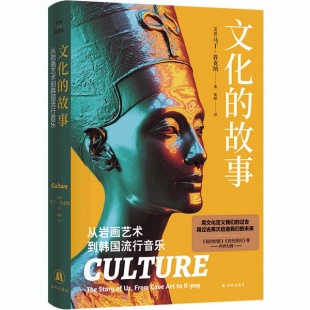
At Beijing's Times Art Museum on May 15, two scholars tried to answer the question at a book-sharing event about Culture: The Story of Us, From Cave Art to K-Pop by Martin Puchner, a professor of world literature and cultural history from Harvard University. The Chinese translation was published by Yilin Press in April.
Using a storytelling approach, the book tries to lead readers into key moments in cultural history — Why are the treasures of ancient Egypt in Berlin's Neues Museum? How did the pillars erected by Ashoka, the last major emperor of the Maurya Dynasty of India, influence the Arab Empire 1,500 years later? What is the relationship between Santo Domingo, the capital of the Dominican Republic in Latin America, and the European Enlightenment? Why has South Korean popular culture become a global phenomenon?
The book connects different civilizations through 15 cultural nodes across time and space, tracing cultural exchange and dissemination from cave paintings, literary creation, and theatrical arts to popular music and cultural phenomena on contemporary social platforms, outlining a cultural evolution spanning thousands of years.
In a presentation titled Timely Attention to K-Pop in American Academia, He Yanxiao, a postdoctoral fellow at Tsinghua University's Institute for Advanced Study in Humanities and Social Sciences, compared the flourishing entertainment culture of late Roman theaters with today's digital era pop culture "represented by K-pop".
For him, the concerns of Roman intellectuals for "vulgar" entertainment forms like pantomime, gladiator games and chariot races are almost identical to today's academic attitudes toward popular culture.
He says that, as "K-pop represents the culmination of mass culture that emerged with photography technology in the 20th century", reshaping the cultural values and imaginations of young people worldwide, it has gradually entered the academic research field as a cultural phenomenon in American universities.

The rise of K-pop is essentially neither the rise of South Korea nor Asia, but the manifestation of popular culture itself entering mainstream culture as a leisure activity, with a driving force that happens to come from South Korea, he says.
The current world is being profoundly changed by social media and cultural industries. Whether popular culture will replace universities as the primary growth path for the new generation remains to be seen, he says.
In South Korea, an increasing number of young people view entering entertainment companies and participating in trainee programs as an alternative to university education, and this trend itself may have historical significance, he adds.
In her presentation What Is Culture, Yang Mingchen, a lecturer from the Department of Comparative Literature and World Literature of Beijing Normal University, traces the etymology of the word "culture" — how it evolved from the Latin "colere" (to inhabit, worship, cultivate) to today's multifaceted meanings. From the 16th century to the 19th century, the concept of culture changed from "cultivation" to "a national way of life", she says, referring to British cultural theorist and literary critic Raymond Williams' ideas about the concept's evolution.
"Culture is both fluid and fixed; it exports and absorbs; it often reflects and confronts the present while looking to the future with the help of the distant past," she says.
She cites content from the book, taking the Renaissance period as a typical example: as an intellectual revolution, it was actually a return to classical traditions. The mysticism abandoned during the Renaissance was revived in the 19th-century Romantic movement.
Cultural renewal is never just linear progress; it is a complex dialogue with history, she concludes.
Popular culture is often viewed as light and transient consumer products, yet it carries rich historical resources and cultural symbols, serving as the adaptation and reinterpretation of classical culture in a contemporary context, she says.
"It is through these constantly updated forms of dissemination that traditional culture can transcend temporal and spatial barriers, reintegrate into daily life, and gain new vitality," she says.