Colombia to diversify economy by pushing to join BRICS







Looking to diversify its economic, trade and financing links, the Latin American country of Colombia is setting its sights on Asia, and China in particular, and working to join both international groupings and programs like the Belt and Road Initiative.
As with many of its neighbors, Colombia's economy has long been closely aligned with the United States, but the broader regional trend to look further eastward has been visible for years. For Colombia, many of these efforts have recently crystallized.
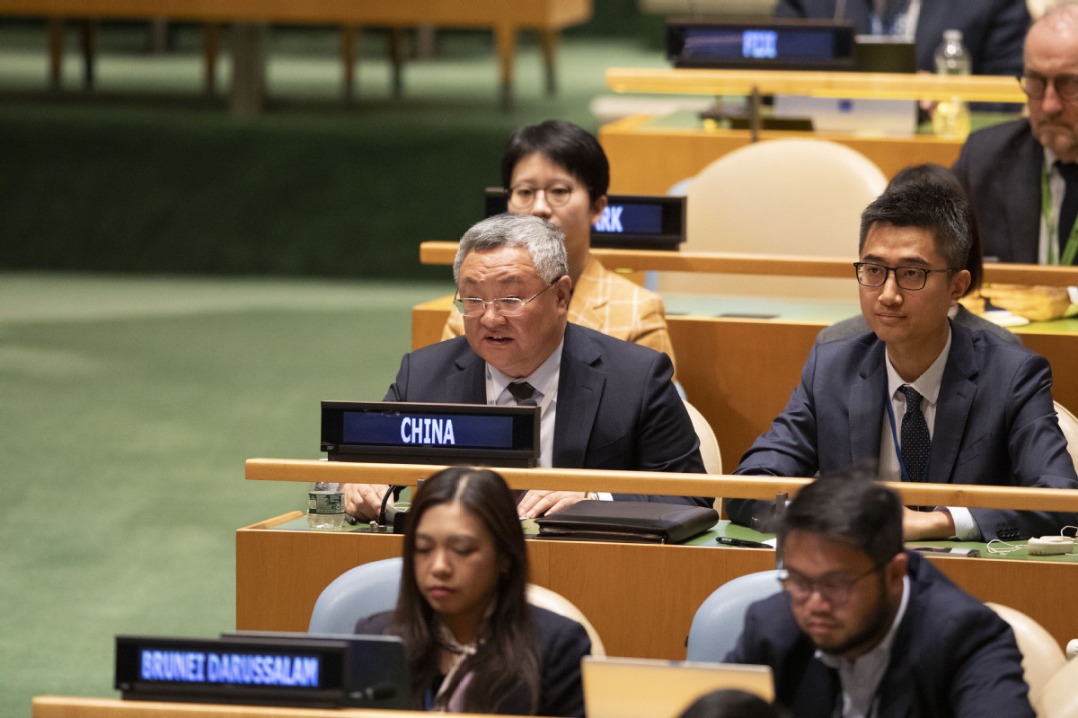
President Gustavo Petro, who visited Beijing for the China-CELAC Forum, signed an agreement to join the Belt and Road Initiative, China's Ministry of Foreign Affairs said in a statement on May 14. Earlier on May 5, Colombia's Acting Trade Minister Cielo Rusinque announced the country's decision to join the NDB during the Colombia & BRICS forum in Bogota. The forum was attended by ambassadors from Brazil, Russia, India, China and South Africa. Rusinque was joined by Colombian Congressman Alejandro Toro, who emphasized the bank's potential to help secure financing for essential sectors such as education and infrastructure.
While in China, Petro met with NDB head Dilma Rousseff and announced Colombia's plan to purchase $512 million in bank shares, according to an NDB release. He also expressed interest in using NDB funds to develop a 120-kilometre canal or railway linking the Atlantic and Pacific coasts.
"This process takes time and requires specific steps and approvals, making it still somewhat distant," said Alejandro Reyes González, chief economist at BBVA Research Colombia. "However, the country's opening to new markets and the attraction of financing sources, foreign investment, and infrastructure development capabilities will always be welcome".
The United States accounts for about 29 percent of Colombia's exports. While these links have helped stabilize the economy, they have also increased the country's exposure to US economic fluctuations.
"Greater openness, whether with Europe, Asia, or in this case, the BRICS, would be positive in achieving broader expansion and more balance in national trade," said González.
Colombia's push to join the BRICS is part of a broader regional trend that has been noticeable for decades to strengthen connections with other emerging economies, particularly in Asia. Colombia has actively pursued bilateral and regional trade agreements with Asian countries since 2008, most notably China but also South Korea and Japan.
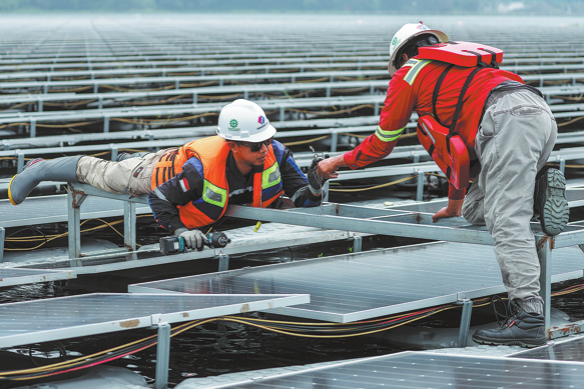
This shift has also been visible through infrastructure projects involving China, including the Bogotá Metro Line 1, La Dorada-Chiriguaná Corridor Megaproject, and Buenaventura-Shanghai Maritime Route.
Colombia has significant interest in attracting investments from increasingly influential regions to minimize its dependency on the US.
In Colombia's case, the arrival of such investments has been slower, and it would certainly benefit from closer ties through a bloc like the BRICS, said González.
Expectations are high, given the country's significant investment needs and still-limited export sector.
At present, Colombia's investment rate stands at just 18.6 percent of GDP, limiting long-term growth. Natural resources, mainly coal and oil, made up 47 percent of Colombia's total exports in 2024.
"Any policy that helps strengthen investment and long-term growth would be a step in the right direction," said González.
The effort to join the NDB also aligns with broader regional shifts underway.
Many Latin American nations have reevaluated their ties to the US, particularly following the US administration's foreign aid cuts, trade barriers, deportations, and the slashing of 84 percent of USAID funding for Latin America.
"A bloc like this could offer a counterbalance to Western powers. There is no formal trade or economic agreement, only a commitment to economic, political, and financial cooperation. This could enable countries like ours, which are heavily dependent on the United States, to achieve diversification," said Felipe Campos, Investment and Strategy Manager at Alianza Fiduciaria - Alianza Valores.
The NDB, launched in July 2014, now includes 10 full members and nine partner countries, including Bolivia and Cuba. BRICS+ collectively represents 54.6 percent of the world's population and 42.2 percent of global GDP, according to IMF data from October 2024.
"We must carefully weigh the diplomatic cost and the potential long-term returns. The cost, especially diplomatic, would be immediate, while any benefits would only be realized over the medium to long term," said Campos.
The writer is a freelance journalist for China Daily.