US actions not based on facts, says ex-envoy
Strategic missteps vis-a-vis China will cause damage to economy, he warns







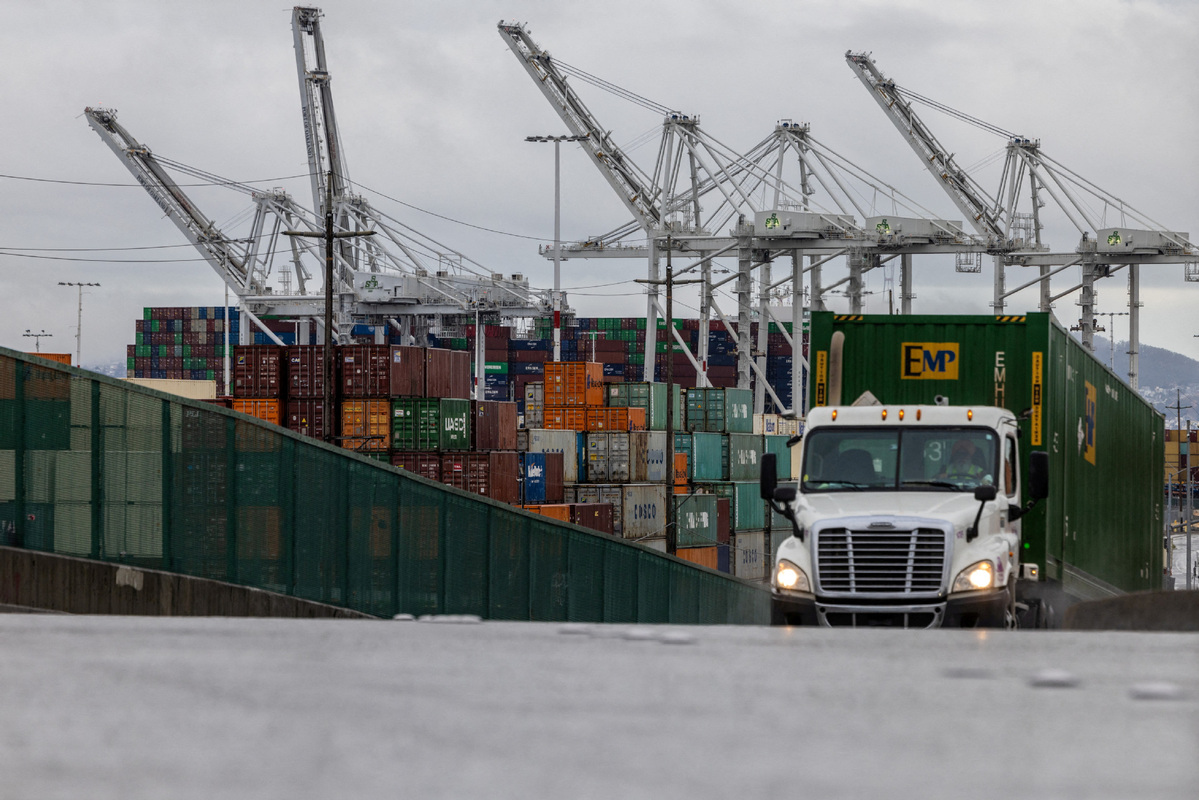
A US business leader and former China-based diplomat has cautioned that many of Washington's decisions on Beijing have been "not based on facts or reality", leading to strategic missteps and lasting damage to the US economy.
At the 2025 Stanford Center on China's Economy and Institutions' China Conference, Sean Stein, president of the US-China Business Council, said his concern was not over policy preferences like tariffs or export controls themselves, but over the "fundamental basic facts about China" that US decision-makers repeatedly misunderstand.
"Because our belief was that whatever your policy outcome is, if you're not basing it upon facts or the reality, then you're not going to get what you're looking for," he said at a panel discussion of the annual event.
Stein served for nearly three decades as a US diplomat, including as consul general in Shenyang and Shanghai, according to the USCBC website.
He reflected on the US-China relationship during Trump's second term at the May 14 Stanford discussion, which had been viewed by at least 15,500 YouTube users by Monday.
Among the key misconceptions that Stein outlined during the hourlong talk was US officials underestimating China's ability to retaliate — taking countermeasures to defend its interests and rights in the wake of the trade war initiated by the US.
Early in the first Trump administration, many officials believed "China's retaliation isn't really a thing". Stein said he heard that directly from high-level officials, who believed China had already used all its retaliation tools without major US economic fallout.
However, Stein warned that China's retaliation tool kit had evolved — from reciprocal tariffs to asymmetrical measures targeting US sectors.
Meanwhile, US policymakers overestimated US leverage, believing that tariffs and other things like export controls or sanctions would force China "to do the types of things they want them to do".
Stein called such perception a "really big fallacy", noting that US-China direct trade comprises less than 3 percent of either country's GDP, meaning tariffs offered limited strategic pressure.
"The leverage that we think we have is not what some policymakers in the US wish it were," he said.
Also, US officials assumed Beijing's resolve would crack under pressure. Instead, Stein observed increased "rally around the flag" sentiment in China.
"From the beginning, they were using two words," he recalled. "And it didn't matter if I was in Beijing or in Washington — I was hearing the same thing: 'We will talk and negotiate with respect. But we will not beg. And we will not be bullied.'"
Erroneous belief
Another erroneous belief, according to Stein, is that policymakers overwhelmingly believed that the only market that matters is the US market, and they ignored the importance of the Chinese market to US companies.
"For many firms, the China market or the ex-US market is more important than the US market."
In his talks, Stein shared examples of how US companies suffered from those policy miscalculations.
One midsized US exporter, whose exports to China accounted for a third of its business, lost not only the China market but also global competitiveness.
"Now, even though I import from China less than one-seventh of what I export to China… what I import from China isn't shoes or garments — it's raw materials. Now, with these tariffs, I'm priced out of the rest of the world," the CEO told Stein.
As for the US efforts to bring manufacturers back, Stein noted that hundreds of US manufacturing jobs moved overseas — not to dodge Chinese tariffs, but because US tariffs made the US too costly for global reexport.
He gave the example of a leading US pharmaceutical company, which built up capacity in Malaysia and signaled it would likely never return production to the US. Meanwhile, China ramped up domestic production and green-lighted European suppliers.
Stein concluded that the damage is not merely cyclic but structural. "Some of the damage is permanent," he warned, citing shifting global supply chains and rising skepticism among European investors toward the US market.
huanxinzhao@chinadailyusa.com