Deputy PM praises China over investment
Friendship between two nations demonstrated by the development of joint infrastructure and expanding cooperation across various sectors







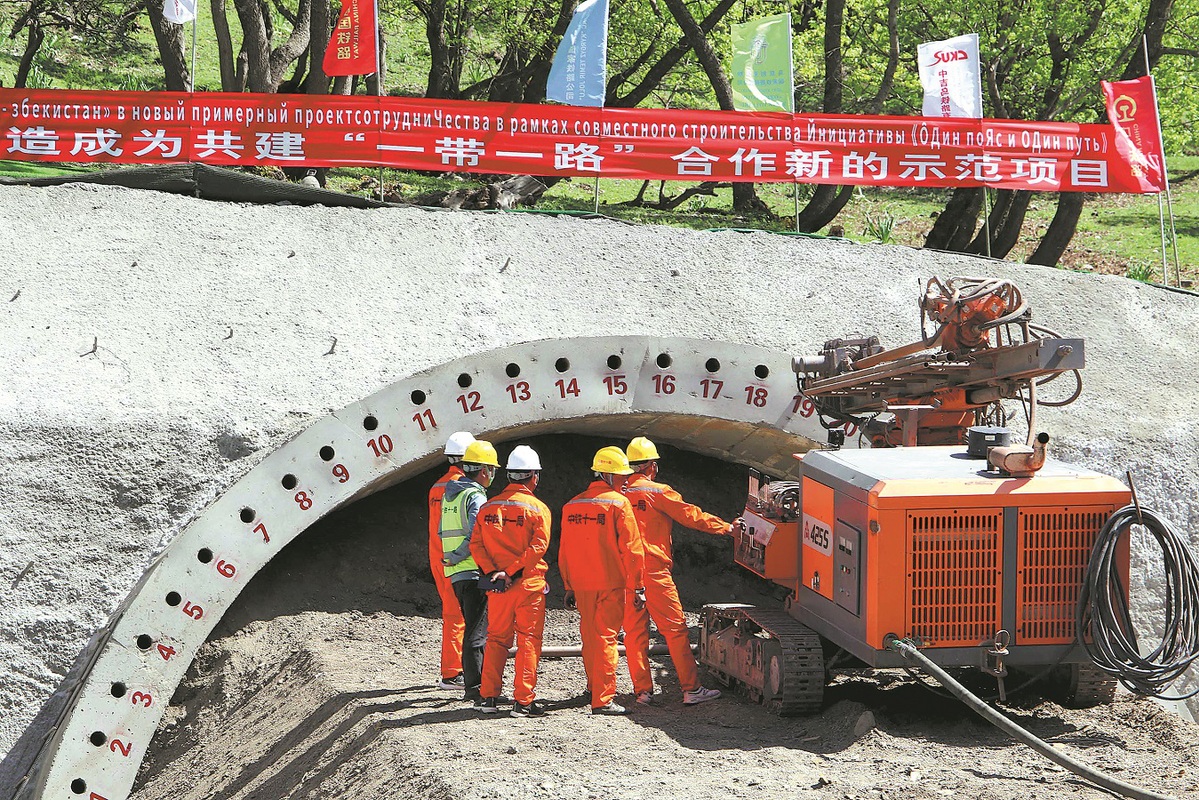
China and Uzbekistan are strengthening their comprehensive strategic partnership by broadening cooperation in trade, connectivity, infrastructure and cultural exchange. Driven by deepening local ties and aligned development priorities, the two nations are translating diplomatic consensus into practical results across a range of sectors.
Demonstrating the growing momentum in bilateral ties, the second Uzbekistan-China Interregional Forum was held on June 1-2 in Samarkand, Uzbekistan. The forum gathered more than 2,800 participants from government bodies, business communities, academia and local authorities, underscoring the expanding scope of cooperation.
It also reflected Uzbekistan's increasingly central role in China's broader engagement with Central Asia, supported by practical measures such as mutual visa exemption and joint infrastructure development.
Uzbekistan's Deputy Prime Minister Jamshid Khodjaev praised China's role as the country's largest trade and investment partner, calling the forum a critical platform for launching major projects despite global economic uncertainties.
China is Uzbekistan's leading trade and investment partner. Over the past five years, bilateral trade has grown rapidly, reaching approximately $13 billion in 2024. Direct investment from China has also multiplied compared with 2017.
The two countries have implemented a range of cooperation projects spanning energy, chemicals, machinery manufacturing, home appliance production and agriculture.
Khodjaev emphasized that despite the complex global economic environment, new opportunities for deepening the partnership are emerging. He expressed confidence that the trade talks and goods exhibitions held under the forum's framework would lay the groundwork for major new agreements.
On the forum's first day, Chinese delegates from provinces including Shaanxi, Shandong, Heilongjiang and Gansu, as well as autonomous regions such as Inner Mongolia, Xinjiang and Ningxia, held bilateral meetings with their Uzbek counterparts and signed multiple cooperation agreements. A concurrent goods exhibition attracted much attention, reflecting the commercial interest and growing business potential on both sides.
Coinciding with the forum was the implementation of a mutual visa exemption agreement. From June 1, residents of both countries can stay visa-free for up to 30 days per entry, with a cumulative stay not exceeding 90 days. The visa exemption policy applies to visits for tourism, business, family reunions and other exchanges.
The policy's effect was immediately felt — Flight CZ6030 from Tashkent arrived in Xinjiang's capital of Urumqi on the same day, the first direct flight under the new arrangement. Urumqi's border inspection officials have reported a rise in passenger flow and flight frequency between China and Central Asia since the policy's launch.
Regional connectivity
Connectivity continues to serve as a cornerstone of China-Uzbekistan relations, with infrastructure development playing a critical role in advancing broader regional cooperation.
A key example of this is the China-Kyrgyzstan-Uzbekistan railway, a long-awaited transnational project that has gained renewed traction under the Belt and Road Initiative.
The 523-kilometer railway is designed to connect western China to eastern Uzbekistan through Kyrgyzstan's mountainous terrain. It is to offer a shorter, more direct route for trade across Central Asia. Recognized as a strategic infrastructural undertaking, the CKU railway is expected to significantly enhance regional logistics and elevate Uzbekistan's position as a vital transport corridor.
In June 2024, the three partner nations signed an intergovernmental agreement that outlined technical standards, financing mechanisms and a phased construction timeline. The landmark accord marked a turning point after years of discussions, signaling a unified commitment to advance the project.
Once operational, the railway is expected to reduce freight transit time between China and Europe by up to seven days and cut the China-Uzbekistan transport distance by nearly 900 km. Analysts estimate that by 2035, the route could handle as much as 5 million metric tons of cargo annually, boosting trade volumes and improving supply chain efficiency throughout the region.
Deng Hao, a professor from Xinjiang Normal University, emphasized in a recent interview with People's Daily that regional cooperation between China and Central Asia has expanded across multiple dimensions. These include stronger interregional ties; the implementation of flagship projects such as the CKU Railway and the China (Xinjiang) Pilot Free Trade Zone; the development of cooperation platforms like regional expos and forums; and new models of collaboration involving cross-border e-commerce, livestreaming commerce and modern agricultural technology.
For instance, the Yiwu International Trade City in Xinjiang's Horgos is evolving into a major cross-border livestreaming commerce hub, connecting Chinese sellers with Central Asian markets. In the agricultural sector, Shaanxi province has begun exporting apple seedlings to Tajikistan, a sign of growing diversification in trade beyond traditional commodities.
Deng also highlighted that as of May, China and Central Asian countries had established more than 80 sister-city and provincial-level partnerships. "These subnational linkages are building blocks of mutual trust and operational synergy, which are critical for long-term cooperation," he said.
Xu Tao, deputy director of the Eurasian Social Development Research Institute at the Development Research Center of the State Council, noted that transportation and logistics have emerged as standout areas of progress between China and the Central Asian nations in recent years. Overland freight routes have become vital arteries for trade integration. Rail corridors connect China's inland hubs — including Xi'an in Shaanxi, Lianyungang in Jiangsu province, Chongqing municipality and Urumqi — to key points in Central Asia.
Air connectivity has also expanded rapidly. Xi'an now serves as China's most connected aviation hub for Central Asia, while cities such as Hangzhou, Zhejiang province; Sanya, Hainan province; and Kashgar, Xinjiang, have launched direct passenger and cargo flights to the region. The growing network not only improves the movement of goods and people but strengthens the overall resilience of regional supply chains.
New vitality
Cultural and tourism ties between China and Uzbekistan are experiencing a new wave of vitality this year, designated as the Tourism Year of Uzbekistan in China. The Central Asian nation is stepping up its tourism promotion efforts to attract more Chinese visitors.
A series of promotional roadshows have been held in major Chinese cities. These include Changsha, Hunan province; Chongqing; Urumqi; Guangzhou, Guangdong province; and Beijing. The roadshows highlight Uzbekistan's rich cultural heritage, local cuisine and distinctive customs.
During a tourism promotion event in Beijing in May, Bobir Yakhyaev, consul at the embassy of Uzbekistan in China, noted that 58 direct flights operate weekly between cities in the two countries. These include connections between Samarkand and Fergana in Uzbekistan and Beijing, Urumqi, Xi'an, Chengdu, Hangzhou and Guangzhou in China.