STAR Market reforms good for tech gains
New profit-related growth tier to be added to Shanghai-based board







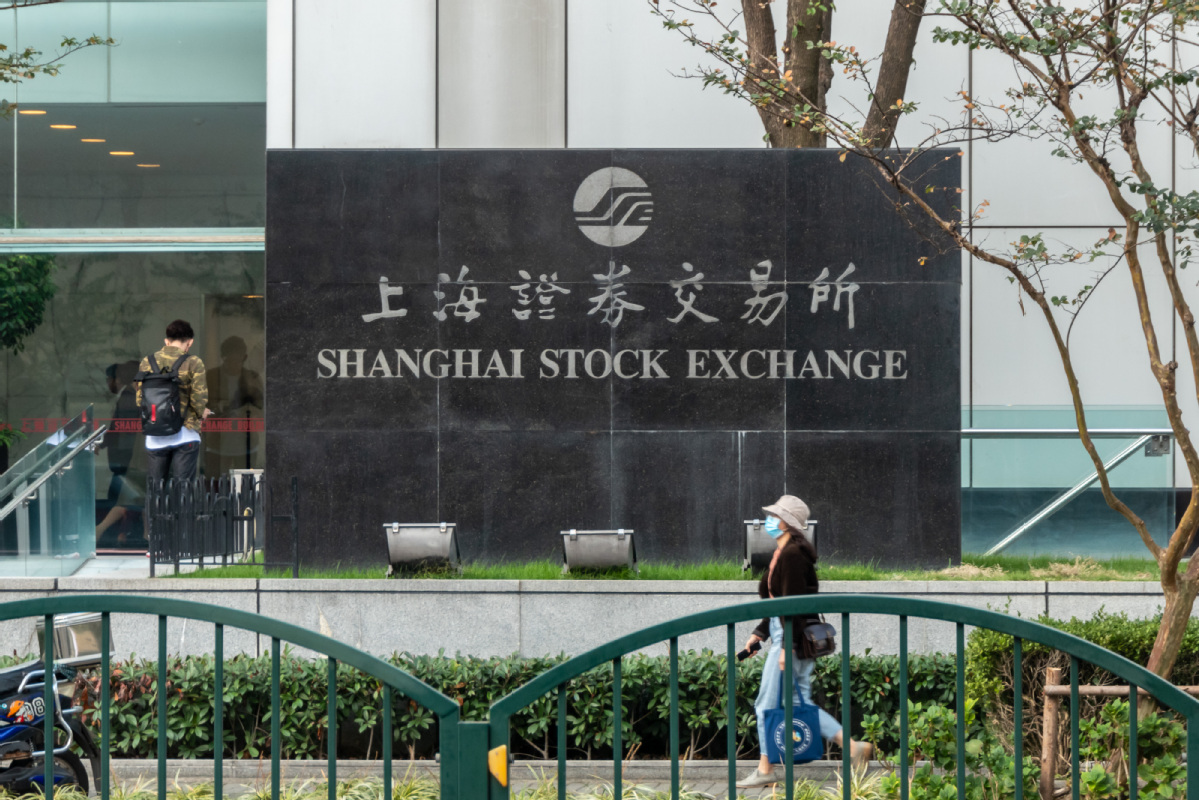
The new reform measures introduced for the STAR Market on the Shanghai Stock Exchange will further boost innovation activity, thus creating more growth impetus for China's high-quality economic growth, said experts.
Their comments were made on Wednesday, when the new measures were released during the Lujiazui Forum held in Shanghai.
A growth tier will be added to the STAR Market, Wu Qing, chairman of the China Securities Regulatory Commission, said on Wednesday.
All the unprofitable technology companies trading on the STAR Market will be included into the new tier, with a "U" designation attached to their stock symbols, according to a guideline released by the CSRC later Wednesday.
The rules for moving out of the growth tier differ. A newly listed company can move from the tier if it has achieved a positive net profit for the past two years and cumulative net profit is above 50 million yuan ($7 million), or if it reports a minimum positive net profit of 100 million yuan during the past year. Existing unprofitable technology companies can be moved once they turn profitable.
A CSRC spokesperson said during a news briefing on Wednesday that introducing the growth tier reflects the trajectory of better supporting technological innovation with the capital market's help, which is conducive to stabilizing market expectations. The new tier points to more controllable space for experimentation for incremental institutional reform.
With centralized management for unprofitable technology companies at the new tier, investors can better identify risks and protect their legal rights, said the commission.
Wu announced on Wednesday an additional six reform measures. Among these, the applicable range of the fifth set of listing rules, which allows the listing of rapidly growing but still unprofitable companies from the biomedicine and semiconductor sectors, may be expanded to frontier sectors including artificial intelligence, commercial aviation and the low-altitude economy.
Meanwhile, Wu added on Wednesday that the fifth set of listing rules for companies to float on the STAR Market will be resumed. It has been suspended since 2023.
The third set of listing rules on Shenzhen's ChiNext board, which allows unprofitable companies to go public, will take effect, Wu said.
Traditional listing refers to profitability as being the major criterion. It has a long-standing precedent. But in the current age of digital economy and knowledge economy, such criteria may rule out most potential tech companies, which require huge capital and long-term investment in advance, said Gao Tingfan, associate professor from the School of Economics at Capital University of Economics and Business.
Original and disruptive technological innovation may not be supported by traditional banking and credit systems. It must depend on risk capital provided by equity financing, especially public market financing. Being open to quality unprofitable companies is indeed helping to build an infrastructure for China's innovation-driven development. It can help China seek more innovation resources and help domestic investors benefit from the rapid growth of Chinese companies, Gao said.
Also included in the six reform measures is a pilot program under which quality tech firms can go through pre-review for their initial public offerings.
The Shanghai bourse explained in a circular on Wednesday that this arrangement has addressed the requests raised by many tech enterprises. Premature disclosure of a company's technologies and IPO plans may have a major impact on operations. The pre-review mechanism can minimize such effects, said the SSE.