Questions raised over South Korea's 4.5-day workweek proposal







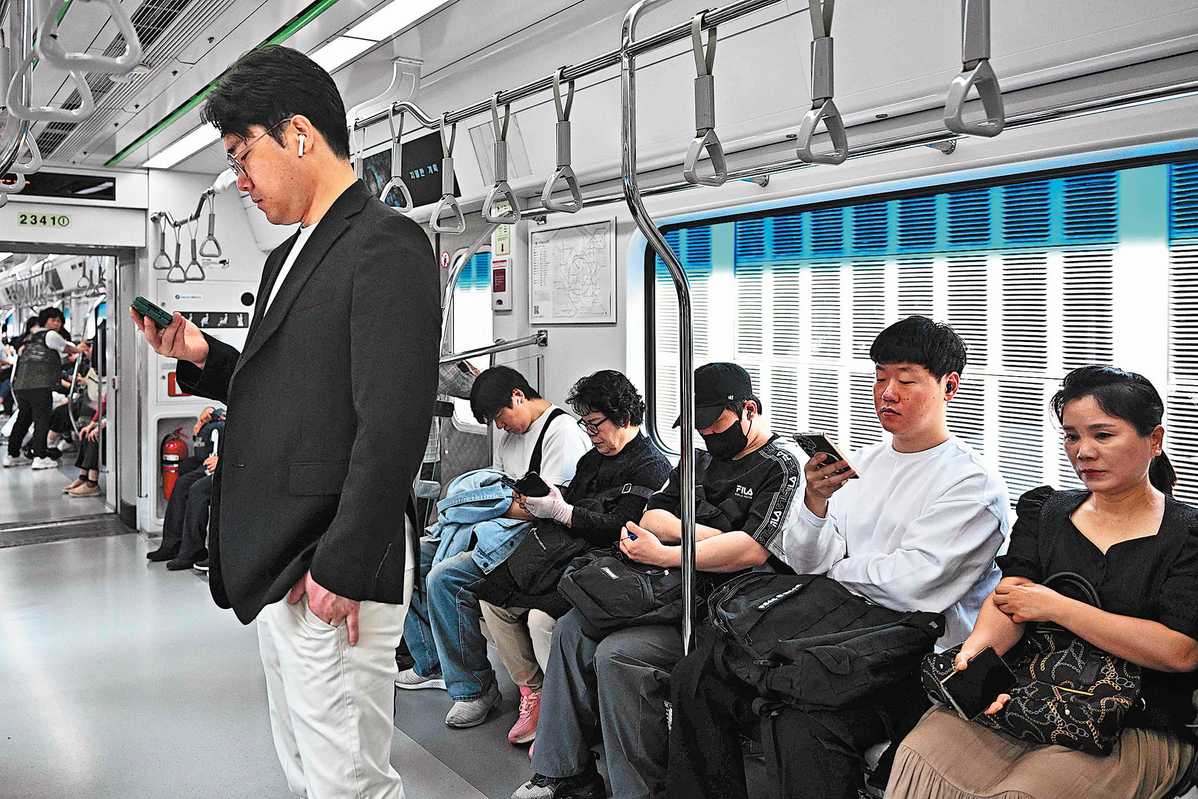
With South Korean President Lee Jae-myung now in office, one of his most eye-catching campaign pledges — introducing a 4.5-day workweek — is facing questions over whether it can really work.
For many workers, the proposal is a welcome one.
"I can't even describe how much I hope this happens," said Kim Ji-eun, a 39-year-old office worker in Seoul. "Right now, I leave work exhausted every Friday evening and have barely enough time to rest, let alone enjoy life or take care of my kids. Just half a day more would mean a real chance at balance."
Kim's view is widely shared. According to a recent survey by business networking platform Remember, seven in 10 salaried workers out of more than 11,000 surveyed said they would prefer a four-day workweek.
In a different survey by Saramin, 86.7 percent of employees said they prefer a four-day workweek, and of those, more than 60 percent said they would take the shorter hours even if it meant a lower salary.
But the reality is more complicated.
South Korea is widely known for its grueling work culture. In 2022, South Koreans worked an average of 1,901 hours annually — 149 hours more than the OECD average.
The country's job market is also notoriously rigid, largely due to labor laws that make it difficult for employers to dismiss regular workers, contributing to a stark divide between secure, permanent jobs and unstable, non-regular employment.
"Shaped by decades of regulations that prioritize employment stability over labor market agility, rigid legal frameworks and cultural norms make it difficult for companies to reward excellence or address underperformance. This makes it risky for businesses to experiment with reduced work hours," Kim Seonghee, a South Korean labor professor, told The Korea Herald.
At the same time, the country ranks low in terms of labor productivity. According to the Korea Labor Institute, South Korea was placed 33rd out of 38 OECD countries in 2023, with hourly productivity at $44.4, just 57 percent of the United States' output at $77.9 and 65 percent of Germany's.
Employers worry that without a significant leap in productivity, a reduced workweek would only add to their burden. "Some pioneering firms might adopt a four-day or 4.5-day workweek to attract talent," said Sohn Kyung-shik, chairman of the Korea Enterprises Federation, at a presidential forum in May. "But for many companies, this change would be a serious strain."
South Korea's largest labor union, the Federation of Korean Trade Unions, has taken the opposite stance. At a news conference in April ahead of the presidential election, the union pushed for the introduction of a four-day workweek. "Seventeen percent of (South) Korean workers still put in more than 48 hours per week — more than twice the EU average of 7.3 percent," the group said, citing long work hours as a pressing national issue.
Overhaul suggested
Pointing to successful pilot programs in countries including Iceland, France, and the United Kingdom, the union argues that advances in automation, AI and platform labor models demand an overhaul in how working time is structured.
"If work is changing, then the standard of what we consider acceptable labor hours must also evolve," the federation stated.
If implemented, the 4.5-day week would reduce the legal workweek from 40 to 36 hours. Coupled with another campaign pledge to abolish the fixed-salary overtime system known as the "inclusive wage system", business groups say they fear a compounded cost burden.
Law firm Lee& Ko warned that just as the adoption of the five-day workweek in 2003 imposed added costs without wage cuts, the proposed shift — especially with inclusive wage reform — could significantly impact corporate operating costs.
Still, labor law experts say shorter work hours may be inevitable. "A reduction in working hours aligns with global trends, and no major political party in (South) Korea is actively opposing the idea," the firm noted in its report after the election. The firm expects phased implementation alongside flexible work arrangements.
The road ahead is not without conditions. Law firm Yulchon emphasized in a recent report that labor productivity must improve first. With South Korea's low hourly labor productivity, the firm argued that "reducing working hours without lowering wages is only socially sustainable if accompanied by productivity growth".
A labor expert at a South Korean law firm advised that companies prepare for the change by adopting practical measures, such as encouraging the use of annual leave, offering more flexible working hours, and updating existing legal frameworks to maximize the use of flexible work arrangements.
"From redesigning work environments and staffing plans to ensuring fair compensation levels, the private sector must begin preparing for structural transformation," he said.
The Korea Herald, South Korea