Five-year plans chart steady progress
Innovation, inclusive growth, domestic resilience seen as development anchors







As the global economy confronts heightened volatility, China is anchoring its strategy in one of its most enduring tools of governance — the five-year plans — to chart a steady course.
With the 15th Five-Year Plan (2026-30) now under development, policymakers are placing stronger emphasis on innovation, inclusive growth and domestic resilience as anchors for China's high-quality growth.
The blueprint will serve as a source of certainty in a world grappling with rising uncertainty, and will present a China solution that shares opportunities with the rest of the world, analysts said.
President Xi Jinping, in setting the tone for the making of the blueprint, reiterated China's twin imperatives: to resolutely manage its own affairs and to press ahead with high-level opening-up — a dual strategy aimed at reinforcing resilience at home while deepening engagement with the world.
During a meeting with provincial leaders in April, Xi, who is also general secretary of the Communist Party of China Central Committee, highlighted the need to set out goals and policy initiatives sector by sector, all aligned with the overarching objective of basically achieving socialist modernization by 2035.
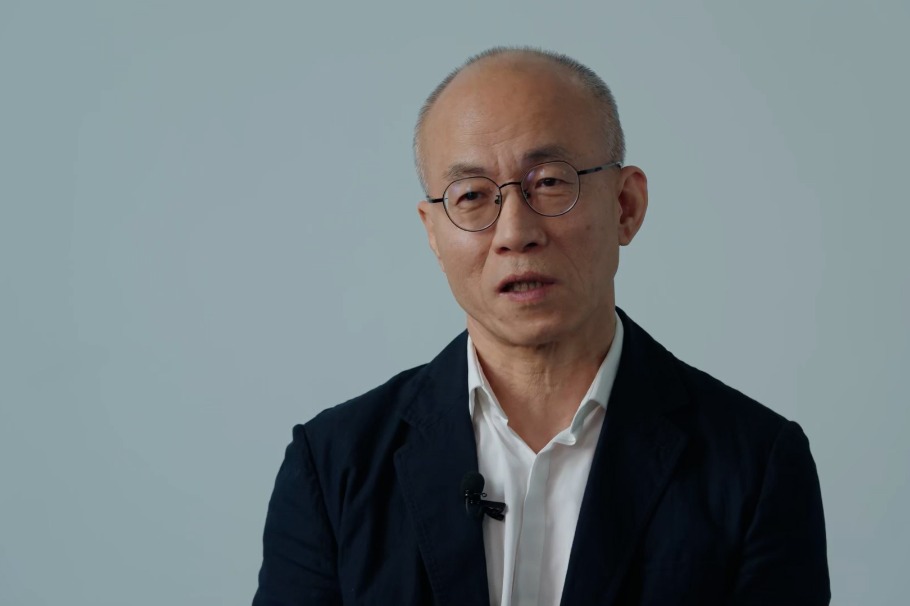
Dong Yu, executive vice-president of the China Institute for Development Planning at Tsinghua University, said that China's five-year plans, enacted upon approval by the nation's top legislature, help stabilize market expectations and ensure the consistency of major policies — unlike the frequent pivots seen in some major economies.
China launched its First Five-Year Plan (1953-57) four years after the founding of the People's Republic of China, and the making of the plans has long been a hallmark of China's strategic governance.
"What makes the five-year plans so vital is China's long-standing emphasis on medium- and long-term thinking," he said.
"The Party's governance philosophy has consistently prioritized carrying forward and innovating on major policy directions through a forward-looking strategic vision," said Dong, who has taken part in the policymaking process of three previous five-year plans.
The CPC Central Committee is now organizing the drafting of proposals for the 15th Five-Year Plan. Public consultations — including online solicitations — are now underway, with input being collected from officials, experts and ordinary residents.
Dong noted that the drafting of the plan has begun earlier than in past cycles to ensure wider participation.
The final recommendations will be deliberated by a plenary session of the CPC Central Committee and submitted to the national legislature for approval next year.
"The scientific formulation and successive implementation of five-year plans is a key governance practice of the CPC and a major political strength of socialism with Chinese characteristics," Xi wrote in an article published in Qiushi Journal, the flagship magazine of the CPC Central Committee.
"Practice has shown that medium-and long-term development planning can both harness the decisive role of the market in resource allocation and give better play to the role of the government," Xi wrote.
Analysts have pointed out that the 2026-30 period could be a critical window for the world's second-largest economy to fulfill its goal of basically achieving modernization by 2035. They have underlined a more complex global landscape, including rising protectionism and simmering trade tensions, in addition to domestic challenges including the graying population.
During a meeting in May, the State Council, China's Cabinet, highlighted the need to anchor the nation's development strategy in strengthening the domestic economy and to leverage its inherent stability and long-term growth potential as a buffer against the rising uncertainties of the global economic cycle.
Xi has highlighted giving further strategic priority to developing new quality productive forces in alignment with local conditions, and steadily advancing the drive for common prosperity, as key priorities in the next five years.
Zhu Keli, founding director of the China Institute of New Economy, said the growth of new quality productive forces, featuring high technology, high efficiency and high quality, will help elevate China's position in global supply chains and build economic resilience and competitiveness over the next five years.
"By targeting breakthroughs in core technologies and shoring up critical supply chains, the nation can pioneer the next stage of industrial development," he said.
Zhu also highlighted the significance of expanding high-level opening-up going forward, which will enable the further integration of domestic and global markets.
With birth rates falling and the population aging, expanding access to higher education and easing the burdens of childbearing are likely to become policy priorities.
"If a more supportive environment for childbearing can be established — one that allows people to better balance work and family life — it would play a critical role in stabilizing the population decline and securing sustainable economic development in the medium to long term," said Dong, from Tsinghua University.
Li Shi, dean of the Institute for Common Prosperity and Development at Zhejiang University, said the raising of residential income and the narrowing of gaps in wealth and public services should be prioritized to advance the drive for common prosperity.
Meanwhile, more targeted measures should be rolled out to improve the social safety net for people of low-income groups, the majority of whom live in rural areas, he said, adding that one policy direction could be raising the level of pension payments to elderly residents in rural areas.
xuwei@chinadaily.com.cn
?




- China targets manned moon landing by 2030, outlines testing tasks ahead
- Environment forum in Hong Kong fosters green collaboration across GBA
- China enhances social etiquette, civility in rural areas
- Advanced heavy-ion accelerator successfully tested in South China
- Trump says President Xi is a great leader of a great country
- Trump says he, Xi to have fantastic relationship for long period of time